A Curated Book List
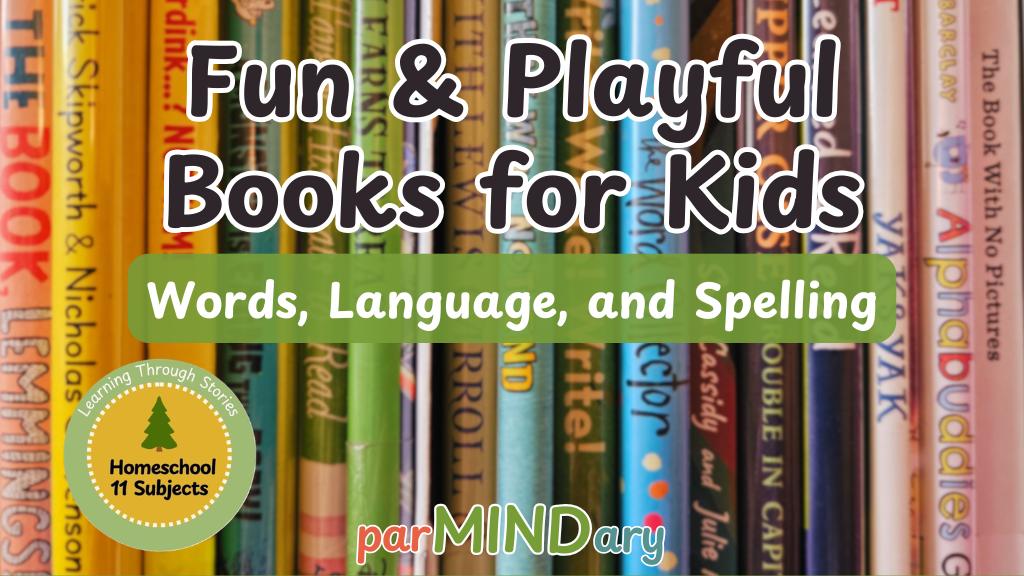
Words can be serious, but they can also be playful. Some of the most memorable language experiences begin with a joke, a rhyme, a surprising spelling, or a story that turns expectations upside down. In this curated collection of word play books for kids, we gather stories about reading, writing, language, and spelling that invite laughter, curiosity, and experimentation. Together, these books explore the delight hidden inside words and the patterns that make language come alive – and are also part of our broader Language & Meaning series exploring language arts in a Washington homeschool.
In Simple Terms:
Reading, writing, language, and spelling are not only ways of sharing meaning. They are also places to play. These stories explore humor, imagination, sound, rhythm, surprise, and the unexpected connections hidden inside words.
At a Glance: Words, Language, and Spelling
- Reading invites imagination and delight
- Writing turns ideas into stories and play
- Language connects words, meanings, and history
- Spelling reveals surprising patterns and sounds
Why this matters:
Language is easier to remember when it is connected to curiosity and joy. Humor, wordplay, and experimentation invite us to notice how language works while reminding us that communication can be both meaningful and fun.
Explore Language & Meaning
Looking for more about Language Arts through stories and reflection?
You may also enjoy:
• Story-based language and meaning explorations
• Patterns in stories through books and observation
Words, Language and Spelling as Shared Meaning
Reading, writing, language, and spelling are often presented as formal subjects. In everyday life, they appear in much more surprising ways.
A story read aloud becomes a shared joke. A funny word sparks curiosity. An unusual spelling leads to a question. A poem, rhyme, or tongue twister turns language into play.
These books are grouped together because they explore language arts through delight, humor, imagination, and experimentation. Some celebrate favorite books and storytelling. Others focus on word origins, playful language, or the strange patterns hidden inside spelling.
Together, they invite us to notice that language is something we communicate through, explore, enjoy, and share. This list connects to our broader Language & Meaning series exploring Reading, Writing, Language, and Spelling in a Washington homeschool.
Disclosure: This post contains affiliate links. As an Amazon Associate, I earn from qualifying purchases at no additional cost to you.
Stories About Reading and Imagination
Some books celebrate reading by turning it into an adventure of its own.
Monsters crawl through pages. Favorite stories lead to new stories. Dogs learn to read. Libraries become destinations. These books capture the delight, imagination, and joyful possibilities that live inside reading.
Themes in this Section:
imagination · libraries · favorite books · reading adventures
✦
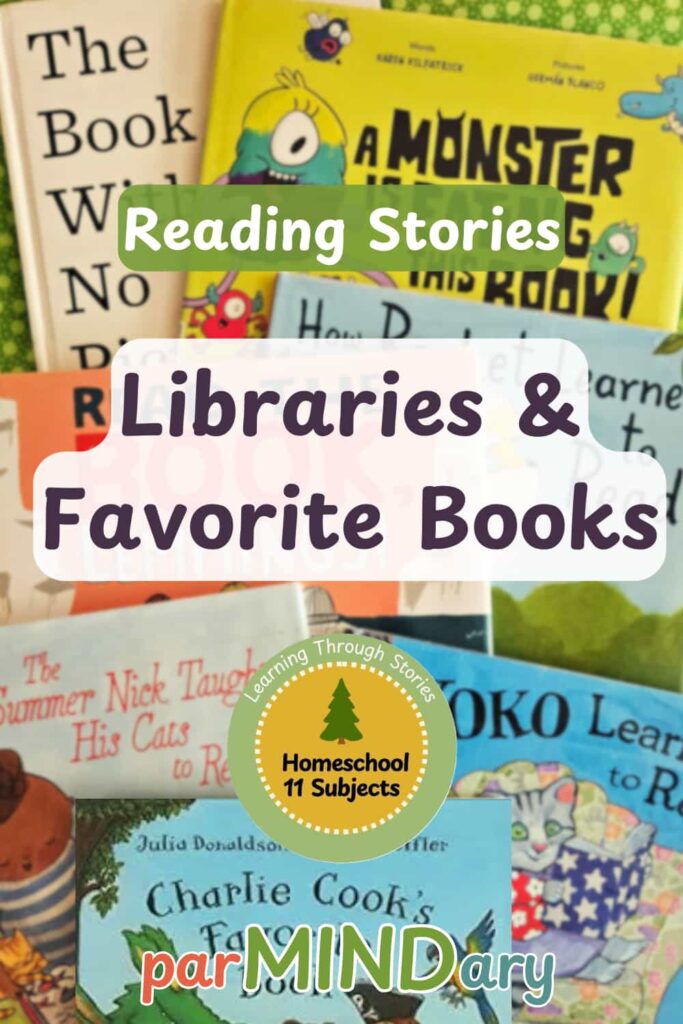
The Book With No Pictures – B. J. Novak
Strange sounds, ridiculous words, and unstoppable laughter take over story time.
Why this book matters: The humor comes from a simple premise: the reader must say every word on the page, no matter how absurd. Nonsense phrases, unexpected interruptions, and imaginative language transform reading aloud into a shared performance.
Themes / patterns: reading aloud, humor, imagination, audience participation, playful language
Age range: 3–6
Find The Book With No Pictures on Amazon
Books Aren’t for Eating – Carlie Sorosiak
A book-loving dog discovers that stories are much more interesting than snacks.
Why this book matters: Curiosity drives the story as Leopold slowly learns what books are actually for. Humor and gentle mischief create a joyful celebration of stories, libraries, and the many ways books become part of daily life.
Themes / patterns: books and reading, curiosity, libraries, humor, favorite stories
Age range: 4–8
Find Books Aren’t for Eating on Amazon
A Monster is Eating This Book – Karen Kilpatrick
Pages disappear as a hungry monster works its way through the story.
Why this book matters: Each turn of the page raises the stakes as readers try to stay ahead of the monster. The lively format turns reading into a game while drawing attention to the physical experience of books themselves.
Themes / patterns: interactive storytelling, humor, books as objects, suspense, imagination
Age range: 4–6
Find A Monster is Eating This Book on Amazon
How Rocket Learned to Read – Tad Hills
Leaves drift, letters appear, and a curious dog begins noticing words everywhere.
Why this book matters: Quiet moments of observation sit alongside Rocket’s growing fascination with written language. Reading emerges naturally through attention, repetition, and the pleasure of sharing stories with someone you trust.
Themes / patterns: learning to read, friendship, observation, nature, shared stories
Age range: 3–6
Find How Rocket Learned to Read on Amazon
These books about reading tie into our related post:
What Reading Really Is: Making Sense Across Time and Text
Reading is the practice of making meaning across time and text — from symbol to sentence to story to worldview.
Read the Book, Lemmings! – Ame Dyckman
Instructions are ignored as enthusiastic lemmings charge straight into adventure.
Why this book matters: The comedy grows from the gap between what the book says and what the characters actually do. Expectations are overturned again and again, creating a humorous reminder that stories often have plans of their own.
Themes / patterns: humor, reader expectations, adventure, books about books, storytelling
Age range: 2–6
Find Read the Book, Lemmings! on Amazon
The Summer Nick Taught His Cats to Read – Curtis Manley
A determined boy sets out to teach reading to an audience with very different priorities.
Why this book matters: Books, patience, and plenty of trial and error fill a summer of experimentation. The story plays with the idea of what reading means while celebrating persistence, imagination, and unexpected companionship.
Themes / patterns: summer stories, books and reading, persistence, imagination, pets
Age range: 3–7
Find The Summer Nick Taught His Cats to Read on Amazon
Lola at the Library – Anna McQuinn
Weekly library visits become part of a cherished family routine.
Why this book matters: Simple moments accumulate through checkouts, story times, and favorite books. The story captures the anticipation and comfort that grow around regular encounters with stories and shared reading.
Themes / patterns: libraries, family routines, reading aloud, favorite books, community
Age range: 2–4
Find Lola at the Library on Amazon
Yoko Learns to Read – Rosemary Wells
Letters, sounds, and determination slowly come together as Yoko tackles reading.
Why this book matters: The story lingers on the excitement and occasional frustration that accompany learning something new. Small successes gather over time, creating a warm and encouraging portrait of persistence.
Themes / patterns: learning to read, perseverance, confidence, school stories, friendship
Age range: 3–6
Find Yoko Learns to Read on Amazon
Charlie Cook’s Favorite Book – Julia Donaldson
One favorite book leads to another, then another, then another.
Why this book matters: Stories nest inside stories as readers travel through a chain of connected characters and adventures. The structure becomes part of the delight, celebrating the endless pathways that open whenever a book is picked up.
Themes / patterns: stories within stories, imagination, favorite books, narrative structure, reading
Age range: 2–5
Find Charlie Cook’s Favorite Book on Amazon
A favorite story often leads to another question: What happens when someone decides to create a story of their own?
Playful Stories About Writing & Authors
Stories do not appear fully formed.
Ideas wander, crayons complain, poems grow out of control, and characters discover that writing can be every bit as playful as reading. These books linger on experimentation, creativity, and the surprising paths stories take before reaching the page.
Themes in this Section:
creative process · storytelling · poetry · imagination
✦
Beginning, Middle, and End – Jon Burgerman
Three mischievous characters discover that every story has a part to play.
Why this book matters: Beginning, Middle, and End refuse to stay neatly in order as they argue, interrupt, and experiment with storytelling. Humor and playful illustrations invite readers to notice how stories are constructed while celebrating the freedom to bend the rules.
Themes / patterns: story structure, creativity, humor, storytelling, imagination
Age range: 3–7
Find Beginning, Middle, and End on Amazon
Little Red Writing – Joan Holub
A brave red pencil sets off through a fairy-tale forest in search of a story.
Why this book matters: Story elements become characters in their own adventure as Little Red gathers setting, plot, conflict, and ending along the way. Familiar fairy-tale patterns are turned inside out, creating a joyful celebration of storytelling itself.
Themes / patterns: story structure, fairy tales, creative writing, imagination, storytelling
Age range: 4–8
Find Little Red Writing on Amazon
The Plot Chickens – Mary Jane Auch
One determined chicken decides she is ready to write a masterpiece.
Why this book matters: Henrietta approaches authorship with enthusiasm, confidence, and very little practical experience. Drafts, revisions, and unexpected setbacks become part of the fun as the story captures both the challenges and excitement of creating something new.
Themes / patterns: creative process, perseverance, humor, storytelling, revision
Age range: 7–9
Find The Plot Chickens on Amazon
One Fun Day with Lewis Carroll: A Celebration of Wordplay and a Girl Named Alice – Kathleen Krull
Puzzles, riddles, and nonsense tumble together during a delightfully unusual day.
Why this book matters: Inspired by Lewis Carroll’s love of language, the story delights in puns, playful logic, and unexpected turns of phrase. Meaning becomes flexible as words stretch beyond their ordinary boundaries.
Themes / patterns: wordplay, logic, riddles, imagination, language games
Age range: 6–9
Find One Fun Day with Lewis Carroll on Amazon
These books about writing connect with our related post:
Writing as a Record of Thought, Not Performance
Writing records thought. It moves from sentence to narrative to legacy, preserving ideas over time.
The Day the Crayons Quit – Drew Daywalt
Frustrated crayons finally decide they have had enough.
Why this book matters: Letters of complaint reveal a surprising collection of opinions, grievances, and personalities. Humor grows from seeing familiar classroom tools become storytellers themselves, each with a distinct voice and perspective.
Themes / patterns: letters, perspective, creative expression, humor, voice
Age range: 3–6
Find The Day the Crayons Quit on Amazon
Write! Write! Write! – Amy Ludwig VanDerwater
Ideas drift in from everyday moments, waiting to become something more.
Why this book matters: Observation, curiosity, memory, and imagination gather through a collection of poems about writing. Rather than focusing on finished work, the poems linger on the many places ideas come from in the first place.
Themes / patterns: poetry, observation, creativity, imagination, writing inspiration
Age range: 5–9
Find Write! Write! Write! on Amazon
The Poem that Will Not End – Joan Bransfield Graham
One small poem keeps growing, twisting, and surprising its creator.
Why this book matters: Wordplay and poetic structure combine as each new line changes the direction of the poem. The story captures the feeling of language taking on a life of its own once a writer begins following where it leads.
Themes / patterns: poetry, wordplay, creativity, surprise, language patterns
Age range: 6–10
Find The Poem that Will Not End on Amazon
Behind every story sits a collection of words, and some words are far more interesting than they first appear.
Fun Language & Word Stories
Some words sound strange. Others have surprising histories. A few seem almost magical once you learn where they came from.
These books invite curiosity about vocabulary, word origins, definitions, and the many ways language continues to evolve.
Themes in this Section:
word origins · meaning · vocabulary · language mysteries
✦
The Word Collector – Peter H. Reynolds
Interesting words drift through daily life until one boy begins gathering them wherever he goes.
Why this book matters: Jerome notices words the way some people notice shells, feathers, or treasures. Collections grow from curiosity and delight before gradually becoming something meant to be shared. The story celebrates vocabulary as both personal discovery and connection.
Themes / patterns: vocabulary, collecting, curiosity, sharing ideas, language appreciation
Age range: 3–7
Find The Word Collector on Amazon
Ebenezer Has a Word for Everything – Chelsea H. Rowe
An extraordinary vocabulary creates unexpected challenges for a boy who always knows exactly the right word.
Why this book matters: Rare and unusual words fill Ebenezer’s conversations, often leaving others completely bewildered. Humor grows from the tension between precision and communication while quietly raising questions about who language is really for.
Themes / patterns: vocabulary, communication, humor, unusual words, social connection
Age range: 4–8
Find Ebenezer Has a Word for Everything on Amazon
Literally: Amazing Words and Where They Come From – Patrick Skipworth
Ordinary words reveal surprisingly strange histories once their stories are uncovered.
Why this book matters: Language becomes a detective story as familiar words are traced backward through time. Unexpected origins, cultural influences, and historical connections begin appearing beneath language that once seemed completely ordinary.
Themes / patterns: etymology, word origins, history of language, curiosity, cultural connections
Age range: 6–11
Find Literally: Amazing Words and Where They Come From on Amazon
These books about language link to our related post:
Why Words Sound the Way They Do (Language)
Language grows from root to word to language to culture. Studying language reveals how ideas travel across generations.
Star Sailor, The Story of Words – Sara Cassidy
One word sets off on a journey through imagination, memory, and meaning.
Why this book matters: The story lingers on the emotional and imaginative life of language. Meanings shift and expand as words move between people, stories, and experiences, creating a gentle reflection on the power words carry.
Themes / patterns: meaning, imagination, vocabulary, communication, storytelling
Age range: 6–8
Find Star Sailor, The Story of Words on Amazon
Word Fun – Michael Dahl
Puzzles, jokes, and language surprises appear around every corner.
Why this book matters: Puns, multiple meanings, and playful challenges encourage experimentation with language. The focus remains on discovery and amusement, reminding readers that words can be entertaining as well as useful.
Themes / patterns: wordplay, humor, puns, multiple meanings, language games
Age range: 7–10
Find Word Fun on Amazon
The Upper Case: Trouble in Capital City – Tara Lazar
Letters become characters as a mystery unfolds inside Capital City.
Why this book matters: Uppercase and lowercase letters take on personalities, conflicts, and responsibilities of their own. Written language turns into a living world while drawing attention to patterns that often go unnoticed.
Themes / patterns: alphabet awareness, personification, mysteries, language patterns, humor
Age range: 4–8
Find The Upper Case: Trouble in Capital City on Amazon
Of course, once language begins behaving strangely, spelling is rarely far behind.
Silly Stories About Spelling, Word Play & Pattern
Silent letters, alphabet chaos, tongue-twisting sounds, and impossible rhymes all make an appearance here.
These books celebrate the quirks of language through humor, repetition, and playful pattern-making. Beneath the silliness, surprising structures begin to emerge.
Themes in this Section:
alphabet play · rhyme · wordplay · humor · repetition
✦
There Was an Old Lady Who Swallowed a Fly – Simms Taback
One increasingly impossible decision leads to another in a wildly escalating chain of events.
Why this book matters: Repetition drives the story forward as each new animal creates a larger and more ridiculous problem than the last. Rhythm, prediction, and cumulative storytelling combine to create a tale that begs to be read aloud.
Themes / patterns: repetition, rhyme, cumulative tales, oral tradition, humor
Age range: 2–5
Find There Was an Old Lady Who Swallowed a Fly on Amazon
Z is for Moose – Kelly Bingham
A very impatient moose refuses to wait his turn in the alphabet.
Why this book matters: The familiar structure of an alphabet book quickly falls apart once Moose decides he should be the star of every page. Humor grows from interruption, expectation, and the chaos that follows when one character ignores the rules.
Themes / patterns: alphabet books, humor, reader expectations, disruption, character-driven comedy
Age range: 2–7
Find Z is for Moose on Amazon
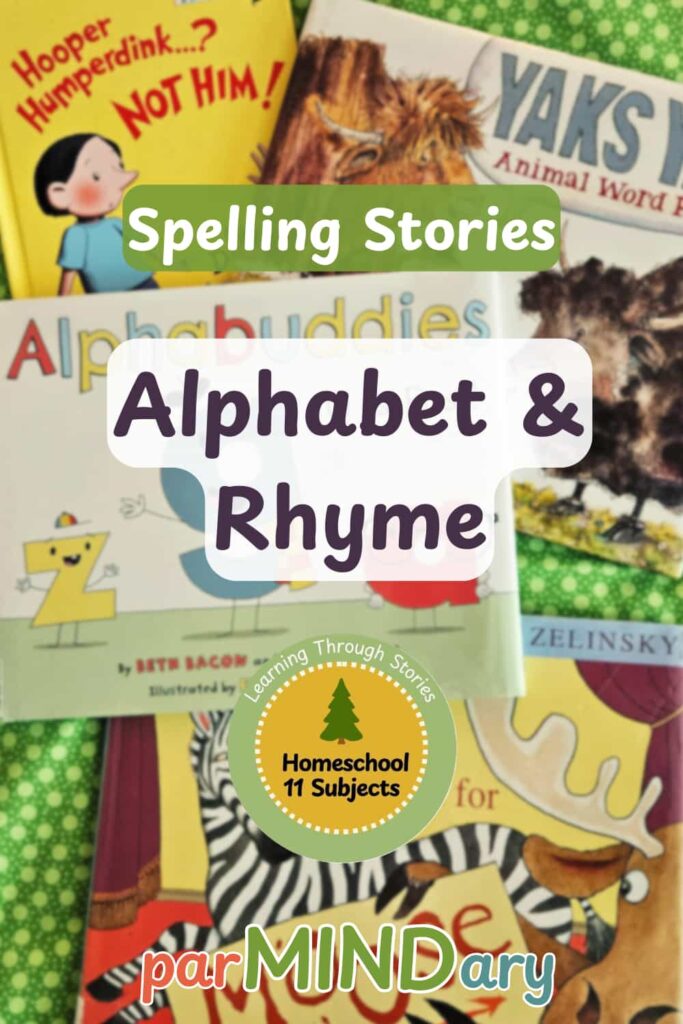
Yaks Yak: Animal Word Pairs – Linda Sue Park
Animals take language literally with delightfully unexpected results.
Why this book matters: Simple word pairs become visual jokes as meanings shift between nouns and verbs. The humor works because language can be interpreted in more than one way, revealing hidden connections inside familiar words.
Themes / patterns: multiple meanings, wordplay, homonyms, visual humor, language patterns
Age range: 4–7
Find Yaks Yak: Animal Word Pairs on Amazon
These books about spelling echo our related post:
Why Words Look the Way They Do (Spelling)
Spelling uncovers structure in written language — from sound to pattern to word to written system.
Alphabuddies: G is First – Beth Bacon
Letters compete for attention while trying to find their place in the alphabet.
Why this book matters: Alphabet order becomes a source of conflict, cooperation, and comedy as letters develop distinct personalities of their own. Beneath the humor sits a lively exploration of sequence, structure, and belonging.
Themes / patterns: alphabet order, personification, friendship, language structure, humor
Age range: 4–8
Find Alphabuddies: G is First on Amazon
Hooper Humperdink..? Not Him! – Dr. Seuss
An increasingly crowded party grows louder, stranger, and more impossible with every page.
Why this book matters: Names, rhythm, repetition, and exaggerated language build momentum as more guests arrive. The delight comes not from the plot itself but from the sound and energy of the language as it tumbles forward.
Themes / patterns: rhythm, repetition, names, sound play, nonsense humor
Age range: 2–6
Find Hooper Humperdink..? Not Him! on Amazon
A is for Angry: An Animal and Adjective Alphabet – Sandra Boynton
Expressive animals turn the alphabet into a celebration of personality.
Why this book matters: Each page pairs animals with vivid adjectives, creating combinations that are fun to read aloud and easy to remember. Sound, rhythm, and characterization work together to make language feel lively and memorable.
Themes / patterns: alphabet books, adjectives, animal characters, sound patterns, humor
Age range: 2–6
Find A is for Angry: An Animal and Adjective Alphabet on Amazon
Books may begin these conversations, but language play rarely stays there.
Looking for more reflective language and spelling stories?
Explore our companion list:
Children’s Books About Reading, Writing, and the Meaning of Words
Language Beyond the Page
Language lives in far more places than lessons or books alone.
It appears in knock-knock jokes, made-up words, family sayings, song lyrics, playground rhymes, and conversations around the dinner table. Long before language appears as a school subject, children are already experimenting with patterns, jokes, and meanings.
A joke that only works because two words sound alike. A tongue twister repeated over and over. A family nickname that takes on a life of its own. Language often becomes memorable through play.
Playing with Language in Daily Life
These stories are one invitation to pay closer attention to the playful side of language already surrounding us.
You might begin noticing:
- rhymes hiding inside everyday conversations
- words that sound alike but mean different things
- family sayings, nicknames, and inside jokes
- songs that play with rhythm and repetition
- signs or advertisements using puns
- unusual spellings that spark questions
- favorite words that are simply fun to say
Some gentle questions to carry forward:
- Which words make your child laugh every time?
- What rhymes, riddles, or jokes get repeated in your home?
- Which books inspired the most playful conversations?
- Have you discovered a word with a surprising origin or meaning?
- What sounds, phrases, or expressions are especially fun to say aloud?
Language play often begins with laughter and wonder, then gradually grows into deeper understanding of how words work.
Related Posts + Language & Meaning Guide
This book list is part of our Language & Meaning series exploring language arts through stories, reflection, and real-world homeschooling in Washington State.
You may also enjoy:
- What Reading Really Is: Making Sense Across Time and Text
- Writing as a Record of Thought, Not Performance
- Why Words Sound the Way They Do (Language)
- Why Words Look the Way They Do (Spelling)
Related reflection and documentation tools for the Language & Meaning series will be available in the Free Resource Library soon.
Note: Whether you borrow books from the library, purchase them, or share them with friends, the goal is the same: finding stories worth returning to. We visit our local library every week and add a few favorites to our home library throughout the year.