Start Here
How to use this site without getting lost
Updated July 22, 2026
If you’ve landed here, you may be trying to make sense of learning as it’s unfolding in your home—through books, conversations, rabbit holes, seasonal rhythms, and the quiet noticing that doesn’t fit neatly into boxes.
This page is your orientation.
parMINDary is not a curriculum site and not a set of instructions. It is a way of seeing learning clearly, naming it honestly, and holding it with care. Everything here is organized to support that purpose.
What parMINDary Is Built For
parMINDary exists to help parents and caregivers:
- Notice learning as it naturally happens
- Use books and stories as starting points, not endpoints
- Document growth without turning it into grades or pressure
- Stay grounded in values while navigating real-world requirements
You will find reflections, examples, book-centered explorations, and tools for documentation. You will not find daily lesson plans or claims that one approach works for every family.
If you haven’t yet, it’s helpful to read the parMINDary Philosophy first. It explains the stance behind everything on this site.
The Four Pillar Pages
The site is organized around four pillars. Think of them as lenses rather than tracks. You can enter through any one of them.
1️⃣ parMINDary Philosophy
This pillar explains why this site exists and how to read it.
Here you’ll find:
- The core stance: reading-led learning and child-led inquiry
- The role of the adult as observer and documenter
- Clear boundaries about what this site is—and is not
If something here resonates but feels hard to define, this pillar gives you the language.
2️⃣ Reading & Patterns
This pillar explores how we recognize patterns—across stories, ideas, nature, history, and everyday life.
Posts here often focus on:
- Pattern-seeking across stories, subjects, and seasons
- Exploring size, viewpoint, proportion, and perspective
- A look at recurring themes in an author’s creative work
This is where you’ll see how reading becomes structure—without becoming rigid.
3️⃣ Learning Through Stories
Stories are not extras here. They are central.
This pillar looks at how fiction, folklore, picture books, and narrative nonfiction open doors to:
- Science and observation
- History and culture
- Ethics, empathy, and big questions
You’ll see examples of how a single story can connect to many areas of learning, depending on where curiosity leads.
4️⃣ Seasons & Culture
Learning does not happen in a vacuum.

This pillar grounds learning in:
- Seasonal rhythms
- Cultural traditions
- Place, time, and lived experience
Posts here often weave together books, activities, and conversations that reflect what is happening in the world right now—both locally and globally.
5️⃣ Browse Books
Explore our favorite Children’s Books.
Explore our growing collection of children’s book lists organized by:
- Season
- Subject
- Theme
- Author
These carefully curated recommendations are designed for families who love learning through stories, observation, and shared reading.
How Posts Are Organized
To make the site usable (and compliant with reporting requirements), posts are also organized by series and subject tags aligned with Washington State’s required areas of instruction.
Series tags include:
Subject tags:
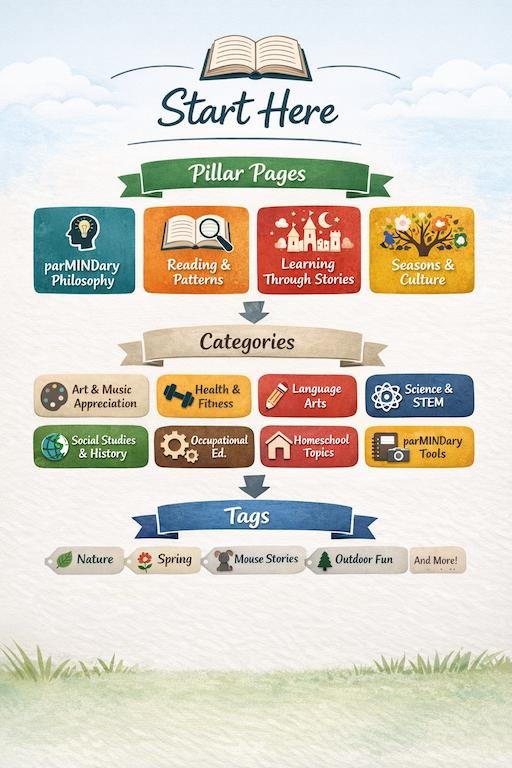
A single post may live in one category while touching many subjects. Categories are organizational tools, not labels on a child’s learning.
Using Tags to Follow Interests
In addition to series and subject category tags, posts are tagged by topic.
Tags reflect interests and themes such as:
Tags are the best way to follow a child’s curiosity across pillars and subjects. If your child is deep into one topic, tags let you see how that interest shows up in many forms.
If You Are Homeschooling in Washington State
This site acknowledges real-world requirements without letting them dominate learning.
The subject categories exist to help families:
- See how learning maps onto required areas
- Document learning clearly and honestly
- Reduce anxiety around “coverage”
parMINDary does not replace legal guidance or required oversight. It supports thoughtful documentation and reflection.
How to Use This Site (Practically)
You might:
- Start with a pillar that matches where your child’s interests are right now
- Use tags to follow a theme across time
- Read reflection posts to gain perspective rather than direction
- Sign up below to get parMINDary resources from the Free Resource Library to document your own observations
There is no correct path through this site.
One Last Note
If you find yourself thinking:
“We’re already doing something like this, but I didn’t have words for it.”
That’s the point.
parMINDary exists to help you name what you see—so you can trust it, document it, and respond thoughtfully.
When you’re ready, begin with the philosophy, or choose a pillar that feels alive right now.
Learning is already happening.
This site is here to help you notice.
Where to go next:
- The parMINDary Philosophy page for foundational ideas
- The Reading & Patterns pillar for long-term themed exploration
- The Learning Through Stories page for reframing required subjects
- The Seasons & Culture page for learning through nature’s rhythms and traditions