
Learning Through The Seasons
Honoring rhythms without turning them into requirements
Updated March 12, 2026
Time is one of the hardest things for children to understand.
Days stretch long or disappear quickly, and a whole year can feel impossible to imagine.
Stories and seasonal rhythms help give shape to time.
Across cultures, the turning of the year has been marked by changes in weather, plants, migration, harvest, and celebration. These repeating cycles help people understand where they are in the larger story of the year.
In our home, we return to these patterns again and again through stories, seasonal traditions, and careful observation of the world around us.
🌎 A Two-Year Exploration of the Living Year
The first year of this series focuses on learning to notice the seasonal cycle.
The second year explores how we participate in it through care, migration, and stewardship.
Year 1: Watching the Year
Year 2: Living Inside the Cycle
The Rhythm of the Year
Winter
🌲 January — Looking Forward Gently
🌙 February — Noticing Before Action
Spring
🌱 March — Return & Anticipation
💧 April — Movement & Thresholds
🌼 May — Invitation & Care
Summer
🐝 June — Belonging & Welcome
☀️ July — Abundance & Coexistence
🌾 August — Effort & Fatigue
Autumn
🍎 September — Preparation & Trust
🍂 October — Memory & Meaning
🕯️ November — Gratitude Without Possession
Winter Return
❄️ December — Rest & Dormancy
Looking for stories about Winter?
Check out our other posts about Winter here.
Looking for stories about Spring?
Check out our other posts about Spring here.
Looking for stories about Summer?
Check out our other posts about Summer here.
Looking for stories about Autumn?
Check out our other posts about Autumn here.
What You’ll Find in Each Seasonal Post
Each monthly reflection seasonal post includes:
- seasonal stories
- cultural connections
- observation ideas
- gentle learning invitations
Year 1: Watching the Year
🌎 Watching the Year: Homeschooling Through the Seasons
🌲 Watching Midwinter: Renewal and Anticipation
🌙 Watching Late Winter: Staying Indoors and Keeping Warm
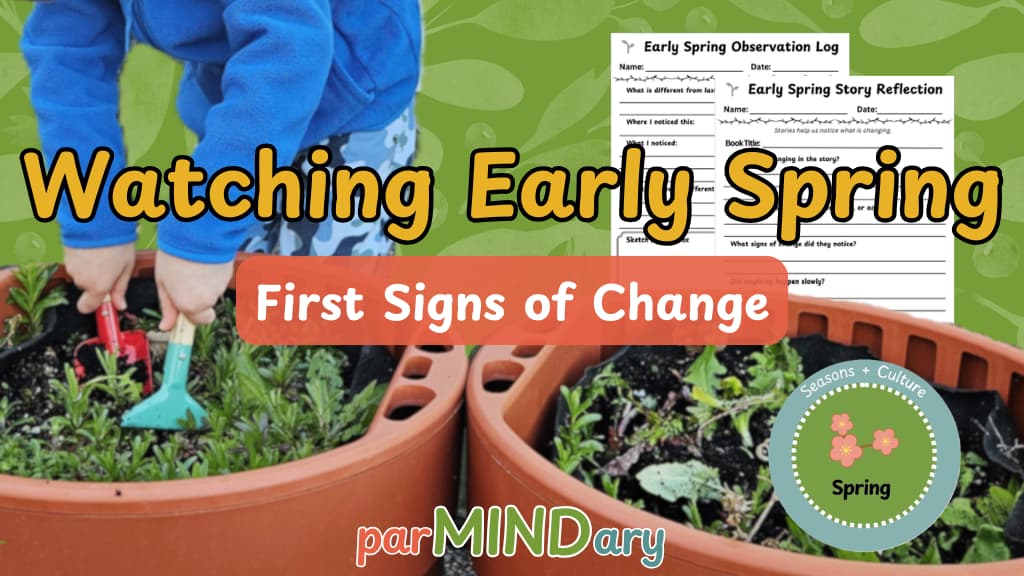
🌱 Watching Early Spring: Waiting for the First Signs of Change
💧 Watching Mid-Spring: When Motion Replaces Waiting
🌼 Watching Late Spring: Marking Time Together
🐝 Watching Early Summer: Long Days and Open Possibility
☀️ Watching High Summer: Stillness Inside Abundance
🌾 Watching Late Summer: Holding and Letting Go
🍎 Watching Early Autumn: Preparing for the First Signs of Fall
🍂 Watching Mid-Autumn: The Work of Letting Go
🕯️ Watching Late Autumn: Quiet Before Winter
❄️ Watching Early Winter: Light, Memory, and Celebration
Seasonal Story Libraries
Throughout the year we also have curated book list companion posts connected to the changing seasons.
🌎 Stories That Follow the Whole Year
🌲 Quiet Deep Winter Stories for Children
🌙 Late Winter & Waiting Stories
🌱 Early Spring Stories for Children
💧 Spring Migration & Movement Stories
🌼 Spring Festivals & May Tradition Stories
🐝 Early Summer Stories for Children
☀️ High Summer Nature & Pollinator Stories
🌾 Late Summer Effort & Harvest Stories
🍎 Migration & Autumn Arrival Stories
🍂 Autumn Harvest & Celebration Stories
🕯️ Gratitude & Community Stories
❄️ Winter Light & Celebration Stories
Explore the Series
Although this series is designed as a full January–December seasonal learning cycle, we begin publishing in March as the first visible signs of spring begin to appear. Over time, the full yearly rhythm will emerge.
Or start reading Year 1: Watching the Year Here:
🌱 March — Return & Anticipation
Watching Early Spring: Waiting for the First Signs of Change
(launch post)
🌎 Seasonal and Cultural Reading for Families
Seasonal and cultural content can feel urgent.
There are dates on the calendar. Displays in stores. Suggested reading lists that arrive already labeled now or missed. It is easy for learning to become reactive—pulled along by what is timely rather than grounded in what is meaningful.
This pillar exists to slow that momentum.
By the time you arrive here, you already know how parMINDary thinks about learning. This page shows how those values are carried into seasons and culture with care, reflection, and restraint.
A Philosophy of Seasonal Reading
Seasonal reading in parMINDary is not about keeping up.
It is about attunement.
Stories tied to seasons help children notice:
- Changes in the natural world
- Shifts in light, weather, and activity
- Cycles of growth, rest, and renewal
Books become markers—not mandates. They help us name what is already happening around us rather than instruct us on what should happen.
Seasonal reading here is:
- Revisited year after year
- Adjusted to the child’s age and interests
- Flexible in timing and depth
There is no expectation to read everything in season. Sometimes the most meaningful seasonal story is read long after the calendar page has turned.
Holidays as Rhythms, Not Obligations
Holidays appear on this site, but they are not treated as requirements.
They are approached as cultural rhythms—moments that many people mark, interpret, and experience differently.
When holidays are explored through reading, the focus is on:
- Understanding, not performance
- Exposure, not expectation
- Curiosity, not compliance
This means:
- Some holidays may appear lightly or intermittently
- Some may be revisited over multiple years
- Many traditions are acknowledged without pressure to adopt them
Reading allows space for conversation, comparison, and choice.
Culture Framed With Care
Culture is not a checklist.
It is layered, lived, and often deeply personal.
In parMINDary, cultural reading aims to:
- Represent many traditions without claiming completeness
- Avoid treating any culture as a novelty or theme
- Invite respect through story rather than explanation alone
No single family is expected to engage with every tradition. Exposure is offered as an invitation, not a responsibility.
Seasonal Pathways
Rather than organizing this pillar by holidays, it is organized by season.
Seasons provide a shared framework while leaving room for local variation, family rhythms, and personal meaning.
You can explore seasonal reading here:
Each seasonal page will gather stories, reflections, and examples over time. Nothing is meant to be exhaustive.
How This Pillar Is Used
This pillar supports timely content without chasing trends.
You might come here to:
- Revisit familiar seasonal stories
- Find language for what your family already notices
- Explore traditions thoughtfully, without pressure
- Document how seasons shape learning across years
Seasonal posts may shift, grow, or rest depending on the year. That flexibility is intentional.
A Note on Timing
If you arrive here “late” in a season, you are not behind.
Seasons repeat.
Stories return.
Hindsight often brings more insight than urgency ever could.
This pillar is built for that long view—where learning is allowed to unfold at the pace of real life, shaped by time rather than driven by it.
Seasonal reading is not about keeping up.
It is about paying attention.
That is where this pillar begins—and where it always returns.
If you are new here, you may also want to check out:
- The Start Here page for a high-level overview of parMINDary
- The parMINDary Philosophy page for foundational ideas
- The Reading & Patterns pillar for long-term themed exploration
- The Learning Through Stories page for reframing required subjects
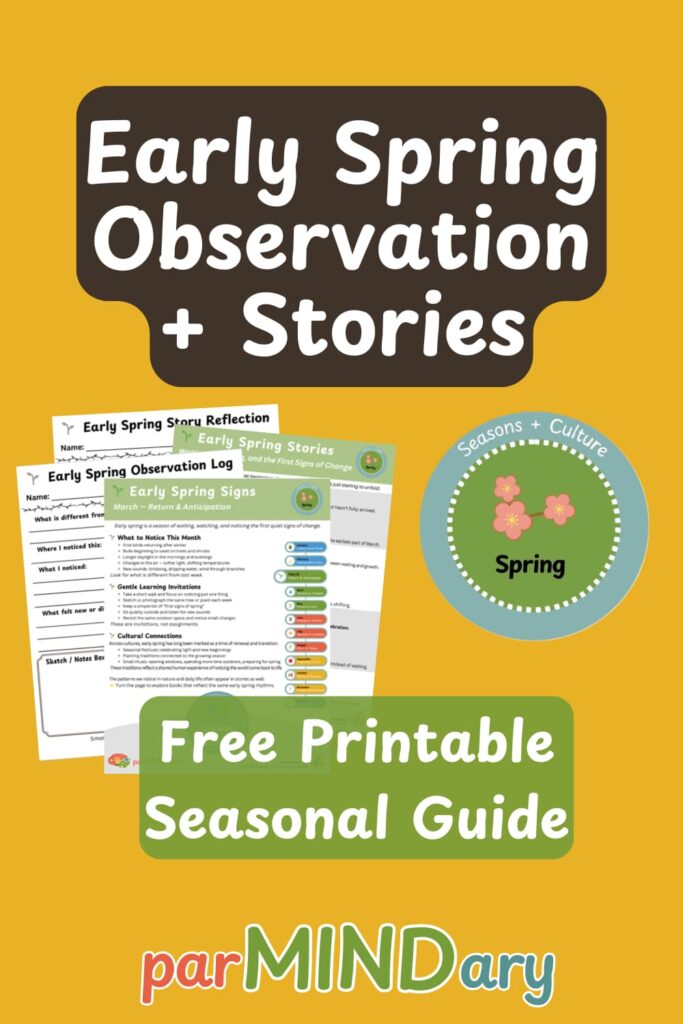
Download the Seasonal Observation + Story Guides from our Free Resource Library.