Part of the parMINDary Philosophy Tree → [Roots]
Table of Contents
- Why We Learn Through Books, Instead of Rigid Curriculum
- Our Position, Clearly Stated
- What We Mean by “Homeschooling With Books”
- What We Do Not Mean
- Why Books Work So Well for Learning
- How This Looks in Practice
- Why This Approach Aligns With Our Values
- Why We Don’t Fully Identify With Any One Method
- Choosing Our Own Path With Books
Why We Learn Through Books, Instead of Rigid Curriculum
Most homeschooling journeys involve curriculum choices to meet requirements. When nothing seems to fit, the questions naturally follow: What do we do instead? and “Will it be enough?
Our own path has included a variety of approaches–Montessori, Classical, and elements of Charlotte Mason. With a strongly independent learner, following a rigid set of rules simply hasn’t worked for us.
What has consistently worked is simple:
- “reading aloud“
- “talking about what we learn”
- “hands-on activities or exploration together”
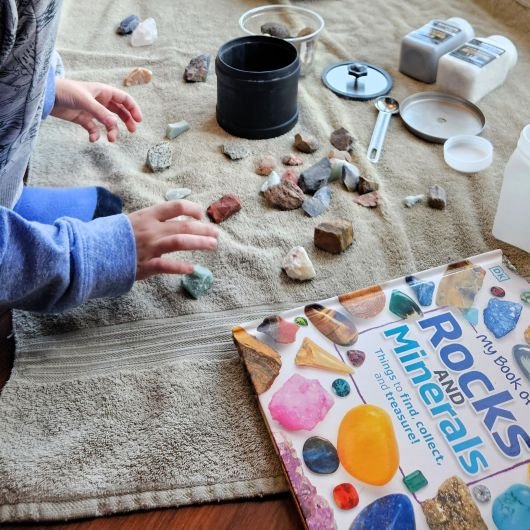
Homeschooling with books has become both our inspiration and our way of accessing the wider world– far beyond what we can see right outside our door.
Our Position, Clearly Stated
We choose homeschooling with books as the foundation of our learning. Rather than following a single, rigid curriculum, we prioritize reading widely, revisiting meaningful stories, and letting learning grow through conversation, connection, and exploration.
Books guide our choices, shape our discussions, and provide continuity across subjects. This is not a rejection of structure or planning—but a deliberate decision to let books, not programs, lead our homeschool.
What We Mean by “Homeschooling With Books”
When we say homeschooling with books, we don’t simply mean reading more. We mean using books as the primary way we encounter new ideas, explore subjects deeply, and create shared reference points in our learning life.
Books provide structure without rigidity. A story read aloud becomes a starting point for discussion, reflection, and connection across subjects.
Reference books help us return to topics over time. Fiction gives context and emotional meaning to history, science, and culture. Non-fiction offers depth and clarity when curiosity takes root.
This approach allows learning to unfold through continuity rather than checklists. We build understanding by revisiting ideas and noticing patterns across stories, allowing books to anchor both our planned studies and the unexpected rabbit trails that naturally arise.
What We Do Not Mean
Homeschooling with books does not mean unschooling, nor does it mean abandoning curriculum, planning, or structure.
I spend a significant amount of time planning our year of learning, with the understanding that we may shift when something isn’t working or when new interests emerge. We aren’t locked into a single curriculum; instead, we use resources flexibly, adding or setting aside tools as our schedule allows.
While my child never sees a checklist—because we learned early on that it didn’t serve him—I keep one for myself. My role is to guide, to plan thoughtfully, and to present learning opportunities in ways that are most likely to be received well.
Why Books Work So Well for Learning
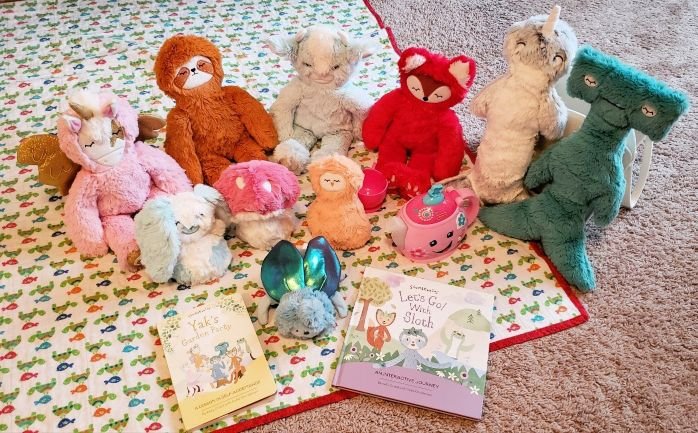
Books work so well for learning because they give information meaning. We don’t just encounter facts—we meet ideas through characters, settings, and stories that stay with us. Long after worksheets are forgotten, the stories we love remain, carrying their lessons with them.
Through reading, our learning becomes connected. A single story can touch history, geography, language, ethics, and science all at once. As we read widely, we begin to notice patterns—how themes repeat across cultures, how ideas evolve over time, how stories reflect the world we live in.
This kind of learning supports deep understanding, especially for independent learners. Books allow space for curiosity, reflection, and revisiting ideas at one’s own pace. They invite conversation rather than compliance, and they create a learning experience that feels cohesive, human, and enduring.
You can read more about this way of learning in our Reading & Patterns pillar page, where we explore how stories help children make sense of the world through connection and continuity.
How This Looks in Practice
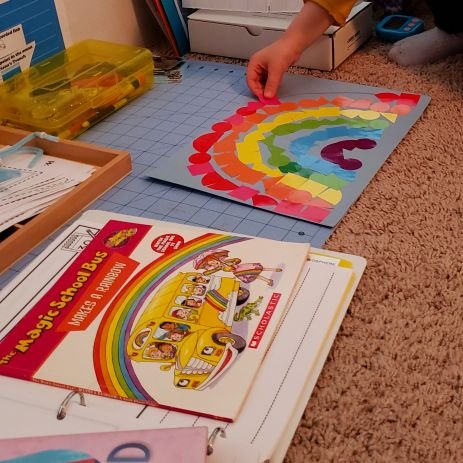
- A math stories book list with discussion or math problem practice after reading
- A science occupations study, matching books with hands-on projects
- Read aloud stories set in continents of the world, paired with a geography passport
- Historical fiction paired with non-fiction books and a timeline notebook
Why This Approach Aligns With Our Values
Learning this way allows us to build understanding through reading, reflections, and gentle inquiry, with our values at the center. We prioritize:
- “reading as the root of learning”
- “an emphasis on long-term thinking”
- “a human-centered approach to education”
Why We Don’t Fully Identify With Any One Method
Homeschooling was a new idea for me, shaped initially by my own public school experience. As we found our way, I explored several established approaches—beginning with Montessori, then Classical education, and later Charlotte Mason.
Each philosophy offered ideas we value, along with assumptions about structure and materials that didn’t fully align with our learning reality. Ultimately, none of these methods accounted for the needs of an asynchronous, independent learner—leading us to create a path that draws from many sources rather than committing to one.
Choosing Our Own Path With Books
And so, we have combined the things we love from each style, to create an eclectic path of our own. Homeschooling with books allows us to focus deeply on favorite subjects while thoughtfully integrating everything else.
Some of our favorite ways to learn along with books are:
- Interactive materials and games conveniently available for use
- The Timeline of Life and Periodic Table displayed as visual reference
- Deeply exploring history and documenting with a Timeline Notebook
- Socratic discussions after selected books to explore story elements
- Nature study and outdoor exploration
- Art and music appreciation through reading and hand-on activities
- Living books for Science and Math topics
- Cultural and language learning through sensory experiences
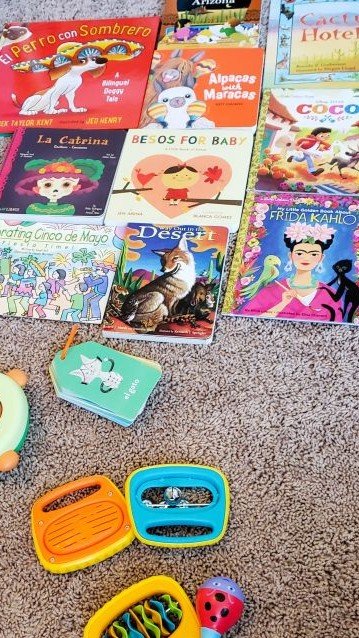
We do use some curriculum and tools too, in our own way to fill in any gaps. Our goal is to learn flexibly in the ways we enjoy, not conform to any one program.
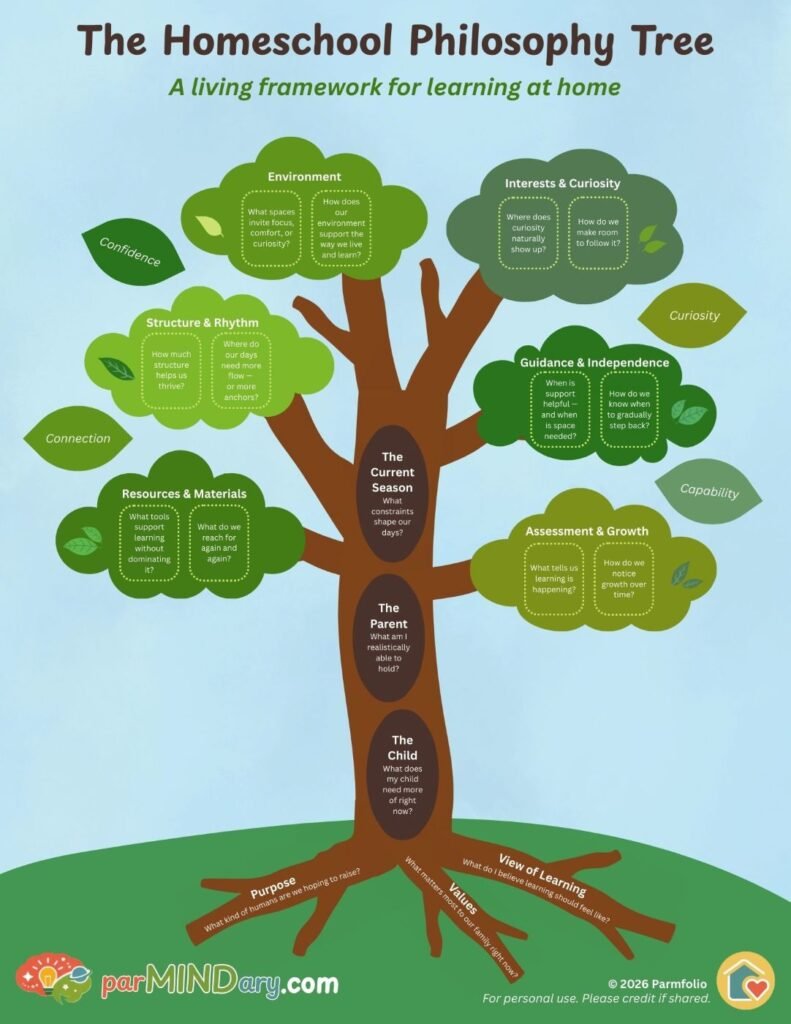
The visual below shows how our values, people, and choices connect– to grow a rich learning life that changes over time.
A printable PDF version with space to reflect is coming soon.
This is the path that we’ve chosen—and we’re thankful for the freedom to find a learning style that works for us.
Have you found yourself on a similar journey? Tell me in the comments below, what are your favorite ways to learn? I’d love to hear from you!
If you liked this post:
Visit our related Learning Through Stories pillar page
Check out our recent blog post about our favorite picture books
Or read more about our parMINDary values