Real World Homeschooling: Reading in Washington State
Table of Contents
- Homeschooling Reading Beyond Curriculum
- What Reading Really Is
- Making Room for Meaning
- What Reading Looks Like in Our Home
- How We Approach Reading Without a Traditional Curriculum
- Meeting Washington State Reading Requirements
- Documenting Reading in a Washington Homeschool
- A Simple Reading Reflection and Documentation Guide
- How Reading Connects to the Bigger Picture
- Closing Reflection
- Learning Through Stories Series: Real World Homeschooling in Washington State
Homeschooling Reading Beyond Curriculum
When I began to think about how to homeschool reading, my first question was about curriculum. I wondered what resources we could use; phonics programs, leveled readers, or comprehension workbooks? I began researching curriculum alternatives and how to properly teach reading at home.
In Washington State, reading is one of the required subjects for home-based instruction, so naturally parents ask: What does the Washington homeschool reading requirement actually mean? Is it a checklist of skills? A stack of finished books? A set of worksheets?
For us, reading has never been primarily about finishing a program. It has been about building the capacity to make meaning across time and text — slowly, deeply, and relationally.
This post is part of our series exploring each Washington homeschool subject through a story-based, book-centered lens. Instead of beginning with curriculum, we begin with the human act at the center of the subject.
And in reading, that act is meaning-making.
What Reading Really Is
Reading is not first a school subject. It is a human capacity.
Before it is phonics instruction or comprehension strategies, reading is the ability to interpret symbols, hold ideas in memory, notice patterns, and connect one moment to another. It is how we step into someone else’s world. It is how we move through time without leaving our chair.
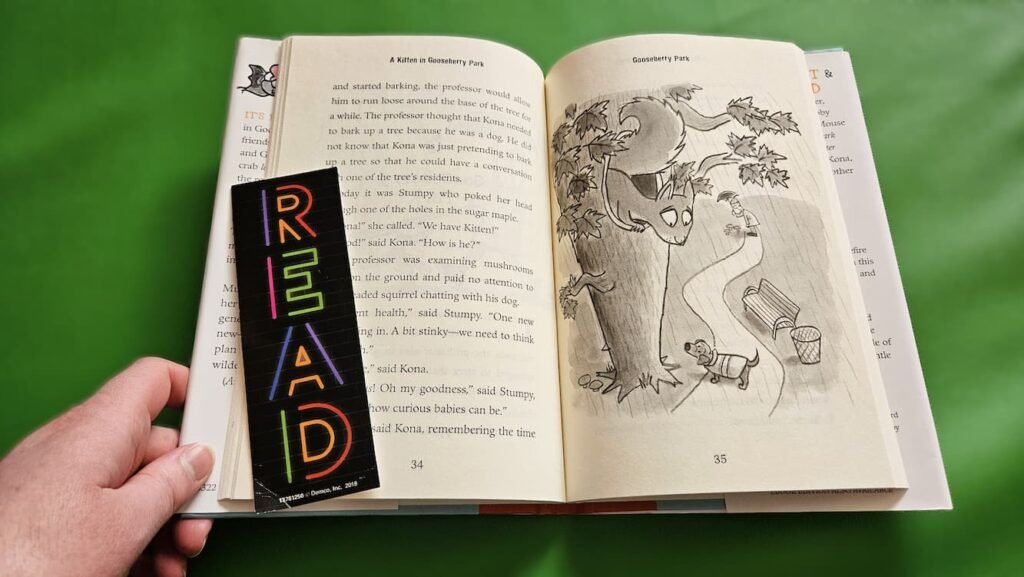
When we talk about homeschool reading, we are not only talking about decoding words correctly. We are cultivating:
- attention
- memory
- inference
- empathy
- pattern recognition
- and the ability to sit with ideas long enough for them to unfold
A textbook can support those skills. So can a read-aloud on the couch. So can a conversation about a chapter book over breakfast.
Reading develops the mind’s ability to move between the small and the large — from a single sentence to a whole story, from a moment in a plot to a theme that spans generations. In that way, reading is not separate from human development. It trains focus, builds language, and strengthens the inner architecture of thought.
This is why we anchor our homeschool reading in books — not as curriculum replacements, but as living companions in the formation of understanding.
Making Room for Meaning
In our home, reading did not begin with a formal lesson plan. It began with rhythm.
We read daily from the time my son was a baby — picture books on the floor, board books before naps, stories woven into bedtime routines. Long before I thought about documentation or requirements, we were building familiarity with language.
Around age three, I began noticing small moments: he would ask about words on signs or packaging, casually revealing that he was already decoding more than he admitted. His reading emerged quietly, as a byproduct of exposure and curiosity.
Making room for meaning meant:
- Choosing books slightly above his independent reading level for read-aloud time
- Allowing rereading of favorites without rushing forward
- Discussing stories informally before ever using a reflection sheet
- Letting curiosity lead us into new genres
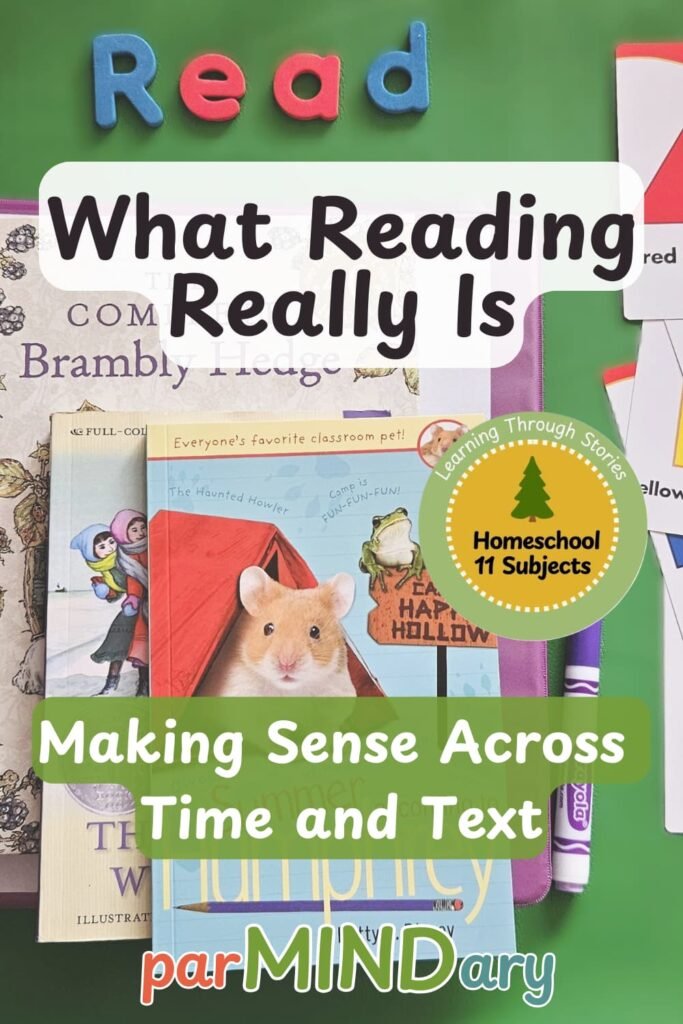
To support him, we added structure gently — alphabet recognition, phonics resources, and hands-on manipulatives. Not as pressure, but as scaffolding.
And as decoding became easy, our attention shifted toward comprehension — talking about setting, character motivation, conflict, and theme. Not as a test, but as conversation.
That is where meaning deepens.
What Reading Looks Like in Our Home
Reading in our home is both ordinary and intentional.
We read every day — often multiple times a day. Some reading is independent. Some is shared. Some supports other subjects. Some exists simply for delight.
Because we read aloud consistently from infancy, decoding emerged early and almost quietly. When my son began recognizing words on signs and packaging, it didn’t feel like a milestone to measure. It felt like a door opening.
As fluency developed, our reading life expanded naturally:
- Board books to picture books
- Phonics readers to early readers to chapter books
- Short stories to ongoing series
We keep simple reading logs to track progress, but the focus is not volume — it’s growth. Alongside fluency, we nurture comprehension through conversation: noticing character motivation, setting, conflict, and theme in age-appropriate ways.
Reading is not confined to a lesson block. It weaves through our days.
Check out some of our favorite book lists here:
- Favorite Board Books
- Favorite Picture Books
- Favorite Phonics Books
- Favorite Early Ready Chapter Books
- Favorite Read Aloud Chapter Book Series
How We Approach Reading Without a Traditional Curriculum
Although we do not follow a single boxed reading curriculum, we are not unstructured.
We add support where it serves growth.
Over the years, that has included:
- Alphabet and phonics resources
- Hands-on manipulatives
- Flash card word hops (our favorite for quick review)
- Occasional curriculum supplements used flexibly
Most weeks, I prepare one book for deeper discussion using a reflection page I created. These are not worksheets for my child to complete independently. They guide a Socratic-style conversation, and I document a short summary of what we noticed together.
The responsibility for structure rests with me — not as pressure, but as stewardship.
For more about our broader philosophy, see our post on Homeschooling With Books.
Meeting Washington State Reading Requirements
Reading is one of the eleven required subjects for home-based instruction in Washington State.
In practice, meeting the Washington homeschool reading requirement is straightforward when reading is already part of daily life.
We document through:
- Reading logs (parent read-alouds and independent reading)
- Themed reading challenges
- Reflection and discussion summaries
- Supplemental skill work when appropriate
- Evidence of reading embedded across subjects
When assessment time arrives, we choose the alternative assessment over standardized testing. We compile samples into a portfolio for review as required by Washington State law.
Reading, in other words, is both lived and recorded.
Documenting Reading in a Washington Homeschool
Our documentation is intentionally simple.
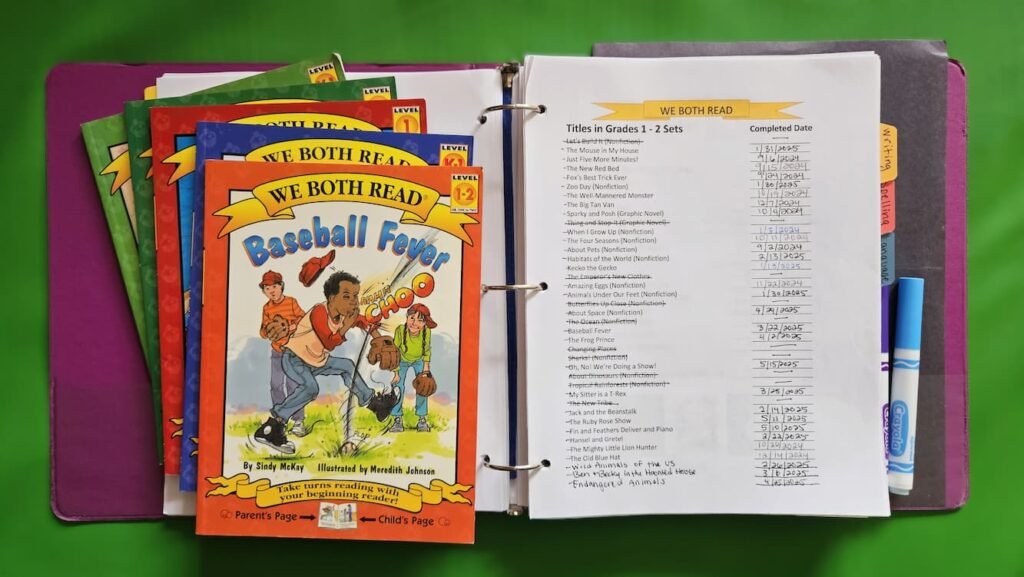
Reading Logs
We track title and start/finish dates. Parent read-alouds and independent reading are logged separately. I also use an app through our library, and am able to print a report of all our completed books for the year.
Reading Challenges
These are themed or seasonal collections of books — either planned by me, or through an outside source — that encourage breadth and exploration.
Reading Reflection Pages
Each year I select a small number of books for deeper analysis. We discuss character, setting, conflict, theme, and literary elements. I record a short agreed-upon summary of our conversation to demonstrate reading comprehension.
These records become part of our annual portfolio.
Books are not just the medium of learning — they become the documentation of it.
(Documentation tools and curated book lists will be available in the Library soon.)
A Simple Reading Reflection and Documentation Guide
We are preparing a free Homeschool Reading Guide to help families reflect on and document their reading practice.
It will include:
- A curated book list
- Reading logs
- A themed reading challenge
- Reflection pages centered on the question: What meaning did we notice?
Designed especially for Washington families, this guide reflects the tools we use in our own home to meet documentation and assessment requirements with clarity and calm.
(Join the email list to be notified when it’s available.)
How Reading Connects to the Bigger Picture
Reading trains the mind to move between scales.
From word to sentence.
From chapter to narrative arc.
From moment to theme.
Across subjects, children are always learning to move from small to large:
- From unit to system
- From moment to era
- From habit to lifetime
Our deeper exploration of scale — including the Capstone series From Atoms to Galaxies: Learning Through Scale — will live under the Reading & Patterns pillar, where we examine how patterns unfold across domains and across time.
Reading prepares the mind for that movement.
Closing Reflection
When we begin homeschooling, it’s easy to believe that reading must look official to be legitimate.
But consistency matters more than packaging. Conversation matters more than completion charts. Meaning matters more than speed.
If you want freedom in your homeschool reading — you are allowed to claim it.
You can:
- use curriculum and adapt it
- skip curriculum and build your own structure
- move slowly
- reread favorites
- document simply
- trust steady growth
Washington’s requirements are real — but they are manageable. They do not require urgency. They require intention.
Reading is not a race toward proficiency. It is a long companionship with language.
This is one part of a larger picture. We’re building that picture slowly, one subject at a time.
Learning Through Stories Series: Real World Homeschooling in Washington State
Part of the Learning Through Stories Series
Capstone: From Atoms to Galaxies