Real World Homeschooling: Writing in Washington State
Table of Contents
- Homeschooling Writing Beyond Curriculum
- What Writing Really Is
- Making Room for Thought
- What Writing Looks Like in Our Home
- How We Approach Writing Without a Traditional Curriculum
- Meeting Washington State Writing Requirements
- Documenting Writing in a Washington Homeschool
- A Simple Writing Reflection and Documentation Guide
- How Writing Connects to the Bigger Picture
- Closing Reflection
- Learning Through Stories Series: Real World Homeschooling in Washington State
Homeschooling Writing Beyond Curriculum
When I first considered how to approach homeschool writing, my instinct was to search for the right starting point. With young children, most curriculum options focus heavily on alphabet drills. Later programs often feel equally repetitive — longer assignments, but still disconnected from real thought.
In Washington State, writing is one of the required subjects for home-based instruction. Naturally, parents ask:
What does the Washington homeschool writing requirement actually mean?
Is it a checklist of skills? A stack of finished assignments? A formal writing curriculum?
In our home, writing has never begun with a program. It began with the human need to record thought.
This post is part of our series exploring each Washington homeschool subject through a story-based, book-centered lens. Instead of beginning with curriculum, we begin with the human act at the center of the subject.
And in writing, that act is thinking — and recording.
What Writing Really Is
Writing is not first a school subject. It is a human capacity.
Before it is written instruction or grammar strategies, writing is the ability to convert ideas into symbols, record memories, and share our thoughts. It is how we communicate with others without saying a word.
When we talk about homeschool writing, we are not only talking about proper grammar and sentence structure. We are cultivating:
- idea generation
- organization of thought
- language selection
- clarity of expression
- audience awareness
- revision and refinement
- patience to stay with a thought long enough to shape it
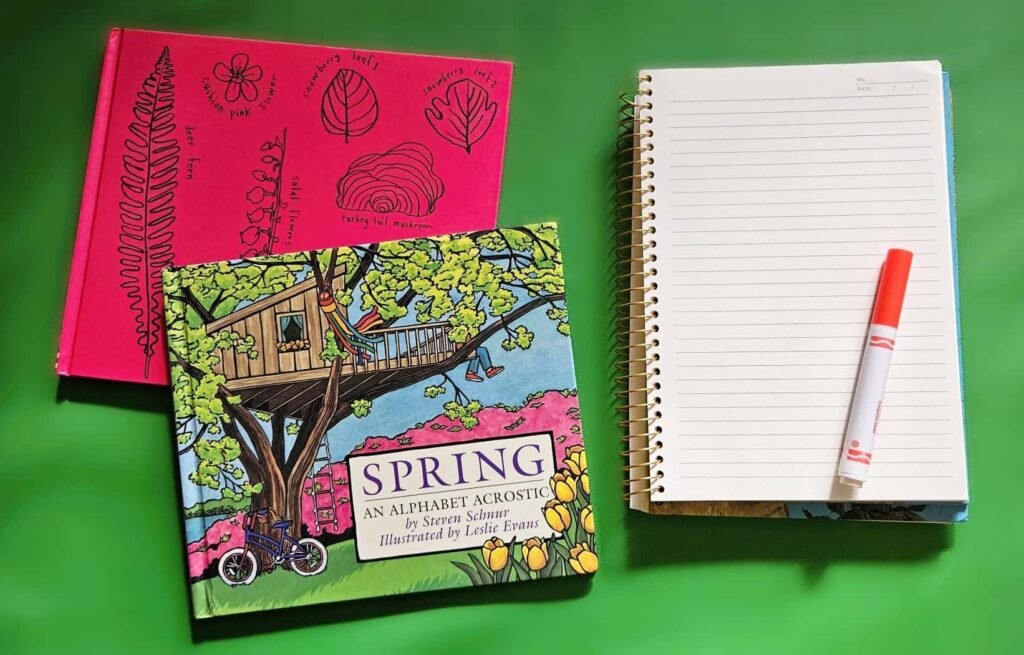
A workbook can support those skills. So can a writing a journal about our day. So can dictating an oral story.
Writing develops the mind’s ability to move between the small and the large — from a single idea to a structured paragraph, from a fleeting thought to a preserved memory, from personal experience to cultural record.
In that way, writing is not separate from human development. It builds our capacity to clarify what we think and to communicate it across time.
This is why we anchor our homeschool writing in books — not as replacements for curriculum, but as living examples of thought made visible.
Making Room for Thought
In our home, writing did not begin with formal lessons. It began with exposure.
As we discussed in our homeschool reading post: What Reading Really Is: Making Sense Across Time and Text.
Books were everywhere. Picture books on the floor. Board books before naps. Stories woven into bedtime routines. Long before we thought about documentation or requirements, we were building familiarity with language.
Written words began to feel like a kind of code — mysterious at first, then gradually decipherable. Letters were symbols. Words carried meaning. Pages held entire worlds.
Making room for thought meant:
- keeping writing tools available
- encouraging oral storytelling with a parent as recorder
- discussing stories informally before ever introducing a reflection page
- letting curiosity about written symbols guide exploration
As letter formation became easier, our attention shifted toward purpose — forming words to record real ideas. Not as a test, but as expression.
What Writing Looks Like in Our Home
Writing in our home is both ordinary and intentional.
We may not write every day, but we make space for it consistently. Some writing is independent. Some is shared. Some supports other subjects. Sometimes it is completely unplanned.
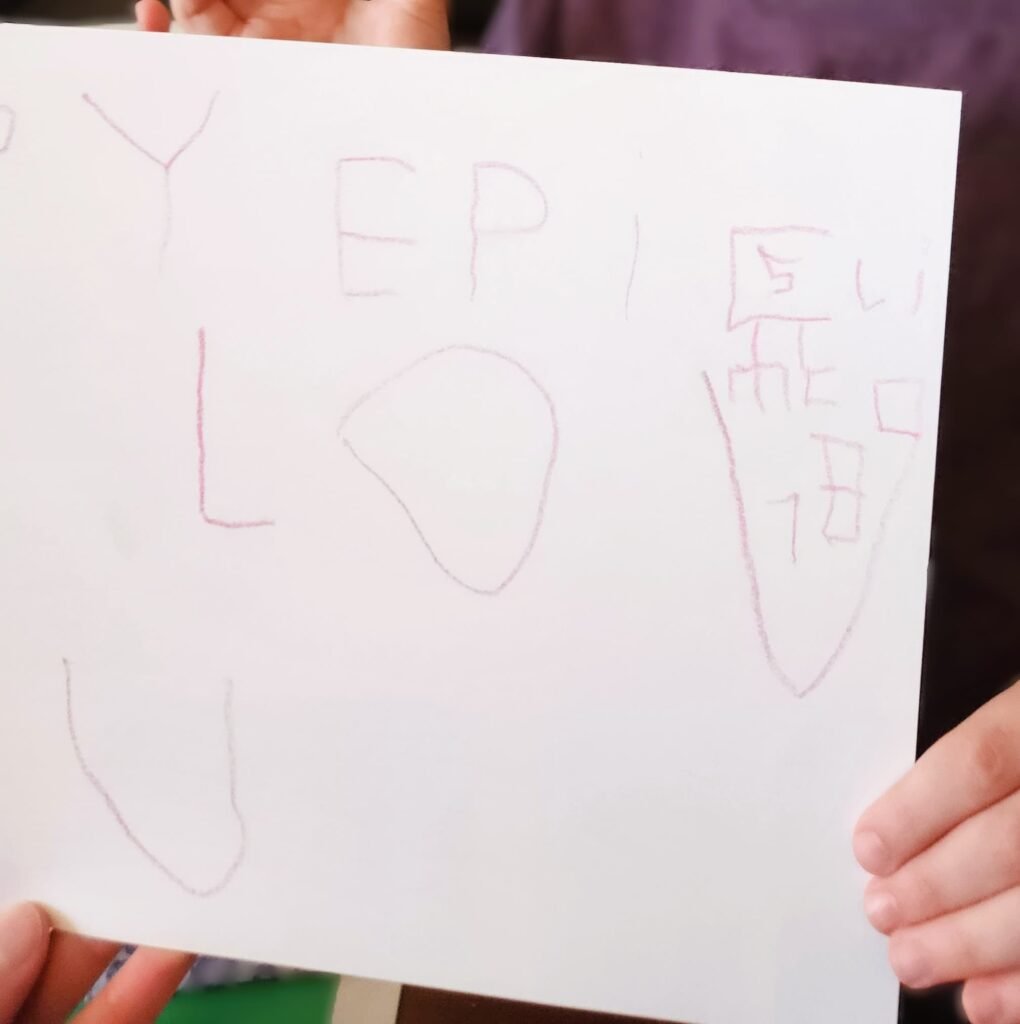
Although my son began reading early, fine motor coordination developed more slowly. So we focused first on hand strengthening, then short written thoughts. Longer compositions were supported through verbal dictation or typing.
As written fluency developed, our world expanded naturally:
- Writing short notes to a friend or family member
- Inputting terms to a search engine independently
- Recording thoughts in sentences.
We keep samples to track progress and ability, but the focus is not on milestones by grade — it’s growth. Alongside writing ability, we nurture thought expression, memory keeping, and written storytelling in age-appropriate ways.
Writing is not confined to a lesson block. It weaves through our days.
Check out some of our favorite book lists here:
- Favorite Books about Authors
- Favorite Books about Written Language
How We Approach Writing Without a Traditional Curriculum
Although we do not follow a single boxed writing curriculum, we are not unstructured. Structure exists — it simply lives in relationship rather than in rigid sequencing.
We add support where it serves growth.
Over the years, that has included:
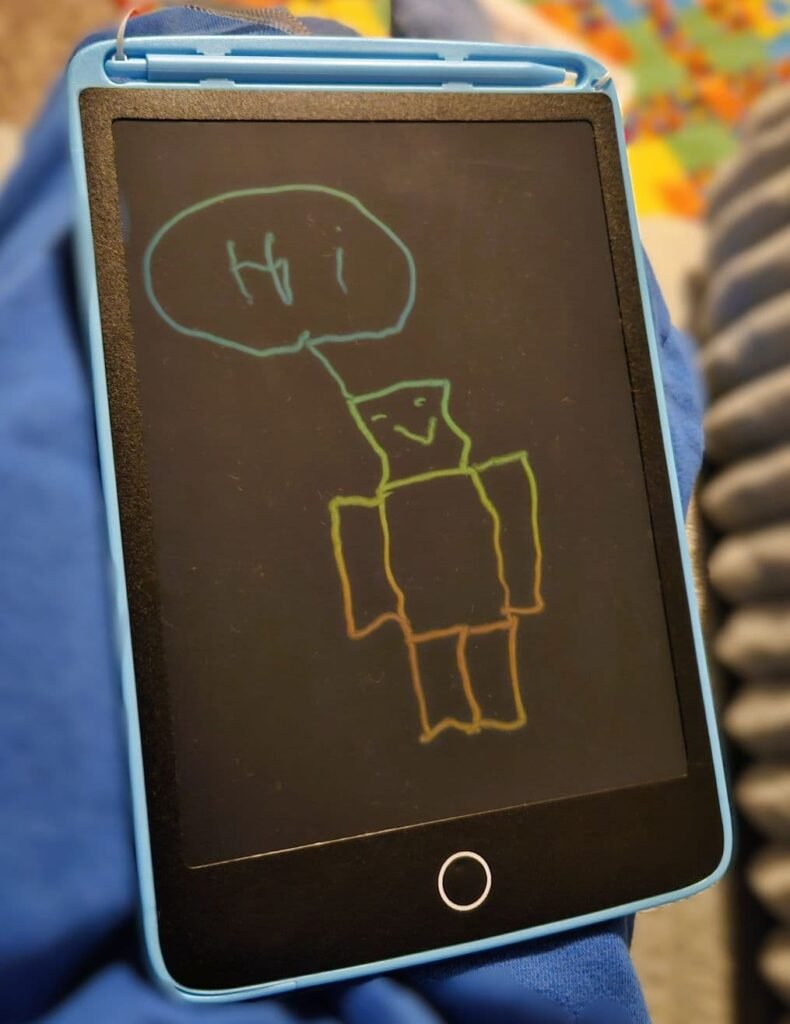
- White boards and writing tablets
- Handwriting activity books
- Guided oral storytelling
- Occasional curriculum supplements used flexibly
Most weeks, I prepare a writing prompt or reflection page as an opportunity for written expression. These are not worksheets for my child to complete independently. They offer inspiration, and a jumping off point for any sort of written record.
The responsibility for structure rests with me — not as pressure, but as stewardship.
For more about our broader philosophy, see our post on Homeschooling With Books.
Meeting Washington State Writing Requirements
Writing is one of the eleven required subjects for home-based instruction in Washington State.
In practice, meeting the requirement for homeschool writing in Washington is straightforward when writing is already part of daily life.
We document through:
- Reading logs (books about authors or about written language)
- Themed writing prompts
- Reflection and discussion summaries
- Written letters
- Supplemental skill work for penmanship or punctuation as needed
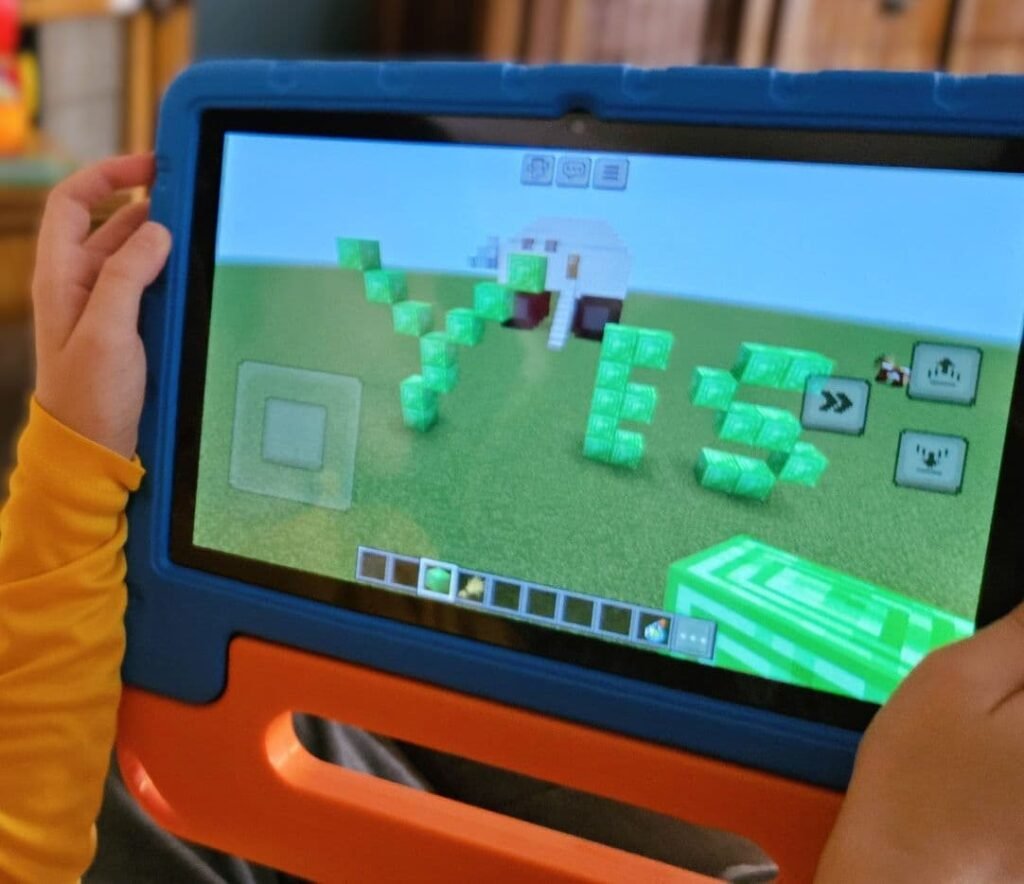
- Evidence of writing or typing embedded across subjects
When assessment time arrives, we choose the alternative assessment over standardized testing. We compile samples into a portfolio for review as required by Washington State law.
Writing, in other words, is both lived and recorded.
Documenting Writing in a Washington Homeschool
Our documentation is intentionally simple.
Reading Logs
We keep a record or books read about authors and written language.
Writing Journal
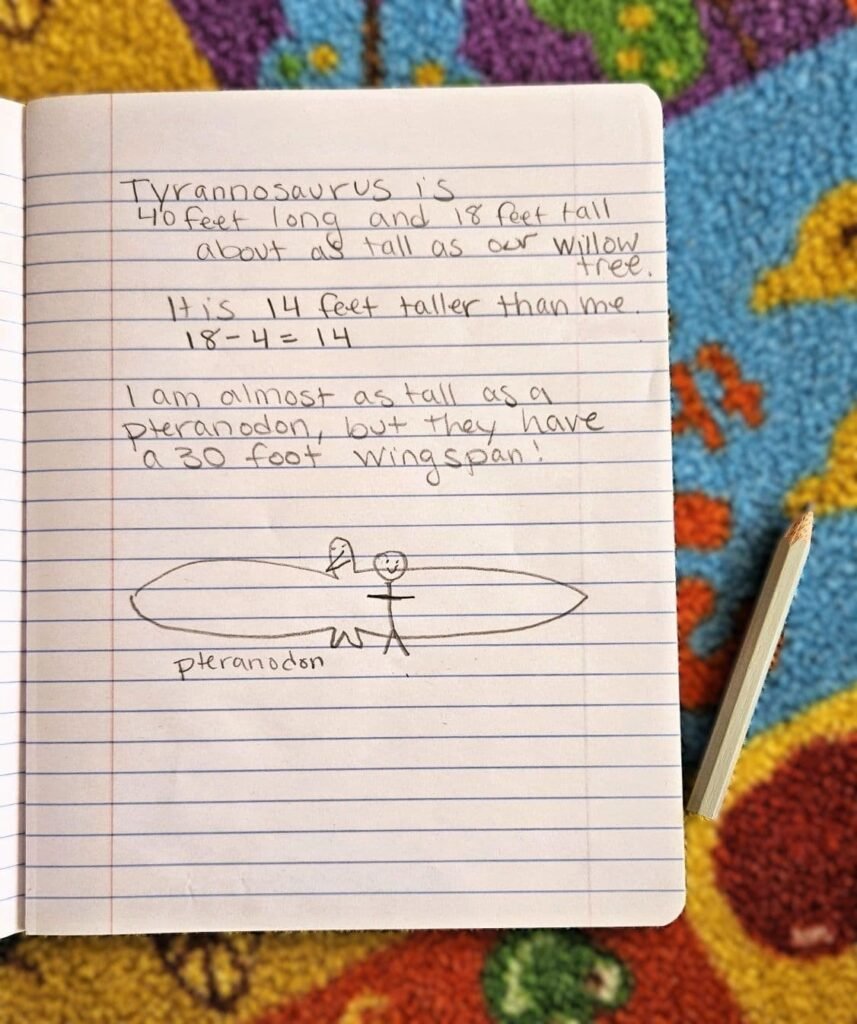
A writing journal gives the opportunity for themed writing prompts, or random inspiration from our day.
Writing Reflection Pages
A writing reflection page may be written by either child or parent, giving an opportunity to analyze writing or synthesize a new composition together.
Letters and Writing Samples
Copies of letters written or written work for other subjects, serve as samples of different writing styles.
These records become part of our annual portfolio.
Books are not just the medium of learning — they become the documentation of it.
(Documentation tools and curated book lists will be available in the Library soon.)
A Simple Writing Reflection and Documentation Guide
We are preparing a free Homeschool Writing Reflection Guide to help families reflect on and document their writing practice.
It will include:
- A curated book list
- Reading log
- Themed writing prompts
- Reflection pages centered on the question: What thoughts can I record?
Designed especially for Washington families, this guide reflects the tools we use in our own home to meet documentation and assessment requirements with clarity and calm.
(Join the email list to be notified when it’s available.)
How Writing Connects to the Bigger Picture
Writing trains the mind to move between scales.
From idea to paragraph.
From oral storytelling to written narrative.
From event to cultural memory.
Across subjects, children are always learning to move from small to large:
- From unit to system
- From moment to era
- From habit to lifetime
Our deeper exploration of scale — including the Capstone series From Atoms to Galaxies: Learning Through Scale — will live under the Reading & Patterns pillar, where we examine how patterns unfold across domains and across time.
Writing prepares the mind for that movement.
Closing Reflection
When we begin homeschooling, it’s easy to believe that writing must look official to be legitimate.
But consistency matters more than packaging. Conversation matters more than completion charts. A record of thinking matters more than speed.
If you want freedom in your homeschool writing, you are allowed to claim it.
You can:
- use curriculum and adapt it
- skip curriculum and build your own structure
- move slowly
- write about what genuinely interests your child
- document simply
- trust steady growth
Washington’s requirements are real — but they are manageable. They do not require urgency. They require intention.
Writing is not primarily about penmanship or performance. It is about preserving thought across time.
This is one part of a larger picture. We’re building that picture slowly, one subject at a time.
Learning Through Stories Series: Real World Homeschooling in Washington State
Part of the Learning Through Stories Series
- Reading
- Writing
- Language
- Spelling
- Math
- Science
- Social Studies
- History
- Occupational Education
- Health
- The Arts (Art | Music)