
A Curated Book List
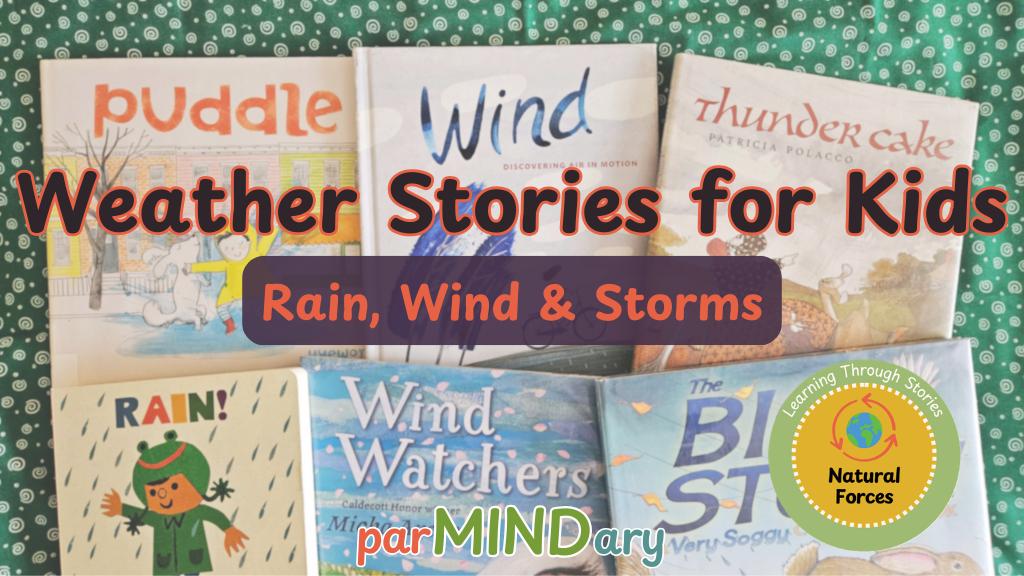
Looking for rain, wind, and storm stories for kids? This curated collection of weather stories invites noticing how weather changes—before, during, and after it arrives. Through picture books about rain, children’s stories about wind, and books that capture shifting skies and storms, this list supports both reading and observation. Whether you’re exploring spring’s variable weather or building a gentle introduction to Earth science, these stories offer a way to connect what children see, hear, and feel with patterns in the natural world.
In Simple Terms:
Weather stories bring into focus how natural forces shape the world around us. Through rain, wind, and storms, these stories reveal patterns of change—how weather unfolds and how we learn to see it over time.
At a Glance: Rain, Wind, and Change
- Sensory experience (what we see, hear, and feel)
- Change and unpredictability
- Visible patterns (before/after, movement, sound)
- How we respond to weather
Why this matters:
Weather is something we experience first—something to feel and observe—not just something to study or explain.
🌧️ Introducing Weather as a Natural Force
Weather is something we experience before we ever try to explain it. Here in the Pacific Northwest, it often feels variable—rain arriving and passing, wind rising and settling, skies shifting throughout the day. In spring especially, the weather rarely stays the same for long. We step outside with a coat or umbrella, but we also begin to notice: how quickly the rain gauge fills, how the trees move in the wind, how a storm sounds as it passes by.
Over time, these moments become familiar. We read stories about rain, wind, and storms not to categorize them, but to return to them—to notice what changes, what repeats, and how we respond. Weather is not something we control. It is a force of nature—something we learn to pay attention to, through what we see, hear, and feel.
Disclosure: This post contains affiliate links. As an Amazon Associate, I earn from qualifying purchases at no additional cost to you.
🌧️ Books About Rain (Picture Books)
Rain is one of the most familiar ways children experience change in the natural world. It begins quietly or suddenly, shifts the light and sound of a place, and leaves something different behind. These stories invite children to notice what happens before, during, and after the rain—how it feels, what it changes, and where it goes.
Looking for stories about Spring?
Check out our other posts about Spring here.
Rain! – Linda Ashman
Same rain, different experiences
Why this book matters: Different perspectives unfold across the same rainy day, helping children notice how experience shapes meaning.
Themes / patterns: perspective, contrast, mood and weather, shared experience, city life in the rain.
Age range: 1–4
Find Rain! on Amazon
Puddle – Hyewon Yum
A puddle becomes something more
Why this book matters: A small, ordinary moment opens into imagination, inviting children to see possibility in what first feels disappointing.
Themes / patterns: imagination, transformation, small moments, shifting perspective, play in nature
Age range: 4–7
Find Puddle on Amazon
Come On, Rain! – Karen Hesse
Waiting for rain on a hot day
Why this book matters: The buildup before rain—and the joy when it arrives—captures weather as a shared emotional experience.
Themes / patterns: anticipation, waiting, relief, community, heat → rain transition
Age range: 4–8
Find Come On, Rain! on Amazon
The Rhythm of the Rain – Grahame Baker-Smith
A raindrop’s journey through the water cycle
Why this book matters: Rain becomes part of a larger story, connecting a single drop to rivers, oceans, and sky.
Themes / patterns: water cycle, interconnected systems, movement of water, continuity, nature patterns
Age range: 4–8
Find The Rhythm of the Rain on Amazon
When Rain Falls – Melissa Stewart
How animals respond when rain arrives
Why this book matters: Animal responses reveal how weather shapes daily life beyond human experience.
Themes / patterns: animal behavior, adaptation, environment, cause and effect, living with weather
Age range: 4–8
Find When Rain Falls on Amazon
Raindrops Roll – April Pulley Sayre
Close-up details of rain in nature
Why this book matters: Close observation is encouraged through vivid imagery that slows the moment and highlights tiny details.
Themes / patterns: observation, detail in nature, light and reflection, slowing down, noticing small changes
Age range: 4–8
Find Raindrops Roll on Amazon
Bringing the Rain to Kapiti Plain – Verna Aardema
A patterned story of waiting for rain
Why this book matters: A repeating pattern builds anticipation while showing how many parts must align before change happens.
Themes / patterns: pattern and repetition, anticipation, cause and effect, interdependence, storytelling rhythm
Age range: 3–8
Find Bringing the Rain to Kapiti Plain on Amazon
A Place for Rain – Michelle Schaub
Where rain goes—and how we help
Why this book matters: Attention shifts from falling rain to where it goes next, introducing environmental awareness and human responsibility.
Themes / patterns: taking action, environmental care, water systems, responsibility, human impact on nature
Age range: 4–8
FindA Place for Rain on Amazon
If rain shows us how water moves, wind reveals movement we can’t see—only feel and watch as it reshapes the world around it.
🌧️ Books About Wind (Children’s Stories)
Rain is one of the most familiar ways children experience change in the natural world. It begins quietly or suddenly, shifts the light and sound of a place, and leaves something different behind. These stories invite children to notice what happens before, during, and after the rain—how it feels, what it changes, and where it goes.
Looking for stories about Seasonal Learning?
Check out our Seasons & Culture pillar page here.
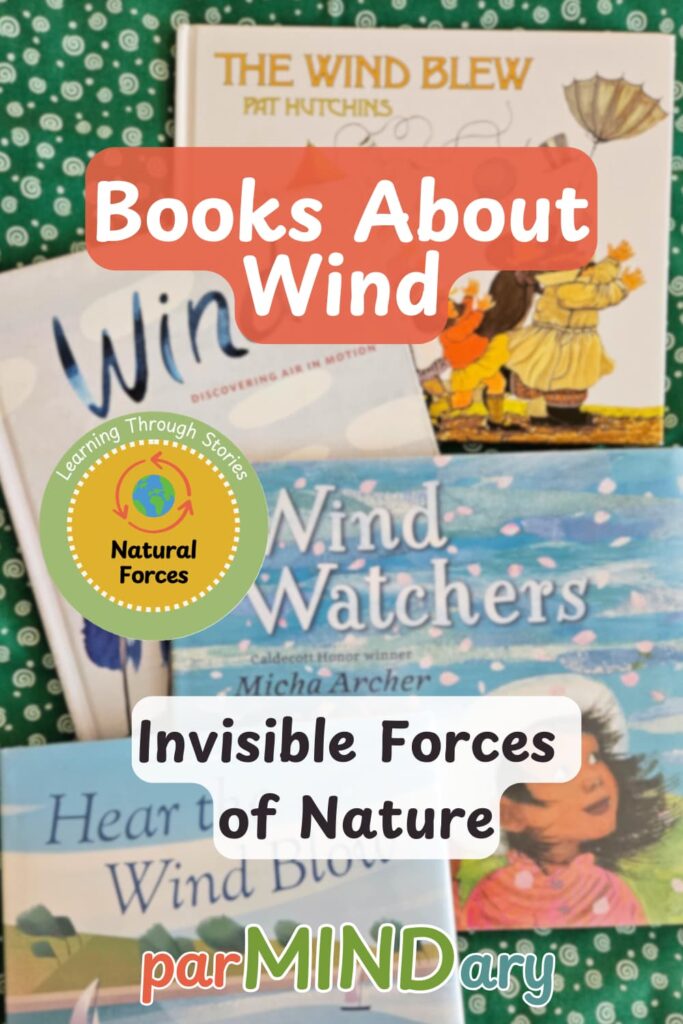
Wind cannot be seen on its own, only through what it moves. It lifts, pushes, scatters, and shapes the world in ways we notice indirectly—through swaying trees, flying hats, and shifting skies. These stories invite children to pay attention to what the wind reveals by what it carries and changes.
The Wind Blew – Pat Hutchins
Wind carries everything away in sequence
Why this book matters: A clear cause-and-effect chain makes the invisible force of wind easy to follow and understand.
Themes / patterns: cause and effect, sequence, accumulation, movement of objects, predictability
Age range: 2–6
Find The Wind Blew on Amazon
Like a Windy Day – Frank Asch
A child moves like the wind
Why this book matters: Imaginative play connects the feeling of wind to the child’s own movement and experience.
Themes / patterns: imagination, embodiment, movement, play, connection to nature
Age range: 4–7
Find Like a Windy Day on Amazon
Wind – Marion Dane Bauer
Wind moves through everyday moments
Why this book matters: Simple language and scenes help children notice wind as part of ordinary life.
Themes / patterns: everyday observation, subtle change, presence of wind, noticing
Age range: 4–6
Find Wind on Amazon
Hear the Wind Blow – Doe Boyle
Wind described through sound and rhythm
Why this book matters: Lyrical language draws attention to how wind is heard and felt, not seen.
Themes / patterns: sensory experience, sound, rhythm, poetic language, atmosphere
Age range: 4–8
Find Hear the Wind Blow on Amazon
Brave Irene – William Steig
A girl pushes through a powerful wind
Why this book matters: Wind becomes a force to struggle against, showing resistance, persistence, and determination.
Themes / patterns: wind as force, resistance, perseverance, challenge, human vs. nature
Age range: 3–8
Find Brave Irene on Amazon
Wind Watchers – Micha Archer
Children observe wind in many forms
Why this book matters: Careful observation reveals how wind appears differently across places and seasons.
Themes / patterns: observation, seasonal change, variety, noticing patterns, quiet attention
Age range: 3–7
Find Wind Watchers on Amazon
Wind Watchers also connects to patterns we return to across the whole year.
Wind: Discovering Air in Motion – Olga Fadeev
How air moves to create wind
Why this book matters: Scientific ideas are introduced in a visual, accessible way that connects experience to explanation.
Themes / patterns: air movement, early physics, cause and effect, systems thinking, explanation of forces
Age range: 7–11
Find Wind: Discovering Air in Motion on Amazon
The Boy Who Harnessed the Wind – William Kamkwamba
Using wind to solve a real problem
Why this book matters: A true story shows how understanding wind can lead to innovation and meaningful change.
Themes / patterns: problem-solving, innovation, science in action, perseverance, human response to nature
Age range: 5–10
Find The Boy Who Harnessed the Wind on Amazon
While wind shows movement in the air, storms bring multiple forces together—shifting quickly from calm to intensity and back again.
🌧️ Books About Storms and Changing Weather
Rain is one of the most familiar ways children experience change in the natural world. It begins quietly or suddenly, shifts the light and sound of a place, and leaves something different behind. These stories invite children to notice what happens before, during, and after the rain—how it feels, what it changes, and where it goes.
Explore Natural Forces
Looking for stories tied to a science themes?
You may also enjoy story-based science explorations
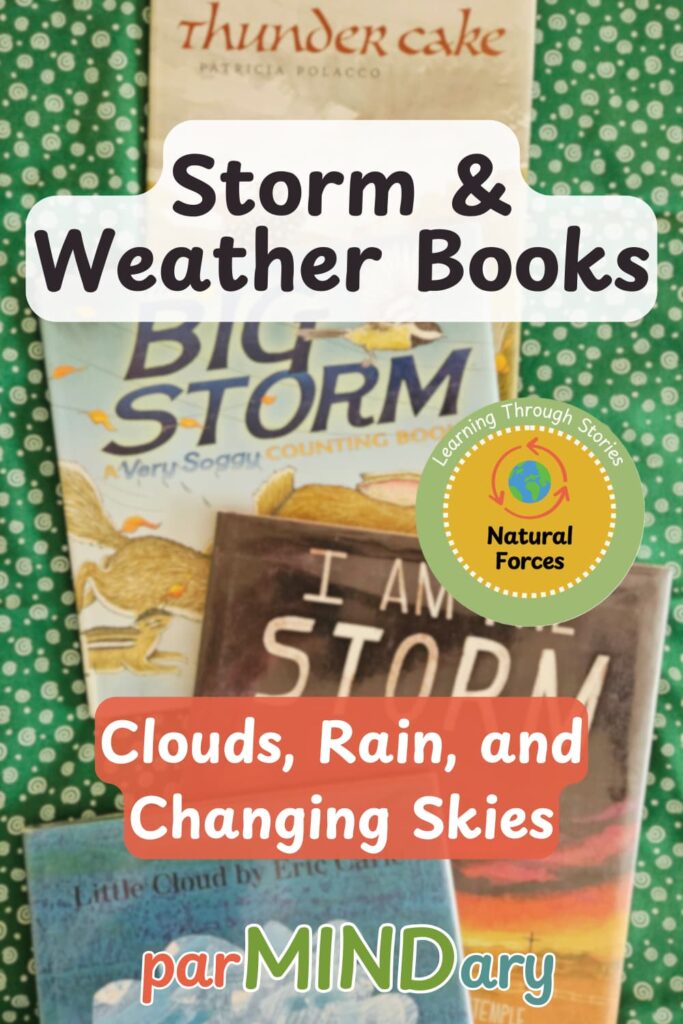
Storms bring sudden shifts—darkening skies, rising wind, falling rain—before settling back into calm. These stories help children notice what changes, what builds, and what remains, tracing the movement from before, through, and after the storm.
Thunder Cake – Patricia Polacco
Facing fear as a storm approaches
Why this book matters: Fear of storms is gently transformed through action, reframing thunder as something to move through rather than avoid.
Themes / patterns: fear and courage, anticipation, reframing experience, family support, storm buildup
Age range: 3–8
Find Thunder Cake on Amazon
The Big Storm: A Very Soggy Counting Book – Nancy Tafuri
Animals gather as the storm arrives
Why this book matters: Counting and pattern combine with the steady buildup of a storm, making change visible and predictable for young readers.
Themes / patterns: counting, accumulation, gathering, anticipation, pattern and sequence
Age range: 1–4
Find The Big Storm: A Very Soggy Counting Book on Amazon
Storm is Coming! – Heather Tekavec
Signs of a storm appear one by one
Why this book matters: The contrast between what is seen and what is ignored helps children recognize early signs of changing weather.
Themes / patterns: observation, warning signs, contrast, prediction, before-the-storm patterns
Age range: 2–5
Find Storm is Coming! on Amazon
After the Storm – Nick Butterworth
What remains after the storm passes
Why this book matters: Attention shifts to the aftermath, showing how environments and emotions settle and recover.
Themes / patterns: aftermath, recovery, calm after change, reflection, environment shifts
Age range: 1–7
Find After the Storm on Amazon
I Am the Storm – Jane Yolen
Preparing for storms with confidence
Why this book matters: Simple, reassuring language introduces preparedness, helping children feel capable rather than afraid.
Themes / patterns: preparedness, safety, confidence, emotional resilience, human response to nature
Age range: 3–5
Find I am the Storm on Amazon
The Cloud Book – Tomie dePaola
Clouds signal changing weather
Why this book matters: Cloud types are connected to weather patterns, helping children notice signs that a storm may be coming.
Themes / patterns: observation, prediction, cloud patterns, weather signals, noticing change
Age range: 4–7
Find The Cloud Book on Amazon
Little Cloud – Eric Carle
Clouds shift and transform
Why this book matters: Gentle transformations show how change happens gradually, not only in dramatic storms.
Themes / patterns: transformation, imagination, slow change, shape-shifting, quiet observation
Age range: 1–3
Find The Cloud Book on Amazon
Across rain, wind, and storms, weather reveals patterns of movement and change—inviting us to notice not just what happens, but how it unfolds over time.
🌧️ What to Notice in Changing Weather
Weather invites us to pay attention. Some shifts happen slowly, others all at once—but each leaves clues before, during, and after.
You might begin by simply noticing:
- What changes before the rain begins?
- How does the wind show itself—what does it move, but not become?
- What stays the same, even when everything feels different?
- What happens after?
Rather than explaining these moments, let them unfold. Over time, patterns begin to appear—familiar sequences, repeated changes, and quiet connections between air, water, and the world around you.
And while we cannot change the weather itself, we can notice how we respond to it—whether by waiting, preparing, adapting, or finding ways to work with what comes.
Gentle Learning Invitations
These small invitations are not meant to direct learning, but to create space for noticing. Weather becomes meaningful when it is experienced, not just observed from a distance.
• Step outside just before the rain begins
Notice the air, the light, and the stillness or movement around you. What feels different before anything has fallen?
• Listen for the wind before you see it
Close your eyes and focus on sound—leaves, branches, distant movement. What does the wind reveal first?
• Watch puddles form—and slowly disappear
After the rain, return to the same place. Where does the water go? What changes over time?
• Notice clouds shifting across the sky
Look up for a few quiet minutes. How do shapes, spacing, and movement change?
• Pay attention to how people respond to weather
Some wait, some prepare, some take action. What do you notice in stories—and in your own daily life?
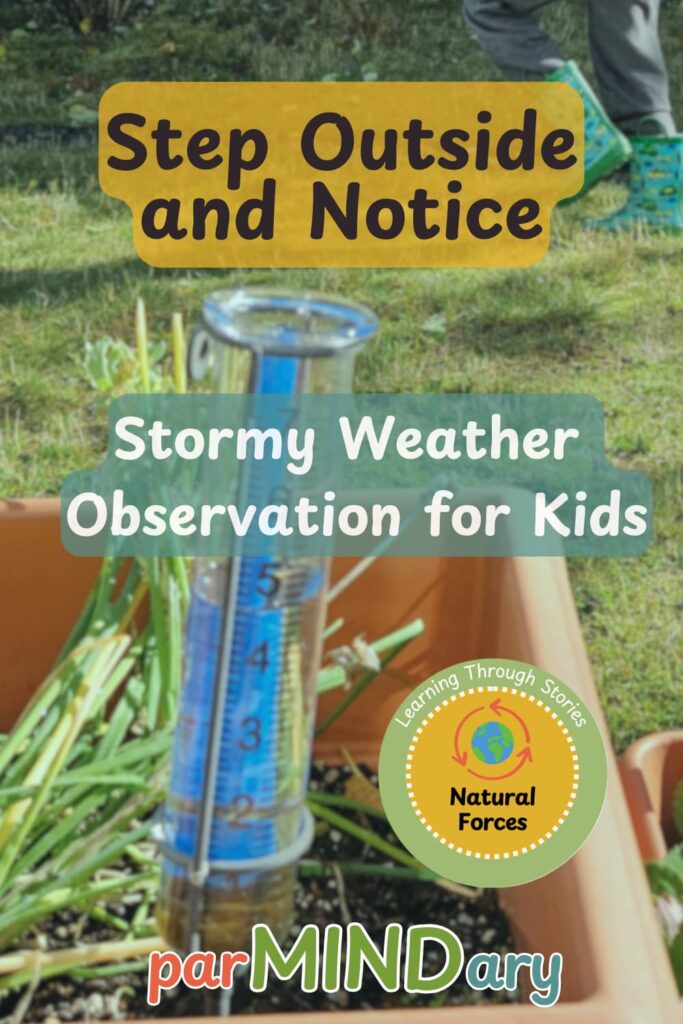
A nature journal or simple seasonal calendar can gently hold these observations over time. A few words, a quick sketch, or a repeated place to check each day is enough.
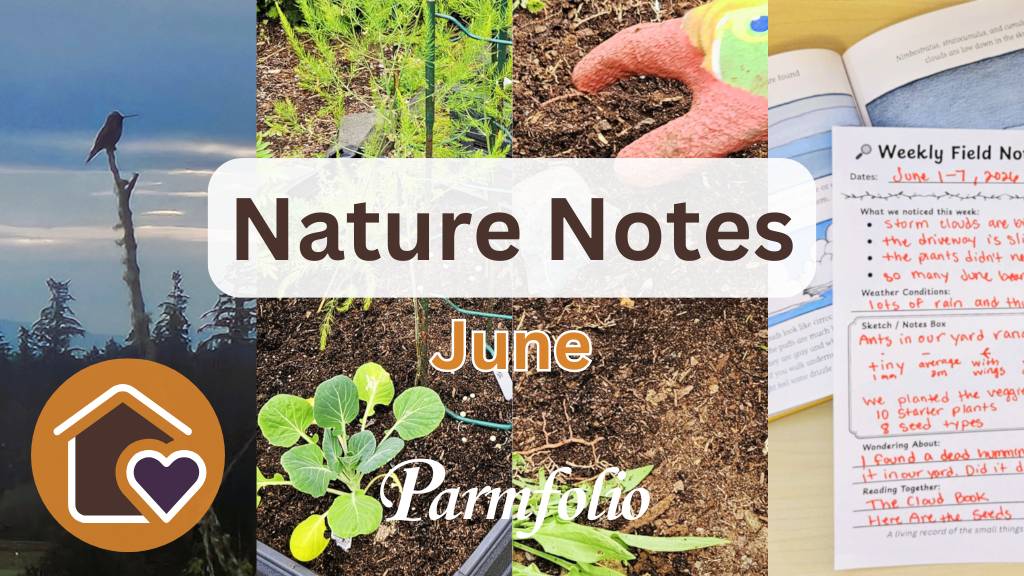
We recorded our own observations of late spring storms in the Parmfolio Learning Lab Field Journal.
🌧️ Science: Weather as a Natural Force
The patterns you notice in rain, wind, and storms are not separate events—they are part of how air and water move across the Earth.
Wind carries air from one place to another. Rain returns water to the ground. Storms bring these movements together, shifting conditions quickly before settling again. What feels like change from moment to moment is also part of a larger, ongoing system of natural forces.
You don’t need to name these weather systems to begin noticing them. Watching what happens—before, during, and after—is enough. These same patterns appear in the stories we return to again and again.
So, choose a story that matches the weather you’re experiencing, and notice what it helps you see.
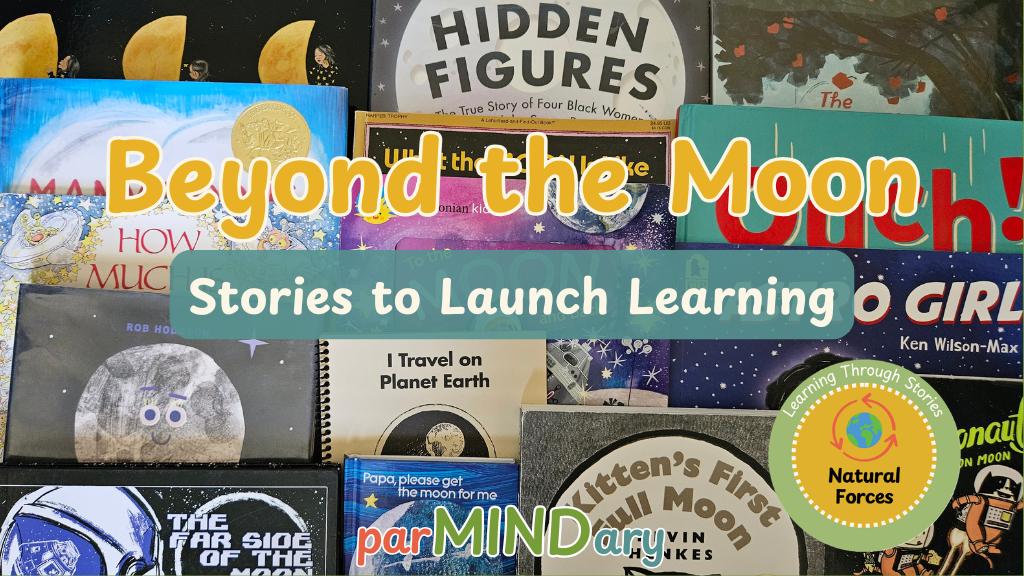
Launch into outer space for more stories that explore natural forces in our world:
Continue Noticing the Season
Weather is one way we begin to notice the changing season. If you’re exploring spring with your child, these posts continue that pattern of observation:
Note: Whether you borrow books from the library, purchase them, or share them with friends, the goal is the same: finding stories worth returning to. We visit our local library every week and add a few favorites to our home library throughout the year.