
💧 April — Movement & Thresholds
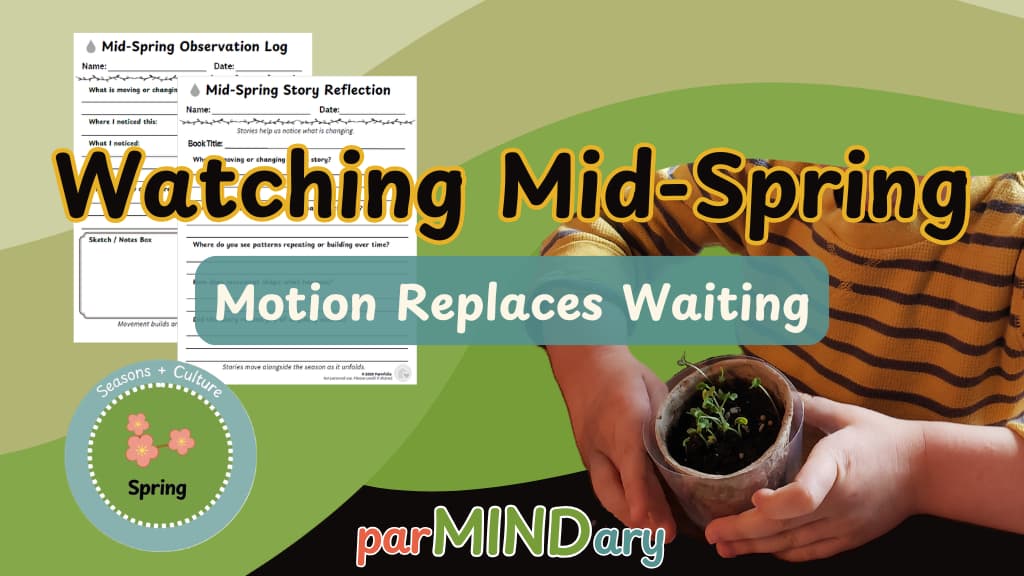
In April, the signs we were watching for in March begin to gather into something more visible. Rain falls more often. Plants grow quickly. Insects and animals move through spaces that once felt still.
The shift is no longer subtle. What began as small, uncertain changes now fills the landscape—movement in the air, across the ground, and through the water. The season feels active, layered, and full.
Mid-spring is not a time of waiting. It is a time of following what is already in motion.
In Simple Terms:
April is a season of movement. Spring is no longer just beginning—it is fully underway. Rain falls, plants grow, animals return, and the world becomes active and full.
At a Glance: Movement & Thresholds
- Visible movement (rain, wind, water, and growth)
- Increasing activity (plants, insects, birds, and ecosystems)
- Overlapping changes (many things happening at once)
- Seasonal thresholds (crossing into full spring)
- Emerging connections (how different parts of the season interact)
Why this matters:
April shifts attention from noticing small beginnings to experiencing the season as a whole. As movement increases, patterns begin to take shape. Connections become visible through what we can see and experience.
💧 April in the Seasonal Cycle: Movement & Thresholds
April no longer sits between seasons in the same way March does.
The early signs of change begin to gather and build. What was once scattered—an occasional bird call, a few swelling buds, a brief warm afternoon—now appears more consistently. Movement increases, and it becomes easier to see how many parts of the season are unfolding at once.
Instead of waiting for something to happen, we begin to follow what is already in motion. The season feels active and layered, with many small changes happening at the same time.
April marks a threshold—not because everything changes at once, but because enough has changed that the season now feels fully underway.
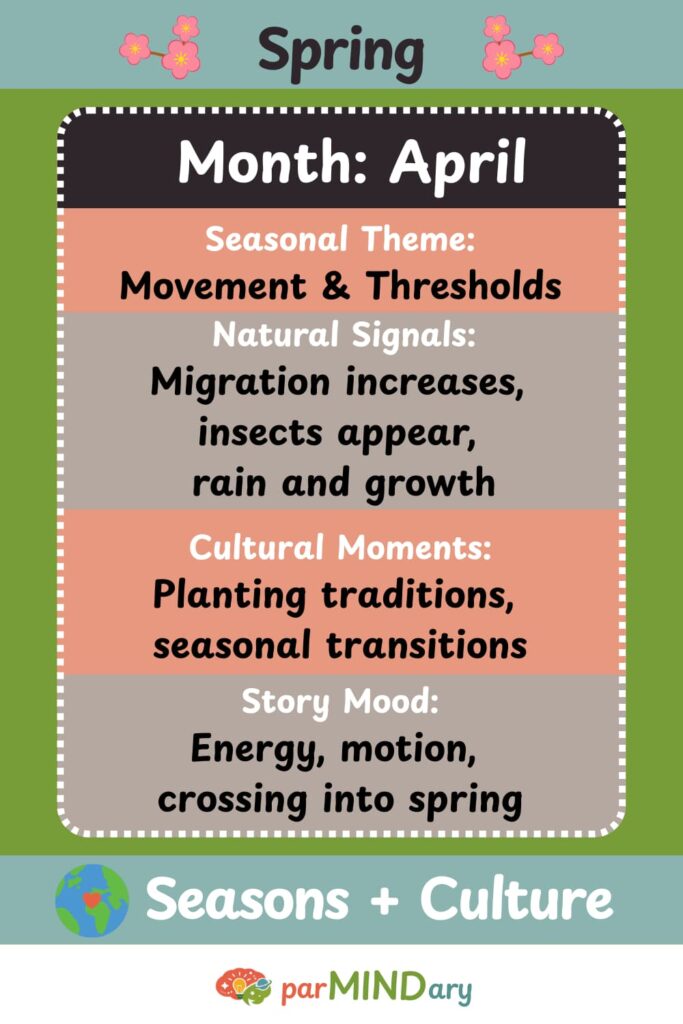
💧 Mid-Spring Movement: What We Begin to Notice in April
By April, change is no longer something we have to look closely to find.
It is easier to see, hear, and feel. Rain falls more often. Plants grow quickly. Insects move through the air. Birds return and fill spaces that were quiet just weeks before.
Instead of watching for the first signs, we begin to notice how many things are happening at once.
You might notice:
- rain collecting, dripping, and moving across the ground
- insects appearing and moving between plants
- trees and gardens filling in with leaves and color
- birds gathering, calling, and returning to familiar places
- longer days that stretch further into the evening
As the changes overlap and build, they create a sense of movement that carries through the entire season.
It invites us to notice not just individual changes, but how they begin to connect. Rain supports growth. Growth draws insects. Insects and plants create movement that spreads across the landscape.
A pattern begins to take shape, simply through what we can see and experience.
💧 Stories That Capture the Feeling of Mid-Spring
Mid-spring stories move alongside what is happening—rain falling, insects moving, animals returning, and the landscape filling in with life.
Some stories follow the path of water as it gathers and flows. Others stay close to small, active creatures moving through the season. Many reflect how different parts of the natural world respond at the same time, creating a sense of motion that connects everything together.
A few examples you might explore:
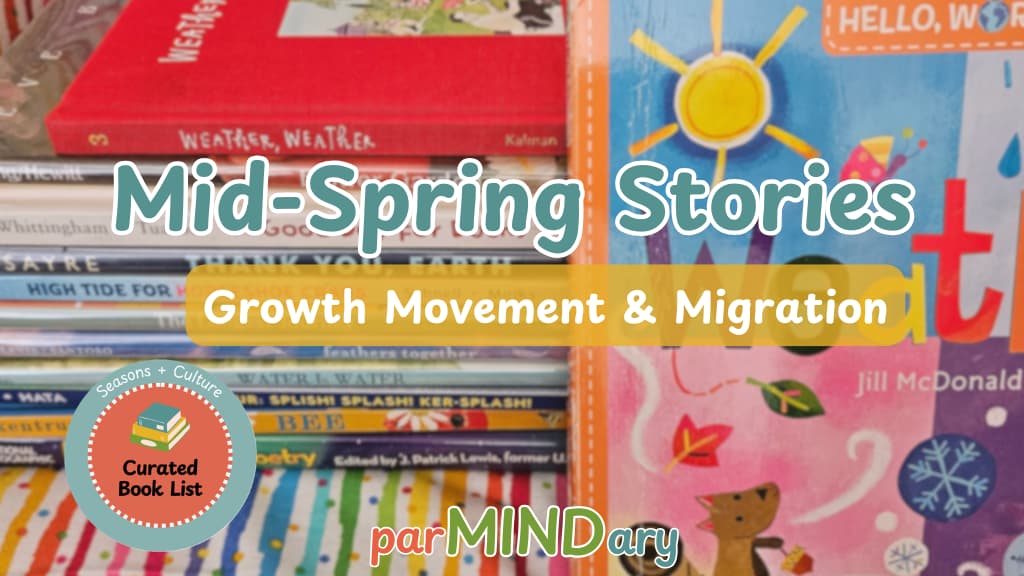
My Tiny Life by Ruby T. Hummingbird — quick, steady movement with purpose through a landscape full of flowers
Bee: A Peek-Through Picture Book — a busy bee flies through nature, where each movement connects one place to the next
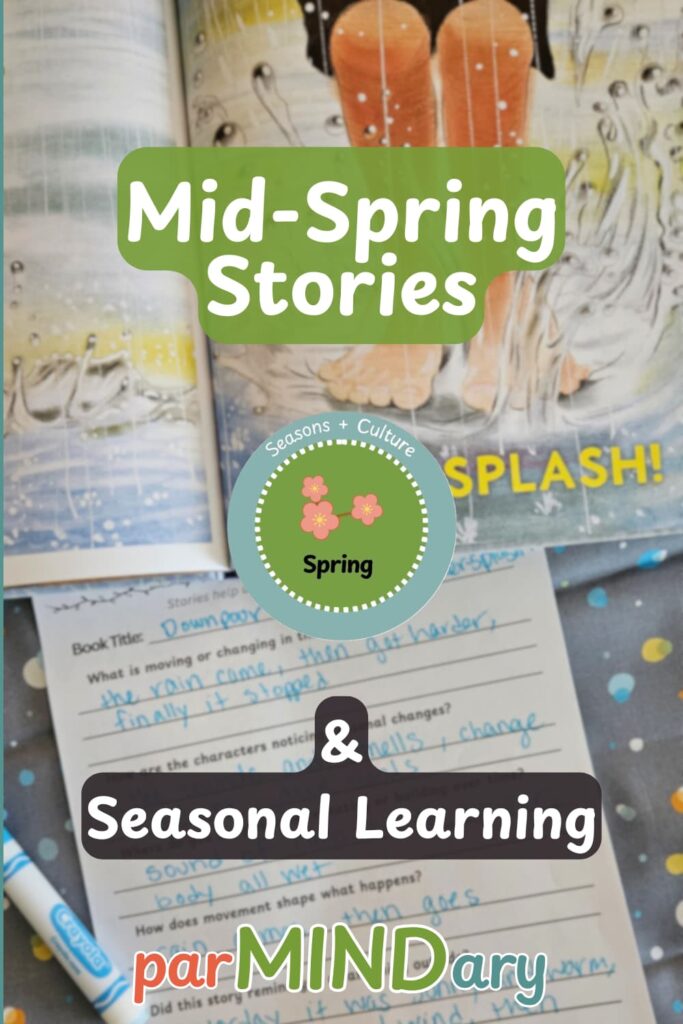
Downpour: Splish! Splash! Ker-splash! — rain building and falling, filling the world with sound and motion
Disclosure: This post contains affiliate links. As an Amazon Associate, I earn from qualifying purchases at no additional cost to you.


These stories do not pause in anticipation. They follow movement as it unfolds—layered, continuous, and shared across the season.
→ If you’d like more ideas, explore our full curated collection of Spring Migration and Movement Stories for Children.
💧 Mid-Spring Nature Observations for April
By April, noticing no longer requires searching.
Movement is easier to see—rain falling, plants growing, insects and animals moving through spaces that once felt still.
Instead of looking for the first signs, we begin to notice how the season is unfolding all around us.
You might notice:
- how water gathers, drips, and moves after a rainfall
- insects moving between flowers or across the ground
- trees and plants filling in with leaves, color, and texture
- birds returning to familiar places, calling or gathering materials
- the length of the day stretching further into the evening
These moments don’t need to be collected or completed. They can be noticed as they happen—small parts of a season that is already in motion.
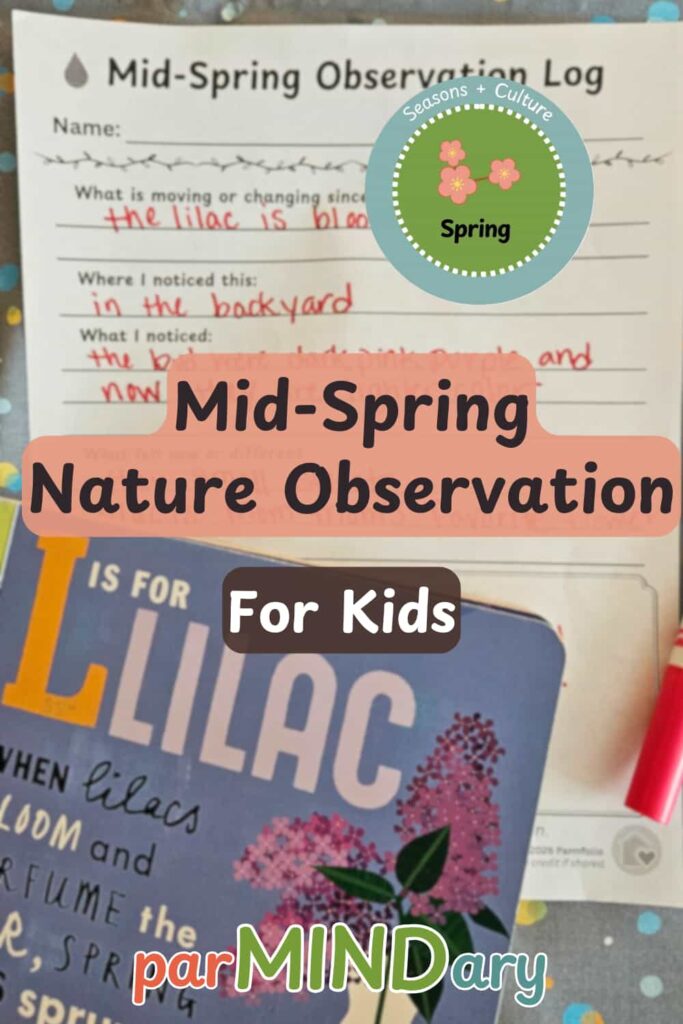
Over time, these small observations begin to form a pattern. Children start to recognize that seasons don’t change suddenly—they unfold.
→ Visit the parMINDary Free Resource Library:
To download the Mid-Spring Observation + Story Guide
💧 Simple Mid-Spring Activities for April
These invitations are meant to follow what is already happening, not to direct it.
- Take a short walk after the rain and follow where the water goes—along the ground, into puddles, or disappearing into the soil
- Pause in one place for a few minutes and watch for movement—what passes through, returns, or changes
- Visit the same outdoor space more than once this month and notice what feels different each time
- Sit outside and listen—what sounds repeat, and what feels new or more frequent
- Notice how the day stretches—when does it stay light later than it did before
These moments don’t need to be planned or completed. They create space to follow the season as it unfolds—to return, to notice, and to experience change as it happens.
💧 Mid-Spring Traditions and Seasonal Rhythms
As spring becomes more active, our human rhythms begin to shift alongside the natural world. We begin to think about the growing season and notice these changes more widely.
Across cultures, this time of year is often connected to planting, preparation, and time spent outdoors. These practices grow from the same patterns we can see—warmer days, steady rain, and the return of movement across the landscape.
Some of these rhythms are quiet and everyday:
- tending a garden or preparing soil
- spending longer stretches of time outside
- noticing seasonal foods beginning to appear
Others are marked more intentionally.
In April, Earth Day offers a moment to pause and reflect on the world as a whole—not just the changes we can see nearby, but the larger systems we are part of. It creates space to notice connection, care, and the shared environment that supports all living things.
These moments don’t need to be separate from daily life. They can grow naturally from the same experiences—being outside, noticing change, and returning to the places that are becoming full again.
💧 How April Leads Into the Rest of Spring
As April continues, the movement of the season begins to settle into something more familiar.
What feels active and full now gradually becomes something we return to each day. The landscape continues to fill in, and the patterns we have been noticing begin to feel more steady.
In May, this sense of movement shifts again. Blossoms open more fully. Pollinators become easier to see and follow. Gardens begin to take shape. Time outdoors stretches longer, and the season begins to feel more welcoming and shared.
Where April invites us to follow what is already in motion, May begins to invite us in. Moments of care, attention, and celebration start to take form in the ways people gather, plant, and mark the season together.
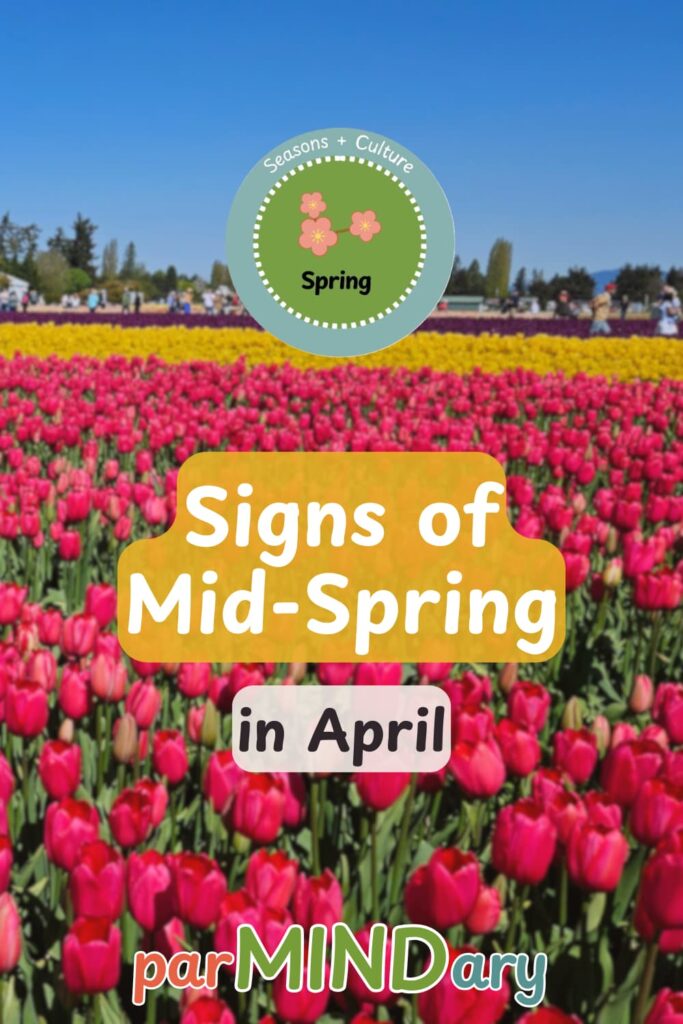
This is how movement takes shape in mid-spring.
The Year Through Stories: Our Seasonal Learning Cycle
🌲 January — Looking Forward Gently
🌙 February — Noticing Before Action
🌱 March — Return & Anticipation
💧 April — Movement & Thresholds
🌼 May — Invitation & Care
🐝 June — Belonging & Welcome
☀️ July — Abundance & Coexistence
🌾 August — Effort & Fatigue
🍎 September — Preparation & Trust
🍂 October — Memory & Meaning
🕯️ November — Gratitude Without Possession
❄️ December — Rest & Dormancy
Related Seasonal Posts
→ Explore the companion curated book list for April:
Spring Growth, Movement, & Migration Stories for Children
→ Visit the parMINDary Free Resource Library:
To download the Mid-Spring Observation + Story Guide
→ Continue reading Year 1: Watching the Year Here:
🌼 MAY — Invitation & Care
Watching Late Spring: Marking Time Together
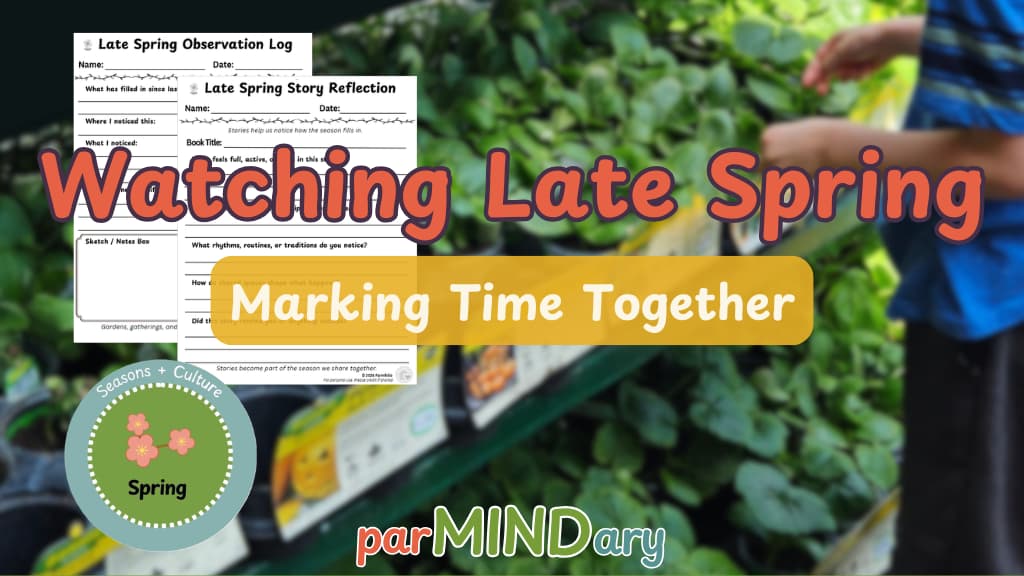
Explore more seasonal learning ideas on our Seasons & Culture pillar page.
Or follow how we learn to notice the seasonal cycle here:
Watching the Year
🌎 Watching the Year: Homeschooling Through the Seasons
🌲 Watching Midwinter: Renewal and Anticipation
🌙 Watching Late Winter: Staying Indoors and Keeping Warm
🌱 Watching Early Spring: Waiting for the First Signs of Change
💧 Watching Mid-Spring: When Motion Replaces Waiting
🌼 Watching Late Spring: Marking Time Together
🐝 Watching Early Summer: Long Days and Open Possibility
☀️ Watching High Summer: Stillness Inside Abundance
🌾 Watching Late Summer: Holding and Letting Go
🍎 Watching Early Autumn: Preparing for the First Signs of Fall
🍂 Watching Mid-Autumn: The Work of Letting Go
🕯️ Watching Late Autumn: Quiet Before Winter
❄️ Watching Early Winter: Light, Memory, and Celebration
Curated Seasonal Book Lists
🌎 Stories That Follow the Whole Year
🌲 Quiet Deep Winter Stories for Children
🌙 Late Winter & Waiting Stories
🌱 Early Spring Stories for Children
💧 Spring Migration & Movement Stories
🌼 Spring Festivals & May Tradition Stories
🐝 Early Summer Stories for Children
☀️ High Summer Nature & Pollinator Stories
🌾 Late Summer Effort & Harvest Stories
🍎 Migration & Autumn Arrival Stories
🍂 Autumn Harvest & Celebration Stories
🕯️ Gratitude & Community Stories
❄️ Winter Light & Celebration Stories
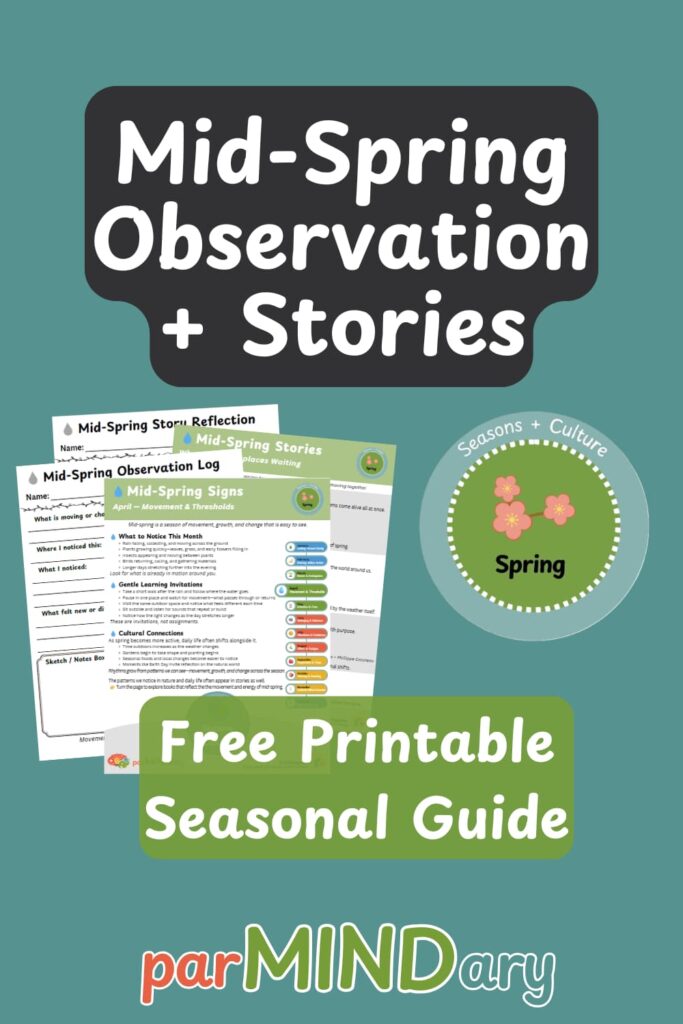
Download the Seasonal Observation + Story Guides from our Free Resource Library.