
A Curated Book List
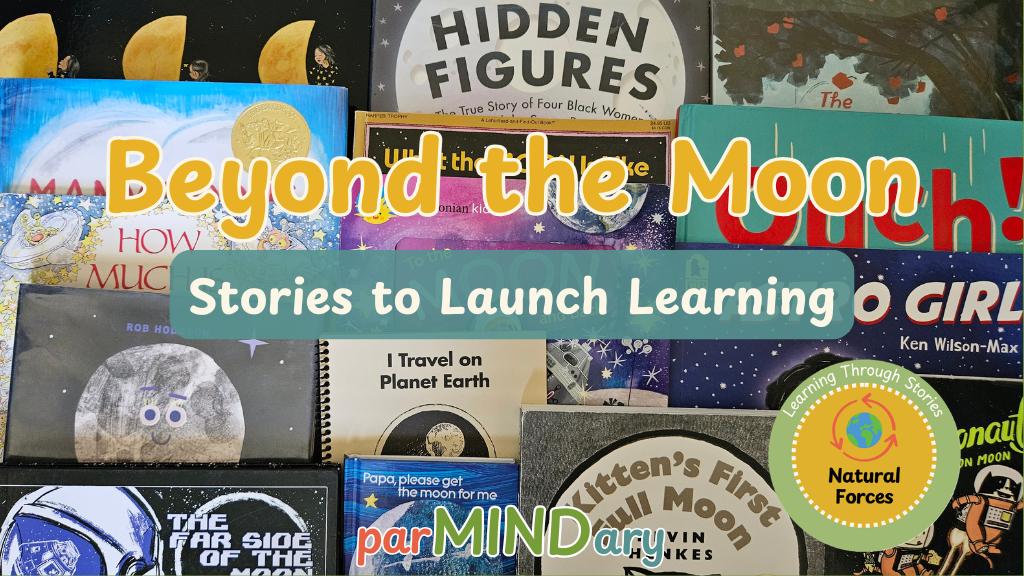
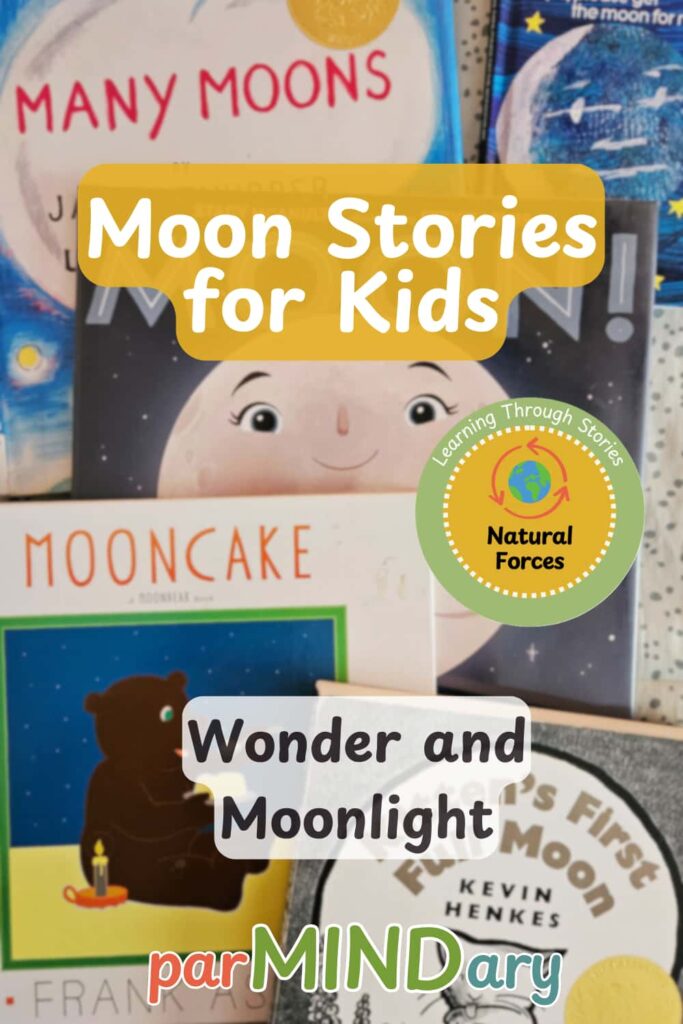
Looking for moon stories for kids? This curated collection invites children to notice the relationship between Earth and our Moon. Through living books and children’s non fiction about looking at the moon and traveling around it, this list supports both reading and observation. Whether you’re just beginning to explore the cosmos or launching into a study of deep space, these stories offer a way to connect what children see, hear, and feel with patterns in the natural world.
In Simple Terms:
Moon stories help children notice patterns beyond Earth itself—light and darkness, movement and gravity, curiosity and exploration.
At a Glance: Moon, Motion, and Wonder
- Moon phases and observation
- Space exploration and discovery
- Gravity, motion, and invisible forces
- Scale and perspective
- Wonder about the cosmos
Why this matters:
The moon is both familiar and mysterious. Children can see it from their backyard, yet it also opens the door to larger questions about physics, motion, scale, and our place in the universe.
These ideas connect beyond the moon alone, extending into broader patterns across science and the natural world.
Explore Natural Forces
Looking for more stories tied to science themes?
You may also enjoy:
• Story-based science explorations
• Seasonal learning through books and observation
🌕 Introducing the Moon as a Cosmic Gateway
The moon is an easy gateway into the study of outer space. It is always present, yet always changing—something we can observe directly while also wondering about its larger role in the universe.
Watching Artemis II fly by the moon amplified a deep love for the cosmos in our home. As homeschoolers, we often follow these interests wherever they lead, building our learning journey through stories, observation, and curiosity.
A fascination with outer space appeared early on. Through living books and countless nights spent looking up at the sky, my aspiring astrophysicist began wondering about worlds both enormous and invisible.
The cosmos has become one of our ultimate classrooms, full of motion, mystery, and scale far beyond everyday life.
We grow his passion for physics through:
- Reading stories
- Outdoor experiences
- Tools
- Local Resources
Follow along with us, and add some of our favorite books about the moon, astronauts in space, and natural forces to your learning journey.
Disclosure: This post contains affiliate links. As an Amazon Associate, I earn from qualifying purchases at no additional cost to you.
🌕 Looking at the Moon
Before children learn about rockets, gravity, or distant planets, many first encounter the cosmos simply by looking up.
The moon feels close enough to notice, yet distant enough to remain mysterious. These stories linger on moonlight, nighttime wonder, changing shapes, and the feeling of noticing something just beyond reach.
Themes in this Section:
observation · distance · imagination · curiosity · patterns
✦
Kitten’s First Full Moon – Kevin Henkes
A curious kitten chases the glowing mystery of the full moon.
Why this book matters: A curious kitten mistakes the full moon for a bowl of milk and sets off on a determined adventure to reach it. The simple, rhythmic story gently captures a childlike sense of wonder under the winter night sky.
Themes / patterns: moon observation, curiosity, exploration, nighttime wonder, early childhood discovery
Age range: 1–4
Find Kitten’s First Full Moon on Amazon
You can also find Kitten’s First Full Moon in our Late Winter and Waiting Stories list, which focuses on linking the cold season with our hopes for both snow and for the season to change.

Moon: A Peek-Through Picture Book – Britta Teckentrup
A curious kitten chases the glowing mystery of the full moon.
Why this book matters: Layered illustrations and gentle rhyming text move through the rhythms of nighttime, drawing the eye toward changing moon phases and the quiet patterns that unfold after dark. The changing shape of the moon becomes something to watch over time rather than simply memorize.
Themes / patterns: moon phases, nighttime rhythms, observation, seasonal patterns, quiet wonder
Age range: 1–4
Find Moon: A Peek-Through Picture Book on Amazon
Mooncake (Moonbear) – Frank Asch
A small bear wonders whether the moon might taste as sweet as cake.
Why this book matters: The story unfolds through imagination, curiosity, and playful misunderstanding as Moonbear reaches toward something distant and glowing in the night sky. The simple illustrations create a gentle bridge between fantasy and real moon observation.
Themes / patterns: imagination, curiosity, moonlight, nighttime exploration, childhood wonder
Age range: 2–5
Find Mooncake on Amazon
Papa, Please Get the Moon for Me – Eric Carle
A father climbs higher and higher in search of the moon for his daughter.
Why this book matters: Pages unfold wider and wider as the moon shifts shape overhead. Distance and scale gradually become part of the story itself.
Themes / patterns: moon phases, scale, distance, family connection, imagination, observation
Age range: 2–5
Find Papa, Please Get the Moon for Me on Amazon
Moon! Earth’s Best Friend – Stacy McAnulty
The moon introduces itself with humor, personality, and fascinating cosmic facts.
Why this book matters: Told from the moon’s perspective, scientific facts drift in and out of playful narration. Bringing attention to the moon’s relationship with Earth, motion through space, and changing appearance over time.
Themes / patterns: moon phases, orbit, Earth-moon relationship, humor in science, cosmic perspective
Age range: 2–7
Find Moon! Earth’s Best Friend on Amazon
Many Moons – James Thurber
A princess asks for the moon, setting off a search that becomes stranger and larger with every answer.
Why this book matters: Different characters describe the moon in completely different ways, showing how perspective shapes understanding. The story blends fairy tale imagination with surprisingly thoughtful questions about size, distance, and human perception.
Themes / patterns: perspective, perception, scale, imagination, storytelling, differing viewpoints
Age range: 4–8
Find Many Moons on Amazon
Looking at the moon often leads naturally to larger questions. What is it made of? How far away is it? Could people really travel there? Stories of exploration begin with the same sense of wonder sparked by simply looking up.
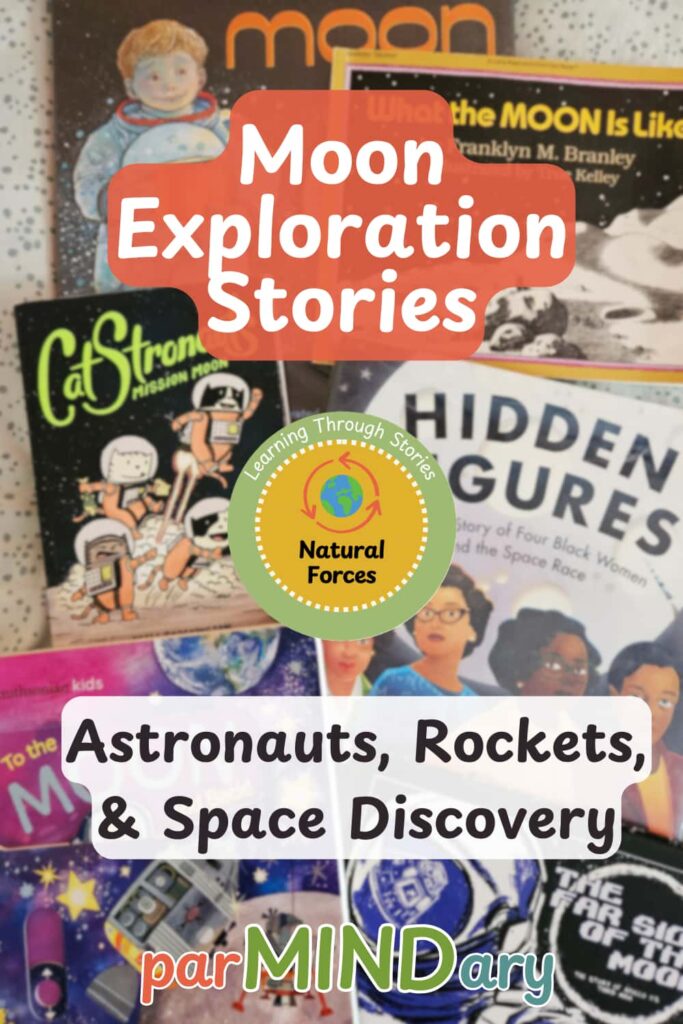
🌕 Stories of Moon Exploration
For generations, the moon has invited people not only to observe it, but to travel toward it.
These stories follow astronauts, engineers, scientists, and dreamers who expanded human understanding beyond Earth itself. Some focus on real missions, while others imagine what it might feel like to journey into space for the very first time.
Themes in this Section:
exploration · discovery · wonder · teamwork · perspective
✦
To the Moon and Back – Jaye Garnett
Rockets launch upward while Earth slowly grows smaller below.
Why this book matters: Simple illustrations and playful interactive elements introduce young readers to the experience of space travel, following the journey from Earth to the moon and back again. The story keeps the focus on movement, distance, and the excitement of traveling beyond familiar surroundings.
Themes / patterns: space travel, rockets, exploration, Earth and moon relationship, movement through space
Age range: 2–6
Find To The Moon and Back on Amazon
If You Decide to Go to the Moon – Faith McNulty
Packing for the moon begins long before the rocket leaves Earth.
Why this book matters: The story moves slowly and thoughtfully through what it might actually feel like to prepare for a journey into space. Everyday experiences are compared with the unfamiliar conditions astronauts encounter, helping bring distant ideas into human scale.
Themes / patterns: space exploration, preparation, imagination, astronaut experience, perspective, distance
Age range: 3–6
Find If You Decide to Go to the Moon on Amazon
What the Moon Is Like – Franklyn M. Branley
Dusty craters, silent landscapes, and enormous distances begin to feel imaginable.
Why this book matters: Originally written during the Apollo era, this classic introduction lingers on the physical reality of the moon itself—its surface, environment, and distance from Earth. Scientific ideas are grounded in observation and curiosity rather than technical explanation.
Themes / patterns: moon surface, lunar exploration, scientific observation, Apollo era curiosity, scale and distance
Age range: 4–8
Find What the Moon Is Like on Amazon
Hello, World! Moon Landing – Jill McDonald
Tiny astronauts, rockets, and moon boots introduce the first steps beyond Earth.
Why this book matters: Bright illustrations and simple language make early space exploration approachable for very young readers. The story gently introduces real historical events while keeping the feeling of wonder and discovery at the center.
Themes / patterns: moon landing, astronauts, early science concepts, exploration, historical discovery
Age range: 2–5
Find Hello World! Moon Landing on Amazon
Hidden Figures: The True Story of Four Black Women and the Space Race — Margot Lee Shetterly
Numbers, calculations, and persistence helped launch astronauts toward the moon.
Why this book matters: The early space program was shaped by the mathematical work of four Black women, bringing attention to the many unseen people behind historic discoveries. Space exploration begins to feel not only technological, but deeply human and collaborative.
Themes / patterns: mathematics, engineering, teamwork, perseverance, hidden contributions, space history
Age range: 6–10
Find Hidden Figures on Amazon
Far Side of the Moon: The Story of Apollo 11’s Third Man – Alex Irvine
One astronaut circles alone above the moon while history unfolds below.
Why this book matters: Focusing on Michael Collins offers a quieter perspective on the Apollo 11 mission, lingering on solitude, teamwork, and the often-overlooked roles within major discoveries. The enormous scale and isolation of space become easier to imagine through this personal lens.
Themes / patterns: Apollo 11, perspective, teamwork, isolation, exploration, overlooked roles
Age range: 6–10
Find Far Side of the Moon on Amazon
CatStronauts: Mission Moon – Drew Brockington
Cats in spacesuits race against time to restore power on the moon.
Why this book matters: Humor and graphic novel storytelling make space exploration feel playful while still introducing real ideas about teamwork, problem-solving, and lunar missions. The fast-moving format helps bridge imaginative adventure with genuine scientific curiosity.
Themes / patterns: space missions, teamwork, engineering, humor, problem-solving, graphic novels
Age range: 6–8
Find CatStronauts: Mission Moon on Amazon
Traveling beyond Earth also changes how we think about movement itself. The moon, planets, and stars are not standing still, and neither are we. Many of the forces shaping our world remain invisible until stories and observation help bring them into focus.
🌕 Invisible Forces: Gravity and Motion
Some of the most important forces shaping our world cannot be seen directly.
Gravity, motion, orbit, light, and rotation influence everything from day and night to the movement of planets through space. These stories help bring invisible patterns into focus, connecting everyday life with spinning planets, shifting sunlight, and motion too large to feel.
Themes in this Section:
gravity · motion · day and night · orbit · astronauts
✦
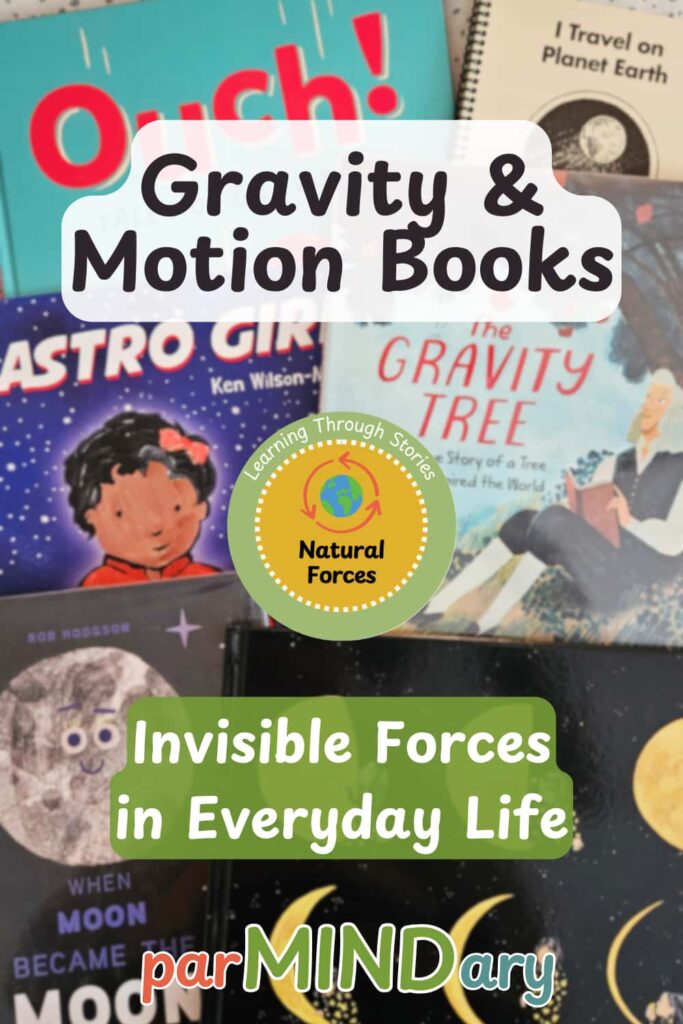
When Moon Became the Moon – Rob Hodgson
The moon drifts through space searching for the place where it finally belongs.
Why this book matters: Bright illustrations and playful storytelling introduce ideas about orbit, belonging, and cosmic relationships through imagination rather than technical explanation. The story centers on the moon as part of a larger moving system.
Themes / patterns: orbit, motion, belonging, Earth-moon relationship, cosmic perspective, imagination
Age range: 3–5
Find When Moon Became the Moon on Amazon
The Darkest Dark — Chris Hadfield
Dark nighttime fears slowly transform into wonder while astronauts walk across the moon overhead.
Why this book matters: Inspired by Chris Hadfield’s childhood, the story follows a young boy learning to see darkness differently during the Apollo moon landing era. Fear, imagination, and scientific curiosity gradually become connected through looking outward toward space.
Themes / patterns: Apollo era inspiration, overcoming fear, nighttime wonder, astronauts, curiosity, perspective
Age range: 4–8
Find The Darkest Dark on Amazon
Astro Girl – Ken Wilson Max
Space helmets, countdowns, and imagination turn an ordinary day into a journey beyond Earth.
Why this book matters: Everyday play blends seamlessly with dreams of future exploration, keeping the feeling of possibility at the center of the story. Lingering on aspiration and identity while grounding space travel in familiar childhood experiences.
Themes / patterns: imagination, future exploration, identity, play, astronauts, possibility
Age range: 4–8
Find Astro Girl on Amazon
A Big Mooncake for Little Star – Grace Lin
Each bite taken from a mooncake slowly mirrors the changing shape of the moon.
Why this book matters: Family tradition, nighttime imagery, and moon phases connect through warm illustrations and repeating visual patterns. Changes in the moon become something observable and cyclical, woven naturally into story and celebration.
Themes / patterns: moon phases, cycles, family traditions, repetition, nighttime observation, cultural stories
Age range: 2–5
Find A Big Mooncake for Little Star on Amazon
What Makes Day and Night – Franklyn M. Branley
Earth spins through space while sunlight shifts across its surface.
Why this book matters: Complex ideas about rotation, sunlight, and planetary motion are grounded in familiar daily experiences like sunrise, shadows, and nighttime. Questions about movement we cannot directly feel, yet experience every single day.
Themes / patterns: Earth’s rotation, sunlight, planetary motion, day and night, invisible movement, observation
Age range: 3–7
Find What Makes Day and Night on Amazon
I Travel on Planet Earth – Aline D. Wolf
Earth becomes a moving spaceship carrying us in motion through space.
Why this book matters: This older Montessori-oriented title shifts perspective outward, inviting children to notice that even standing still is part of a much larger motion through the cosmos. Connecting daily life with Earth’s continuous movement through space.
Themes / patterns: Earth in motion, cosmic perspective, astronomy, movement, scale
Age range: 3–6
This older Montessori-oriented title may need to be sourced through specialty or used booksellers.
Gravity – Jason Chin
A quiet apple falls while gravity holds together worlds far beyond what we can see.
Why this book matters: Simple illustrations and spare text linger on the invisible force that shapes motion both on Earth and across the cosmos. The story begins with everyday experience before gradually widening toward a much larger sense of scale.
Themes / patterns: Earth’s rotation, sunlight, planetary motion, day and night, invisible movement, observation
Age range: 4–8
Find Gravity on Amazon
The Gravity Tree – Anna Crowley Redding
Ideas about gravity spread outward through falling apples, scientific questions, and generations of discovery.
Why this book matters: The story traces how Newton’s observations continued influencing scientific thought long after the original moment of discovery. Patterns of questioning, experimentation, and shared knowledge become part of the larger story of understanding motion and force.
Themes / patterns: scientific discovery, gravity, observation, curiosity, history of science, interconnected ideas
Age range: 4–8
Find The Gravity Tree on Amazon
Ouch! Tales of Gravity – Kate Simpson
Falling objects, flying inventions, and unexpected accidents all collide with gravity in motion.
Why this book matters: Fast-moving stories and humorous examples bring physical forces into everyday experience, showing how gravity shapes movement in ways both predictable and surprising. The book keeps scientific ideas active, tangible, and closely tied to the real world.
Themes / patterns: gravity, motion, physics in everyday life, experimentation, humor, cause and effect
Age range: 6–8
Find Ouch! Tales of Gravity on Amazon
The moon is often a child’s first step into thinking beyond everyday scale. Questions about distance, motion, and enormous numbers gradually stretch our understanding outward—from familiar surroundings to the immense scale of the universe itself.
🌕 How to Notice the World Beyond What We Can See
We experience the world first through direct observation, but many parts of the universe remain beyond what our eyes alone can see.
Telescopes, maps, measurements, photographs, and scientific models all help extend human perception farther outward—from nearby moon craters to distant galaxies.
- Backyard telescope
- Planetarium Visits
- Space and Physics shows
- Current events (NASA)
- Size and Scale comparisons
- Orders of Magnitude exploration
Gentle Learning Invitations
These small invitations are not meant to direct learning, but to create space for noticing patterns in the world beyond Earth.
- Watch the moon for several nights in a row
- Notice where the moon appears in the sky
- Compare the moon at dusk versus late night
- Look for shadows created by moonlight
- Compare photographs of Earth from space with your own surroundings
- Notice how humans create tools to see farther than our eyes alone
A nature journal or simple seasonal calendar can gently hold these observations over time. A few words, a quick sketch, or a repeated place to check each day is enough.
Science: Moon as a Natural Force
The moon is more than something beautiful to look at in the night sky. It is part of a larger system of motion, gravity, light, and perspective that shapes how we experience the world.
Even while standing still, we are already moving through space. Earth rotates beneath our feet while traveling around the sun, and the moon moves alongside us in its own repeating orbit. Many of these motions are too large or gradual for us to notice directly, yet their patterns appear again and again when we pause long enough to observe them.
Stories about the moon help bring these invisible relationships into focus.
Some explore changing moon phases and shifting light. Others follow astronauts traveling beyond Earth itself. Still others begin to show how gravity, motion, and scale connect our everyday lives to the wider cosmos.
You do not need advanced physics to begin noticing these patterns. Looking up at the night sky, watching the moon over time, and asking questions about what we cannot easily see is already a beginning.
Questions about the moon rarely stay limited to the moon itself.
Curiosity naturally expands outward—from phases and astronauts to distance, motion, enormous numbers, and the scale of the universe beyond Earth.
🌕 Continue Noticing Scale: From Atoms to Galaxies
The moon is often a child’s first step into thinking beyond everyday scale. Stories about distance, motion, planets, and enormous numbers help us gradually expand our sense of the universe—from the smallest particles to galaxies beyond what we can easily imagine.
How Much Is a Million? – David M. Schwartz
Enormous numbers stretch from everyday counting all the way beyond the moon.
Why this book matters: Large quantities become visual and tangible through playful comparisons that gradually expand a child’s sense of scale. The illustrations help bridge mathematics, distance, and the immense size of the universe.
Themes / patterns: scale, large numbers, mathematical thinking, perspective, distance
Age range: 5–10
Find How Much Is a Million? on Amazon
Continue Exploring Natural Forces and Scale
The moon is only one part of a much larger story about motion, gravity, light, and perspective. Many of these same patterns appear throughout nature—from weather systems and seasons to astronomy and enormous scales beyond everyday experience.
Future explorations in this series will continue following these connections outward:
- Natural Forces
- Scale: From Atoms to Galaxies
- Space and Astronomy Stories
- Invisible Systems in the Natural World
Our Learning Lab
Stories often lead us beyond books and into hands-on exploration.
Inspired by Artemis II and our growing fascination with space, we began creating simple stop-motion videos using felt boards, printed pieces, and visual models to explore ideas like rockets, planets, motion, and scale together.
This first space-themed compilation includes:
- Artemis II inspired moon travel
- solar system sequencing
- space mazes and challenges
- early scale and motion explorations
Our larger Parmfolio Learning Lab project is still growing, with more videos and hands-on explorations coming throughout the year.
Note: Whether you borrow books from the library, purchase them, or share them with friends, the goal is the same: finding stories worth returning to. We visit our local library every week and add a few favorites to our home library throughout the year.