An A-Z Reading Challenge
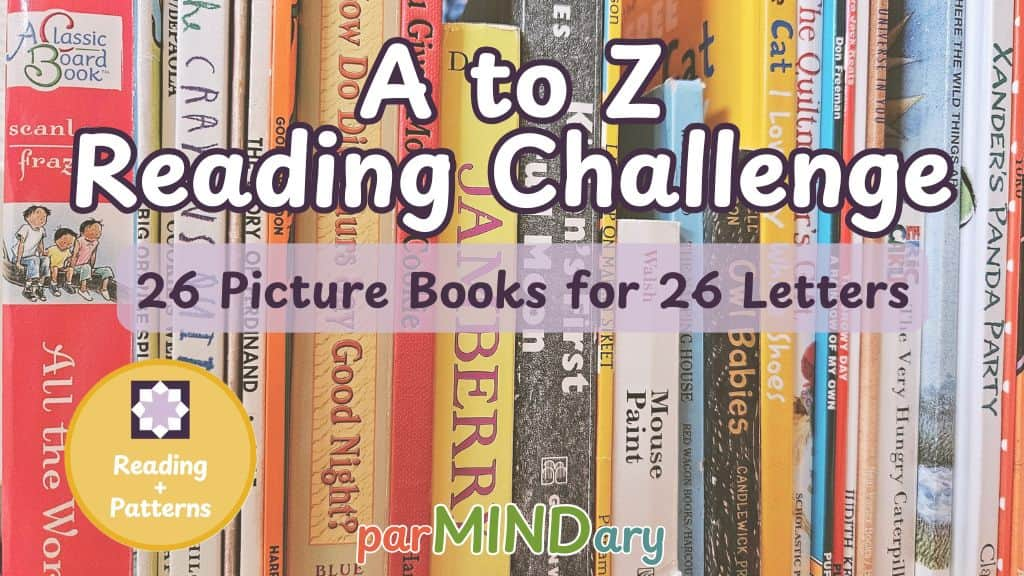
For this A–Z Reading Challenge, I pulled 26 picture books from our shelves—one for each letter from A to Z. But a book doesn’t have to start with the letter to count. You can look at the title, author or illustrator, a character, subject, setting, theme, or another connection you notice.
In Simple Terms:
Choose one picture book for every letter of the alphabet, from A to Z.
At a Glance: How Does a Book “Count” for a Letter?
- First Letter in the Title
- Author Name
- Illustrator Name
- A Character
- Story Subject
- The Setting
- A Theme or Connection You Notice
Why this matters:
A simple constraint can change the way we look at familiar books. Instead of following a prescribed reading list, children can search their own shelves, make connections, and decide which books belong.
Explore Patterns in Stories
Looking for books with recurring ideas, story structures, and ways of seeing the world?
You may also enjoy our quick visual guides:
- Author Spotlights
- Story Patterns (including our full A to Z lists)
How Does a Book “Count” for a Letter?
When scanning my home library shelves for picture books to reread, I came up with the idea of an A to Z reading challenge to make it more fun. The most obvious choice was to pick based on the first letter in the title, and mostly that is what you will find in this list (ignoring “the” and “a”). But there are other way to pick a book, especially for a more difficult letter.
A book might fit because of its:
- Title
- Author
- Illustrator
- Character
- Subject
- Setting
- Theme or another connection you notice
The “rules” are intentionally loose here, because this is meant to be fun! It is a chance for us to explore books and make connections. There is no need to complete an alphabet worksheet correctly.
For more information about the A to Z Reading Challenge for Kids, check out our announcement post!
The A–Z Picture Book List
- All the World – Liz Garton Scanlon
- The Big Orange Splot – Daniel Manus Pinkwater
- Cookie’s Week – Cindy Ward
- The Day the Crayons Quit – Drew Daywalt
- The Empty Pot – Demi
- The Story of Ferdinand – Munro Leaf
- Goodnight Moon – Margaret Wise Brown
- How Do Dinosaurs Say Goodnight? – Jane Yolen
- If You Give a Mouse a Cookie – Laura Numeroff
- Jamberry – Bruce Degen
- Kitten’s First Full Moon – Kevin Henkes
- Last Stop on Market Street – Matt de la Peña
- Mouse Paint – Ellen Stoll Walsh
- The Napping House – Audrey Wood
- Owl Babies – Martin Waddell
- Pete the Cat: I Love My White Shoes – Eric Litwin
- The Quiltmaker’s Gift – Jeff Brumbeau
- A Rainbow of my Own – Don Freeman
- The Snowy Day – Ezra Jack Keats
- The Tiger Who Came to Tea – Judith Kerr
- The Universe In You – Jason Chin
- The Very Hungry Caterpillar – Eric Carle
- Where the Wild Things Are – Maurice Sendak
- Xander’s Panda Party – Linda Sue Park
- Yoko – Rosemary Wells
- Zin! Zin! Zin! A Violin – Lloyd Moss
Disclosure: This post contains affiliate links. As an Amazon Associate, I earn from qualifying purchases at no additional cost to you.
A is for…
A — All the World by Liz Garton Scanlon
A lyrical picture book following the small moments of a day and showing how people, nature, and everyday experiences are connected.
Why this book matters: The spare, rhythmic language leaves room to notice the illustrations and the relationships between ordinary moments. It encourages a wide view of belonging without losing sight of little details.
Themes / patterns: Connection, family, nature, community, belonging, everyday moments

B is for…
B — The Big Orange Splot by Daniel Manus Pinkwater
When a bright orange splot lands on Mr. Plumbean’s house, he transforms his ordinary home into something that reflects who he is.
Why this book matters: A wonderfully strange story about individuality and the way one person’s willingness to be different can give others permission to imagine something different too.
Themes / patterns: Individuality, creativity, self-expression, community, change

C is for…
C — Cookie’s Week by Cindy Ward
Cookie the cat creates a new little disaster every day of the week.
Why this book matters: Repetition, predictable structure, simple text, and humorous illustrations make this an especially inviting book for young readers who are beginning to recognize story patterns.
Themes / patterns: Days of the week, repetition, cause and effect, cats, humor

D is for…
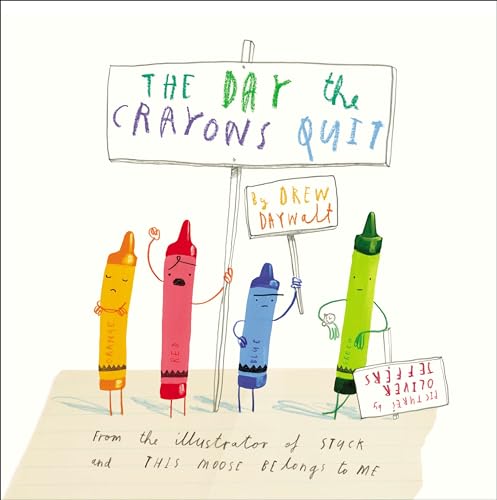
D — The Day the Crayons Quit by Drew Daywalt
Duncan opens his crayon box to discover a stack of letters from crayons that have plenty to say about how they’ve been used.
Why this book matters: The different crayon voices make perspective wonderfully visible. It also invites children to reconsider familiar colors, expectations, and the many ways something can be used.
Themes / patterns: Perspective, color, creativity, feelings, letters, humor
E is for…
E — The Empty Pot by Demi
Ping desperately tries to grow the seed given to him by the emperor, but when nothing grows, he brings his empty pot anyway.
Why this book matters: A quiet story in which honesty matters more than producing the impressive result everyone expects.
Themes / patterns: Honesty, integrity, patience, courage, plants, Ancient China

F is for…
F — The Story of Ferdinand by Munro Leaf
Ferdinand would rather sit quietly beneath his cork tree and smell the flowers than fight like the other bulls.
Why this book matters: Ferdinand remains himself even when everyone around him expects something different. Its gentle humor makes space for conversations about temperament, expectations, and choosing your own way.
Themes / patterns: Individuality, peace, expectations, contentment, animals, Spain

G is for…
G — Goodnight Moon by Margaret Wise Brown
A little bunny slowly says goodnight to everything in the familiar room around him.
Why this book matters: Repetition, rhythm, and tiny visual changes turn a simple bedtime book into an exercise in close observation. Children can return to the same pages and keep finding things to notice.
Themes / patterns: Bedtime, repetition, observation, rhythm, familiar objects

H is for…
H — How Do Dinosaurs Say Good Night? by Jane Yolen
Enormous dinosaurs act out all the ways a child might resist bedtime before settling down for a loving goodnight.
Why this book matters: The exaggerated dinosaur behavior makes familiar bedtime emotions funny and recognizable without dismissing them.
Themes / patterns: Bedtime, feelings, dinosaurs, family, humor, routines

I is for…
I — If You Give a Mouse a Cookie by Laura Numeroff
One small request leads to another and another until Mouse’s adventure circles right back to where it began.
Why this book matters: Its circular structure makes cause and effect easy to see—and wonderfully funny. It’s a great story for predicting what might happen next and noticing how stories can loop.
Themes / patterns: Circular stories, cause and effect, sequencing, prediction, humor

J is for…
J — Jamberry by Bruce Degen
A boy and a bear tumble through an exuberant world overflowing with berries, rhyme, sound, and imaginative wordplay.
Why this book matters: This is a book to hear as much as read. Its playful language demonstrates how rhythm, rhyme, invented combinations, and sound can make words almost sensory.
Themes / patterns: Rhyme, wordplay, berries, imagination, sound, sensory language

K is for…
K — Kitten’s First Full Moon by Kevin Henkes
A kitten mistakes the full moon for a bowl of milk and keeps trying to reach it.
Why this book matters: The simple black-and-white illustrations and repeated attempts create a story that feels both quiet and dramatic. Kitten’s persistence drives the entire narrative.
Themes / patterns: Moon, persistence, mistaken perception, animals, repetition, night

L is for…
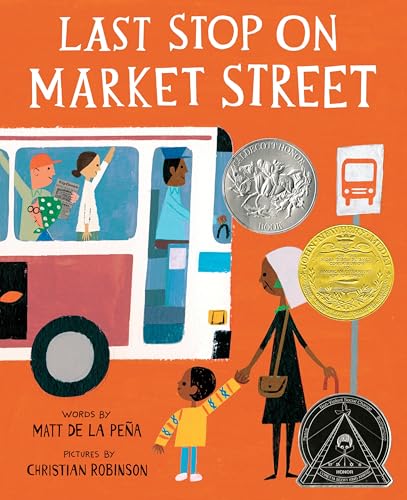
L — Last Stop on Market Street by Matt de la Peña
CJ and his grandmother ride the bus across the city, with Nana continually helping him notice beauty and possibility along the way.
Why this book matters: The story doesn’t ask CJ to ignore what he sees. Instead, Nana helps him look again and notice value, beauty, community, and connection in places he might otherwise overlook.
Themes / patterns: Community, perspective, gratitude, city life, family, noticing
M is for…
M — Mouse Paint by Ellen Stoll Walsh
Three white mice discover jars of red, yellow, and blue paint—and begin mixing colors as they play.
Why this book matters: The story makes color mixing part of the action rather than presenting it as a lesson. Children can predict the combinations and watch the pattern repeat.
Themes / patterns: Color mixing, primary colors, prediction, mice, art, patterns

N is for…
N — The Napping House by Audrey Wood
In a quiet house, one sleepy creature after another piles onto a cozy bed—until one tiny wakeful visitor changes everything.
Why this book matters: The cumulative structure invites children to anticipate each addition while the illustrations gradually shift along with the story’s mood.
Themes / patterns: Cumulative stories, repetition, sleep, rain, sequencing, visual change

O is for…
O — Owl Babies by Martin Waddell
Three baby owls wake to discover their mother is gone and wait together for her return.
Why this book matters: The story gives separation anxiety room to exist without making it frightening. Each owl responds differently, while the repeated reassurance captures a very recognizable childhood feeling.
Themes / patterns: Separation, reassurance, family, feelings, owls, night

P is for…
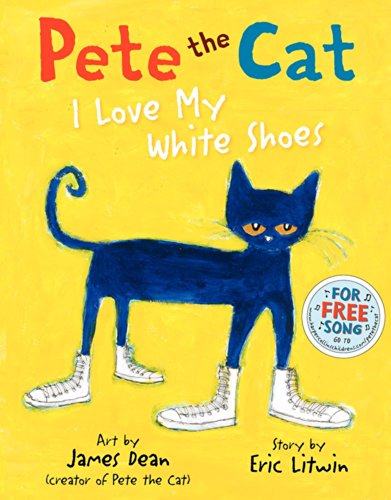
P — Pete the Cat: I Love My White Shoes by Eric Litwin
Pete keeps walking as his white shoes change color again and again—and he keeps singing his song.
Why this book matters: Repetition, color changes, prediction, and music make the story highly participatory, while Pete models adapting when things don’t go according to plan.
Themes / patterns: Colors, repetition, adaptability, music, prediction, attitude
Q is for…
Q — The Quiltmaker’s Gift by Jeff Brumbeau
A generous quiltmaker agrees to make a beautiful quilt for a greedy king—but only after he begins giving away his possessions.
Why this book matters: The richly detailed illustrations reward slow looking while the story explores the difference between accumulating things and finding joy through generosity.
Themes / patterns: Generosity, giving, happiness, quilts, transformation, material wealth

R is for…
R — A Rainbow of My Own by Don Freeman
A child longs to have a rainbow of his own and imagines what it would be like to play with one.
Why this book matters: The story moves gently between observation and imagination, capturing the desire to hold onto something beautiful and fleeting in nature.
Themes / patterns: Rainbows, imagination, weather, color, wonder, nature

S is for…
S — The Snowy Day by Ezra Jack Keats
Peter heads outside to explore a neighborhood transformed by fresh snow.
Why this book matters: The story takes ordinary sensory discoveries seriously—the sound of snow, footprints, tracks, snowballs, and the disappointment of something melting away.
Themes / patterns: Snow, sensory exploration, winter, observation, childhood, everyday wonder

T is for…
T — The Tiger Who Came to Tea by Judith Kerr
Sophie and her mother unexpectedly welcome an enormous tiger who proceeds to eat and drink everything in the house.
Why this book matters: The story accepts its wonderfully absurd premise without explanation. That matter-of-fact imagination is much of its charm—and gives children plenty of room to wonder about what happens when the impossible walks through the door.
Themes / patterns: Imagination, hospitality, tigers, absurdity, family, surprise

U is for…
U — The Universe in You by Jason Chin
A journey inward explores increasingly tiny scales, from the human body toward cells, molecules, atoms, and beyond.
Why this book matters: It makes an enormous scientific idea—the scale of the very small—visual and approachable while connecting our bodies to the same matter that makes up the universe.
Themes / patterns: Scale, human body, cells, atoms, science, patterns in nature

V is for…
V — The Very Hungry Caterpillar by Eric Carle
A tiny caterpillar eats his way through the week before undergoing one of nature’s most familiar transformations.
Why this book matters: Days, counting, food, growth, sequencing, and metamorphosis all fit naturally into one simple story, supported by Eric Carle’s instantly recognizable collage illustrations.
Themes / patterns: Life cycles, metamorphosis, counting, days of the week, food, growth

W is for…
W — Where the Wild Things Are by Maurice Sendak
After being sent to his room, Max sails into an imagined world of Wild Things, becomes their king, and eventually chooses to return home.
Why this book matters: Max gets to experience anger, power, wildness, loneliness, and return without the story explaining those feelings for him. The changing relationship between words and illustrations carries much of that emotional journey.
Themes / patterns: Imagination, big feelings, home, anger, adventure, return

X is for…
X — Xander’s Panda Party by Linda Sue Park
Xander plans a panda party, but deciding whom to invite becomes increasingly complicated as the guest list grows.
Why this book matters: The expanding party turns animal classification into a playful story about categories, exceptions, and inclusion.
Themes / patterns: Animals, classification, inclusion, friendship, pandas, categories

Y is for…
Y — Yoko by Rosemary Wells
Yoko brings sushi to school and discovers that having a lunch different from everyone else’s can make her stand out.
Why this book matters: A familiar school experience opens into a gentle story about food, culture, teasing, curiosity, and what can happen when children are given an opportunity to try something unfamiliar.
Themes / patterns: Food, culture, belonging, school, differences, friendship

Z is for…
Z — Zin! Zin! Zin! A Violin by Lloyd Moss
Instruments join a musical performance one at a time, building from a solo into a full chamber ensemble.
Why this book matters: Counting, rhyme, sound, and increasingly complex musical groupings give children a way to hear and see how individual instruments become part of something larger.
Themes / patterns: Music, instruments, counting, rhyme, ensemble, building patterns

But What Else Could “A” Be For?
Once I started pulling books from our shelves, choosing just one became the hard part. A wasn’t only for All the World. It could also be A Day at the Airport, Apples to Oregon, or a book by the author Aliki.
I am building more book lists from my home library for each letter of the alphabet, and will share them with you here. Join us as we explore the alphabet, one letter at a time.
Explore Books From A to Z
What Can We Read for Letter A? | Picture Books That Start With A
What Can We Read for Letter B? | Picture Books That Start With B
What Can We Read for Letter C? | Picture Books That Start With C
What Can We Read for Letter D? | Picture Books That Start With D
What Can We Read for Letter E? | Picture Books That Start With E
What Can We Read for Letter F? | Picture Books That Start With F
What Can We Read for Letter G? | Picture Books That Start With G
What Can We Read for Letter H? | Picture Books That Start With H
What Can We Read for Letter I? | Picture Books That Start With I
What Can We Read for Letter J? | Picture Books That Start With J
What Can We Read for Letter K? | Picture Books That Start With K
What Can We Read for Letter L? | Picture Books That Start With L
What Can We Read for Letter M? | Picture Books That Start With M
What Can We Read for Letter N? | Picture Books That Start With N
What Can We Read for Letter O? | Picture Books That Start With O
What Can We Read for Letter P? | Picture Books That Start With P
What Can We Read for Letter Q? | Picture Books That Start With Q
What Can We Read for Letter R? | Picture Books That Start With R
What Can We Read for Letter S? | Picture Books That Start With S
What Can We Read for Letter T? | Picture Books That Start With T
What Can We Read for Letter U? | Picture Books That Start With U
What Can We Read for Letter V? | Picture Books That Start With V
What Can We Read for Letter W? | Picture Books That Start With W
What Can We Read for Letter X? | Picture Books That Start With X
What Can We Read for Letter Y? | Picture Books That Start With Y
What Can We Read for Letter Z? | Picture Books That Start With Z
Free A-Z Reading Challenge Printable
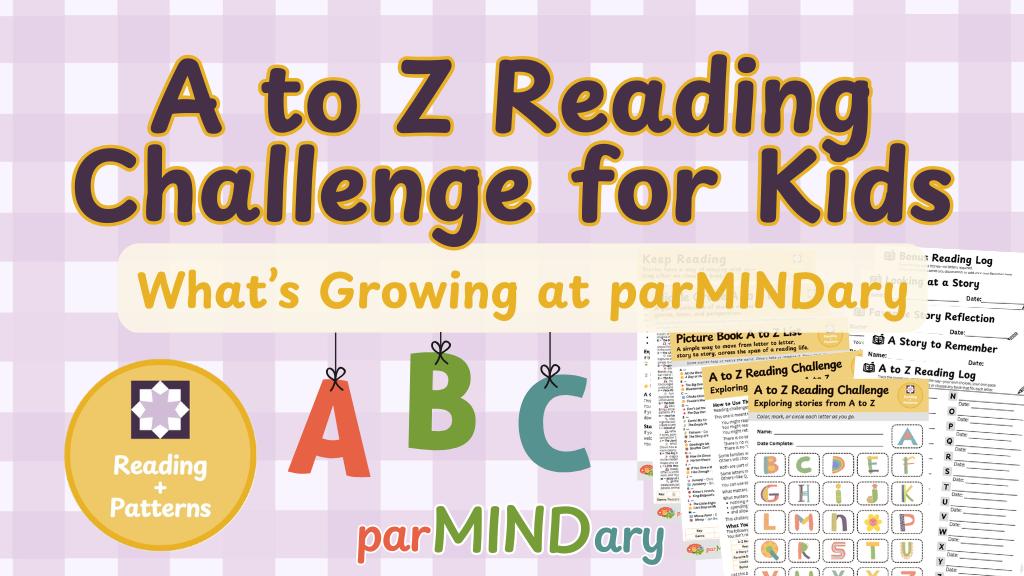
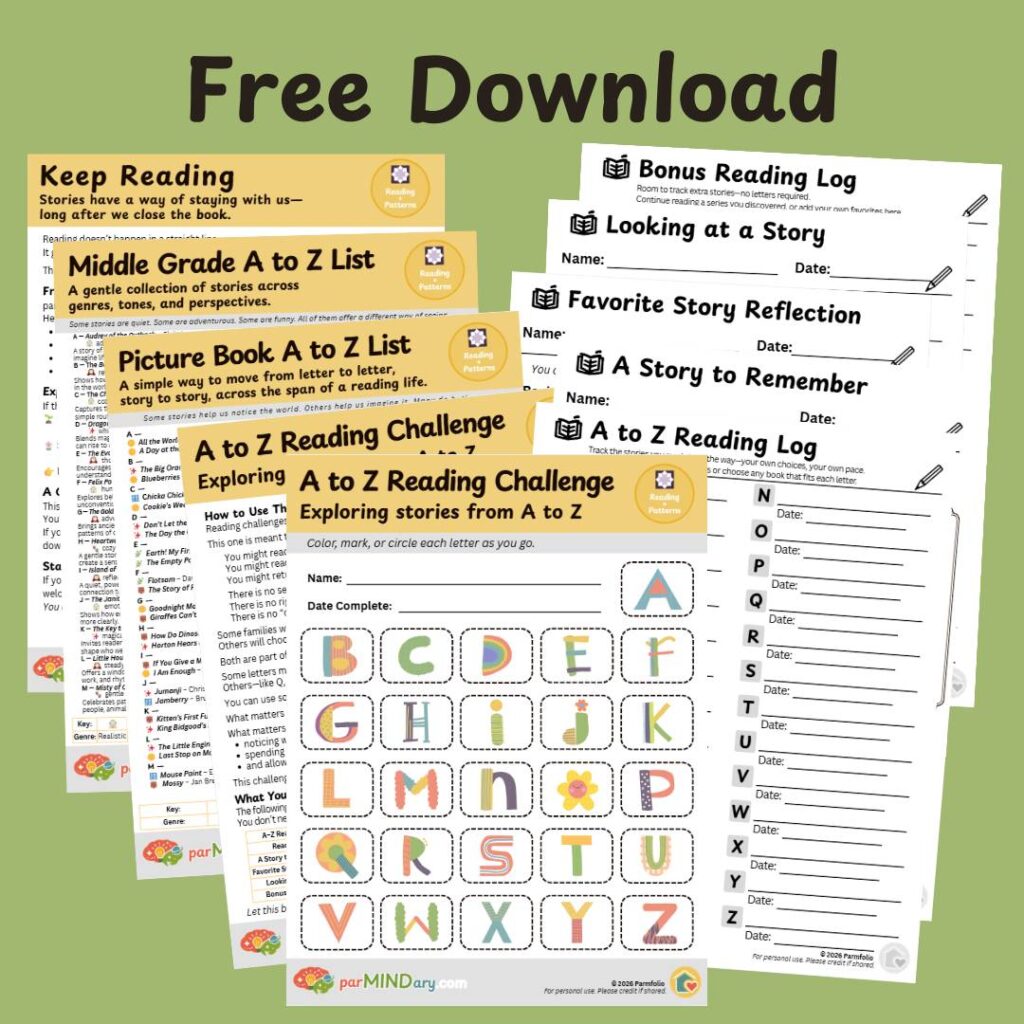
If you are looking for more inspiration, visit the parMINDary Free Resource Library to find the A to Z Reading Challenge Guide.
The A–Z Reading Challenge offers another way to explore—moving through a wide range of books while still leaving room to revisit favorites.
→ Try the A–Z Reading Challenge printable
Available in our Free Resource Library
Build Your Own A-Z Bookshelf
Instead of copying my 26 choices, look through your own shelves or visit the library. What book would you choose for each letter?
Here are a few prompts if you get stuck:
Does the title start with the letter? What about the author’s name? A character? An animal? A place? Something you notice in the illustrations?
For the tricky letters, get creative. If you can explain the connection, I’d say it counts.
Just remember, we’re not trying to teach 26 letters with 26 books. We’re using the alphabet as a new way to look at books you already know.
Keep Reading About Related Themes
Read more about our A to Z Reading Challenge and our Free Printable:
For more of our favorite books:
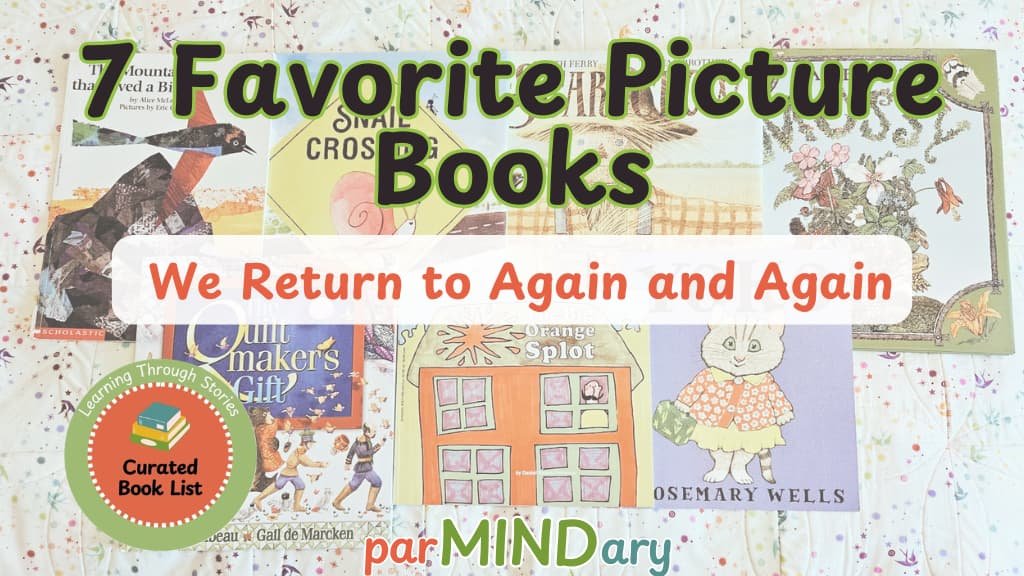
Note: Whether you borrow books from the library, purchase them, or share them with friends, the goal is the same: finding stories worth returning to. We visit our local library every week and add a few favorites to our home library throughout the year.
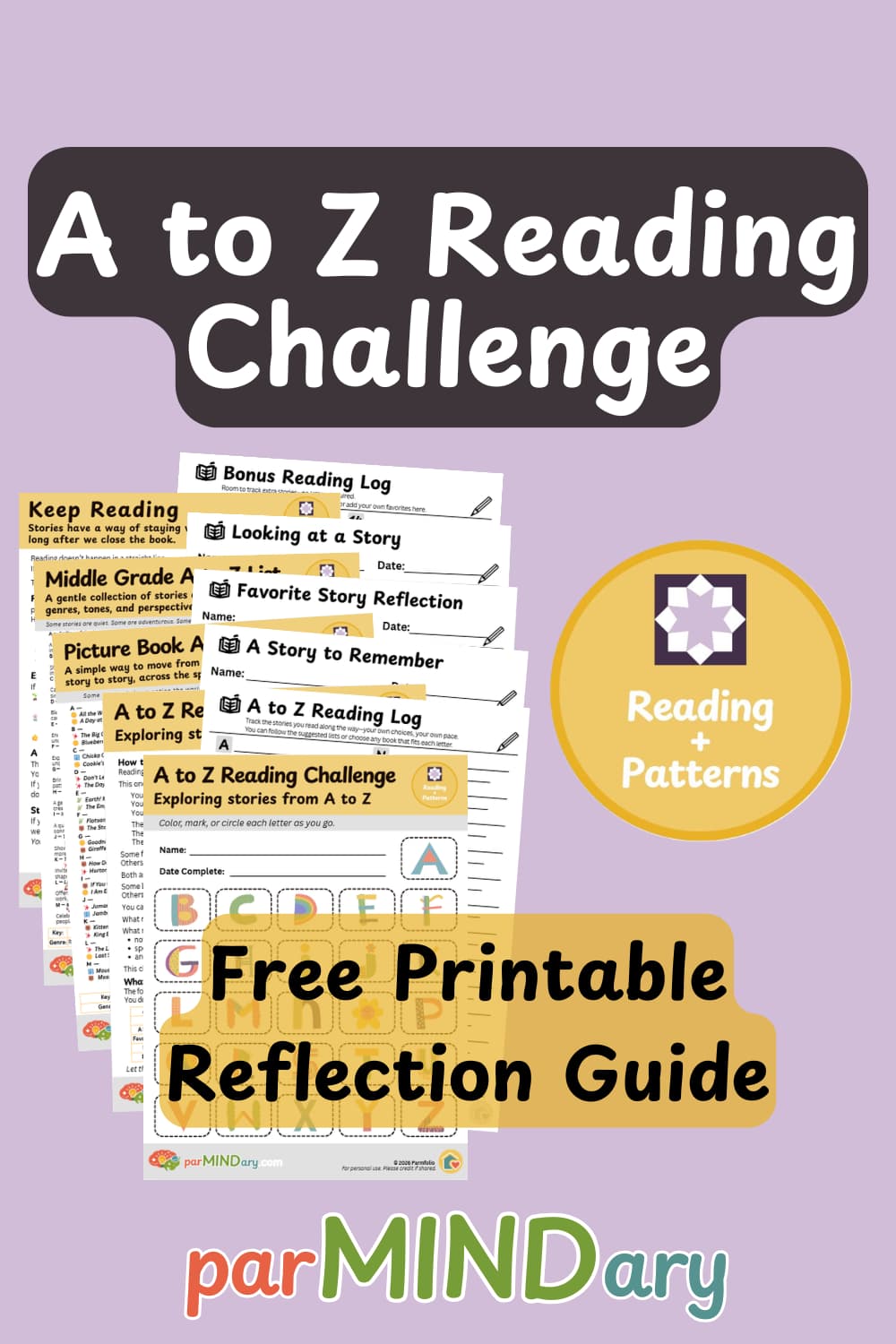
Download the A to Z Reading Challenge for Children from our Free Resource Library.