
Part of the parMINDary Philosophy Tree → [Branches]
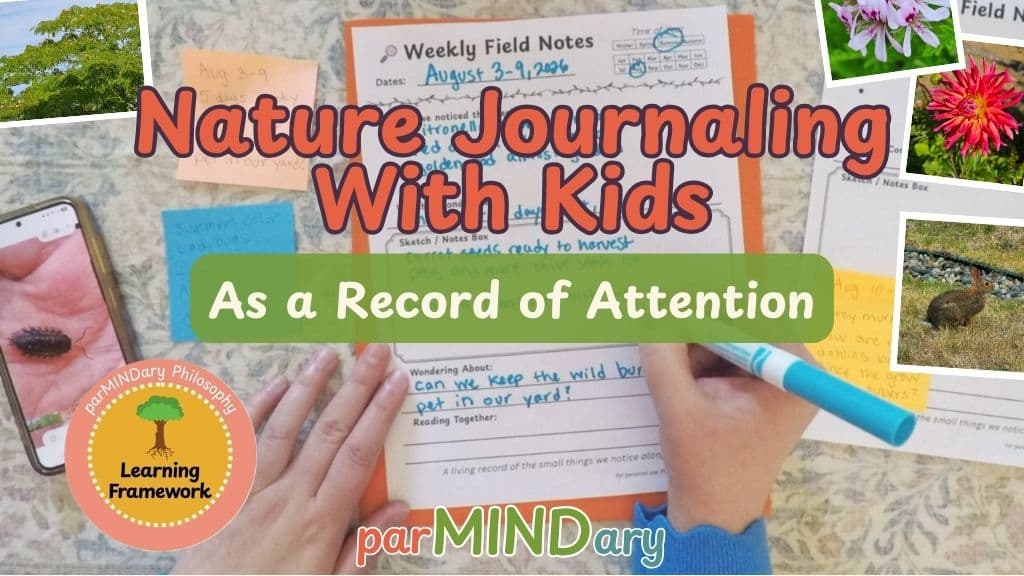
Nature journaling with kids can be simple, flexible, and grounded in everyday observations. Our family uses weekly field notes, photographs, living books, and questions to record what catches our attention as the seasons change—without requiring daily nature study, elaborate artwork, or special outings.
In Simple Terms:
Nature journaling is how we make a record of what caught our attention. We observe, wonder, and record—not necessarily every day or even in the moment, but often enough to look back and see patterns over time.
At a Glance: Real-World Nature Study
- Everyday nature observations
- Observe, wonder, record
- Photos, notes, and memories
- Living books alongside nature study
- Weekly records of seasonal change
Why this matters:
A nature journal doesn’t have to document every outdoor experience. Recording a few observations gives us something to revisit, compare, and connect as our understanding of the natural world grows.
Why We Nature Study, In Our Own Way
Nature journaling with kids doesn’t have to mean daily sketching, planned nature walks, or elaborate watercolor pages.
Nature journaling for us, is a record of attention rather than an assignment to complete.
Sometimes I sit down later with notes, photographs, weather memories, and conversations and reconstruct what we noticed. The value is in making the record, not maintaining a perfect journaling streak.
I’m writing this while catching up on two weeks from sticky notes, photographs, memory, and things we talked about.
How We Keep Field Notes in Real Life
My Nature Journal Mantra is:
Observe. Wonder. Record.
That is my whole system, week after week.
Step 1: Observe. We observe nature with our senses; sight, sound, touch, and scent. I often take photos of what we see, or we collect a sample to keep with our record later.
Step 2: Wonder. We wonderabout what we observe in nature and what we read about in living books. We may count things we see or hear, compare them, or guess what is coming next. If we have a significant question about nature to research later, I make a note.
Step 3: Record. I record what we observed later. My goal is to fill out my Weekly Field Notes page at the end of the week, but sometimes I catch up on more than one together.
Watch “Our Week in Nature” video to see how I complete that third step. Join me as I record our nature observations from the past two weeks, using my notes, photos, and memories from the week.
How Living Books Support Nature Study
I like to pair children’s literature set in the current season, with our observations each week.
Living stories and friendly non-fiction are regular picks for bedtime. Sometimes we’ll pick up a book about something in nature before we go outside, giving us something new to look for or think about.
We don’t have any hard rules about books when it comes to seasonal learning. They simply give us another way to experience the season.
-> If you’re interested in the kinds of seasonal stories we read each month, explore our seasonal book lists.
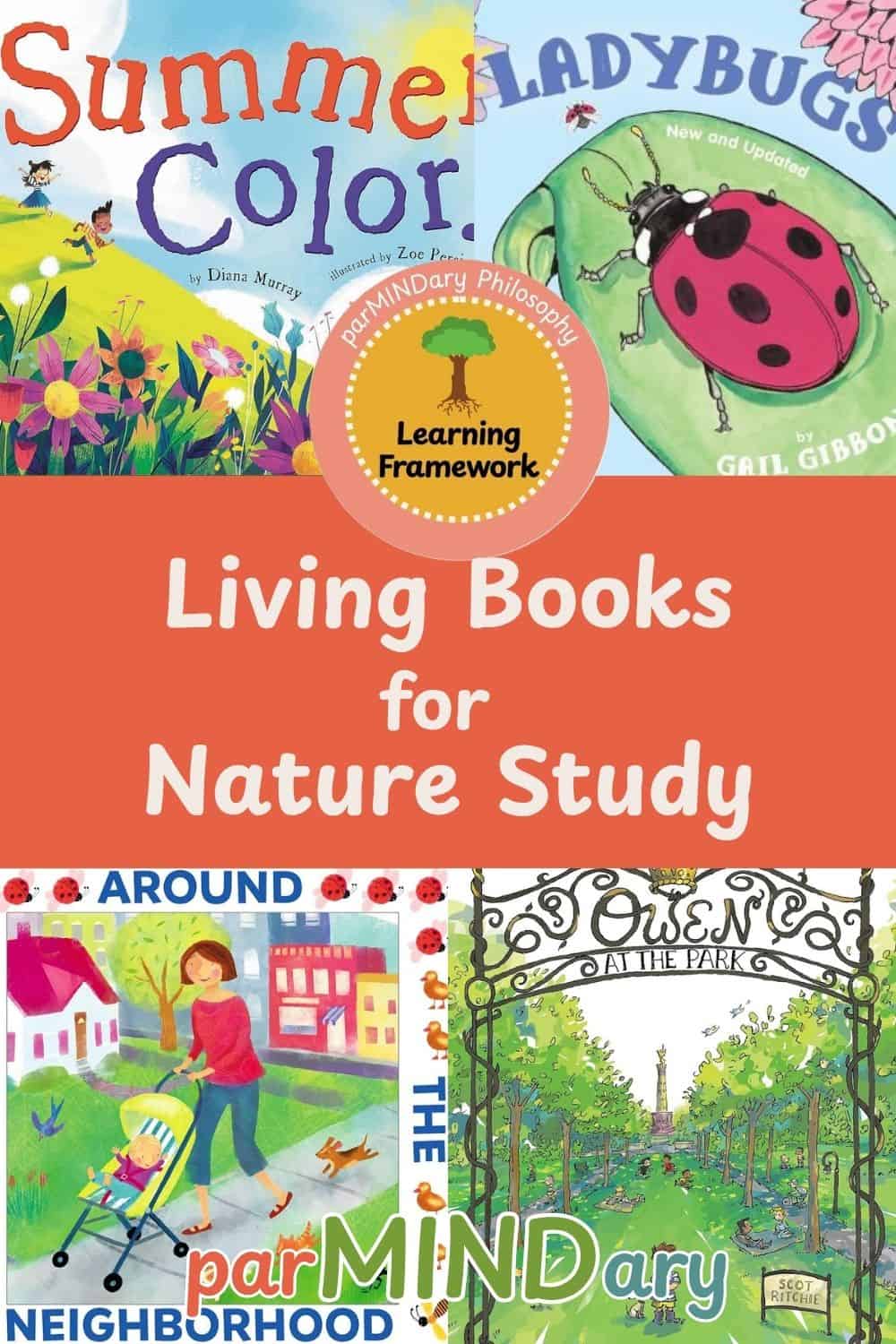
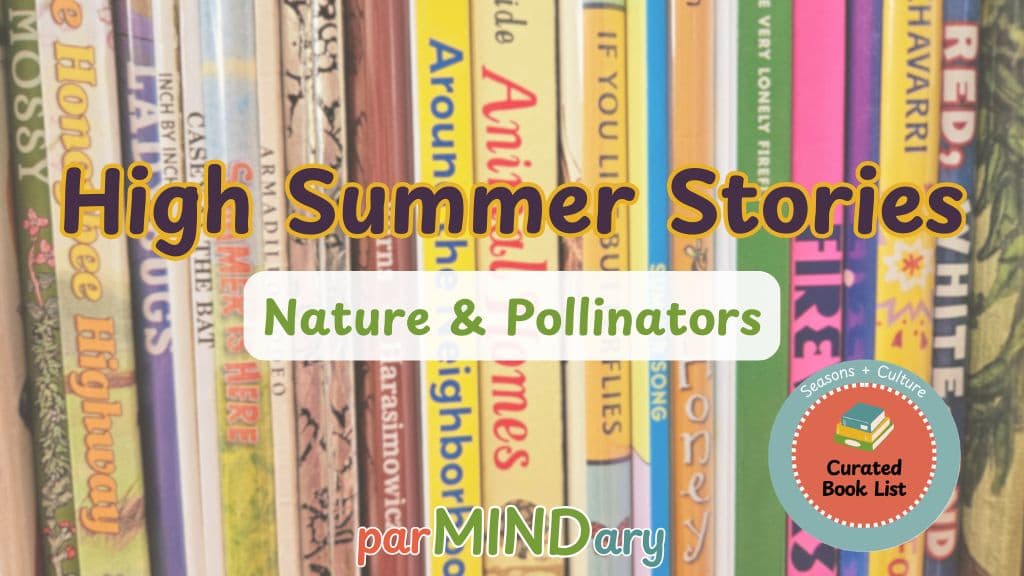
→ Explore our recent curated collection of High Summer Nature & Pollinator Stories.
Why This Approach Aligns With Our Values
In our previous Philosophy posts, we’ve talked about how we use reading and writing to make sense of our world and record our thoughts. Our Field Notes are another expression of the same philosophy:
observe → wonder → record → look back → notice patterns
The observations, questions, conversations, identification, reading, measuring, wondering, and connections happen throughout ordinary life. The journal captures pieces of them so they don’t simply disappear.
Later, the record itself becomes useful. We can look back and see seasonal cycles, recurring questions, changing interests, things we misunderstood at first, and observations that suddenly connect with something we’re learning months later.
This brings us back to our larger philosophy of documenting the learning as it happens in our everyday lives.
Learning this way allows us to build understanding through observation, reflection, and gentle inquiry, with our values at the center. We prioritize:
- Reading as the root of learning
- Understanding grows through observation
- Learning deserves to be seen and remembered
Nature Journal FAQ
These questions come from real conversations I’ve had with other homeschool families about nature study.
Here’s what we actually do, rather than a set of formal rules for nature journaling.
Let’s break through a few of the barriers that can make nature journaling feel more complicated than it needs to be.
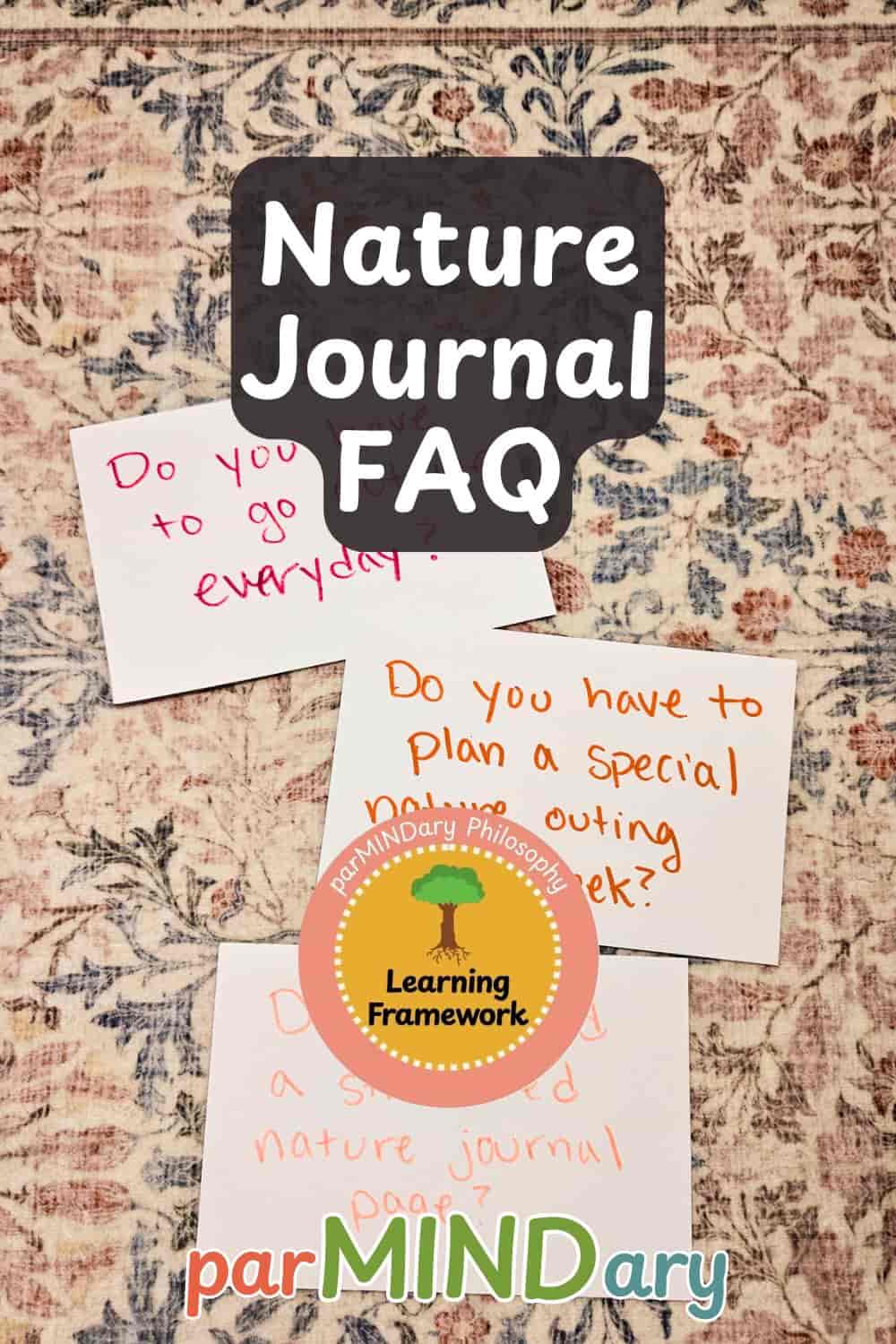
Do you have to go outside every day?
No. Nature journaling doesn’t have to mean a formal daily nature-study session.
Some observations happen because we’re intentionally outside, but others happen while we’re gardening, looking out the window, walking somewhere, noticing the weather, or discovering something unexpected.
Nature journaling doesn’t have to happen outside. Observation may happen outside, or through a window. Recording can happen later. Sometimes much later.
We’re cultivating a habit of noticing, not checking off daily nature study.
Do you plan a special nature outing every week?
No. Special outings can certainly become part of the journal, but the journal isn’t dependent on them.
We’re often watching an ordinary place around us change. Going back to the same yard, neighborhood, plants, weather, and wildlife is actually what allows seasonal patterns to become visible.
You don’t need a special outing to have something worth noticing.
“The strawberry runners weren’t there before. A flower opened. The days shortened. The birds changed. Something disappeared.”
A special outing lets us discover somewhere new.
Or, we can watch what is changing somewhere familiar.
Do you need a structured nature-journal page?
No. A blank notebook can be wonderful, especially if you enjoy drawing or painting what you see.
For me a blank page is too much. A structured page gives me somewhere to start.
Instead of sitting in front of a blank sheet wondering what deserves to be recorded, the categories prompt me to look back through the week and remember different kinds of information. The repeating structure also makes it easier to compare one week with another.
A blank journal offers freedom; our repeating prompts help me remember things I might otherwise overlook.
And over months, that consistency also creates something especially useful.
The journal isn’t the learning. It’s the record of the learning.
As we are Watching the Year, we’re learning to see patterns in nature through the seasons. The structure gives us a record we can look back through and makes those patterns easier to see over time
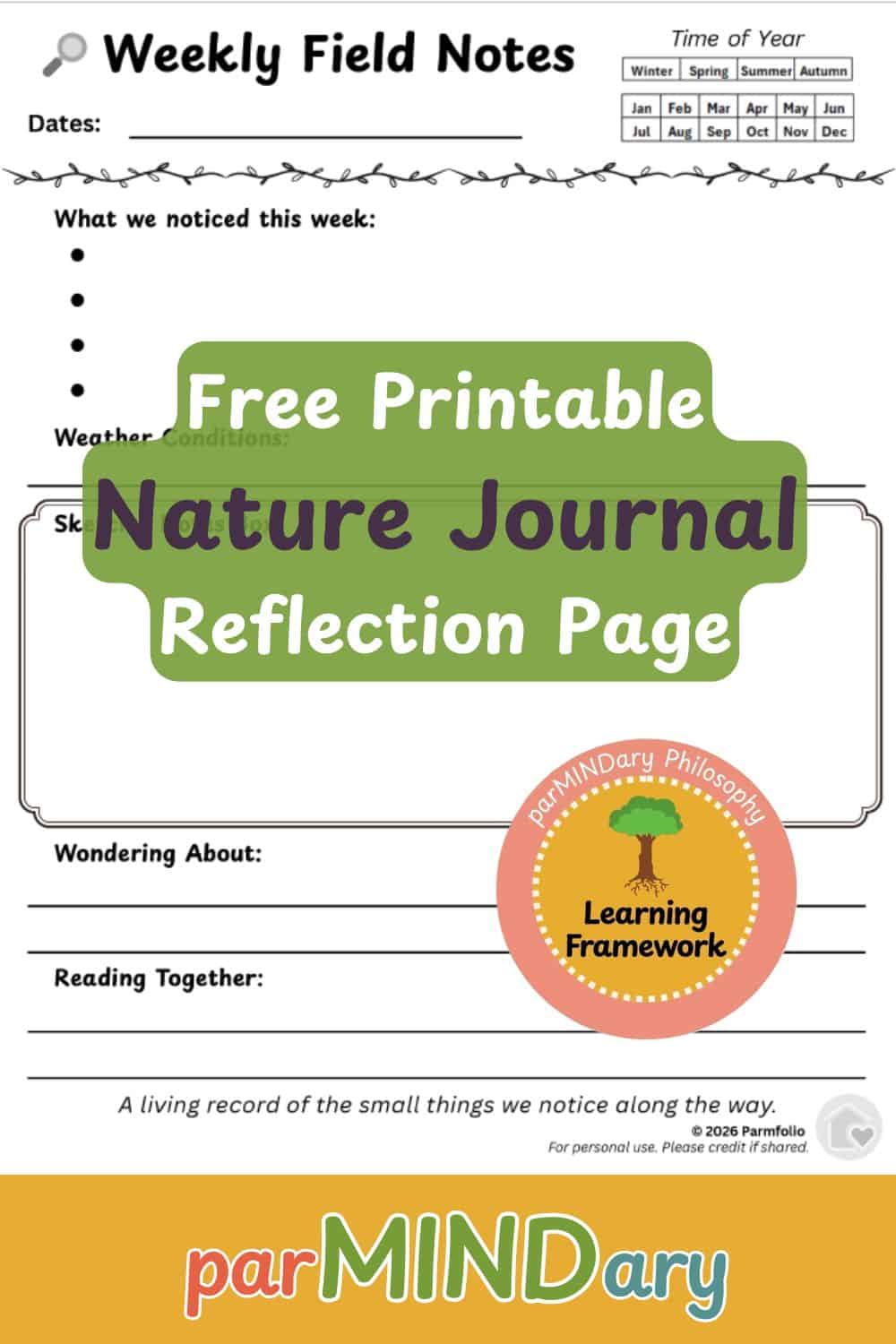
Our Weekly Field Notes Page (Free Printable)
Our Weekly Field Notes page is available for you to use too.
This is the same one-page printable I use to record our observations each week, with space for what we notices, weather, questions, books, and other pieces of our nature study.
Try it yourself:
Find the Weekly Field Notes page in our Free Resource Library
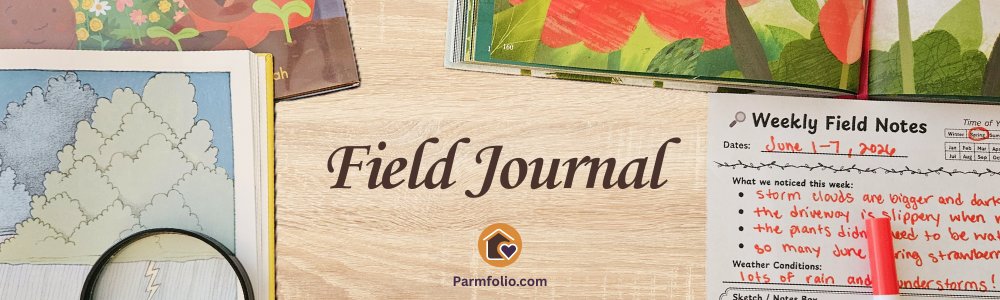
Parmfolio Learning Lab Field Journal
You’ve now read why we nature journal and seen how we keep our weekly field notes.
Now I invite you to visit our Parmfolio Learning Lab, where I keep the Field Journal records of our weekly discoveries. You can see our latest observations, and what this practice looks like over time.
Now I invite you to visit our Parmfolio Learning Lab, where I keep the Field Journal records of our weekly discoveries. You can see our latest observations, and what this practice looks like over time.
I wish you the best with your own nature observations!
Observe. Wonder. Record.
If you liked this post:
Check out our related blog post about homeschooling with books
Visit our parMINDary Philosophy pillar page
Or read more about our parMINDary values

Download the Build Your Homeschool Philosophy Mini Guide from our Free Resource Library.