
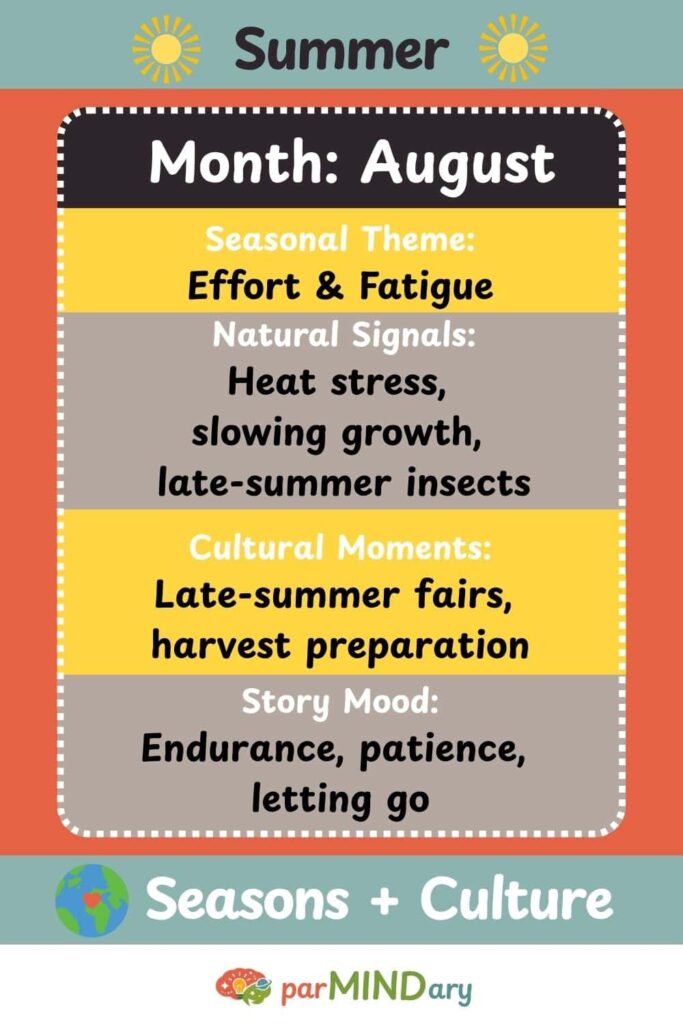
August — Effort & Fatigue
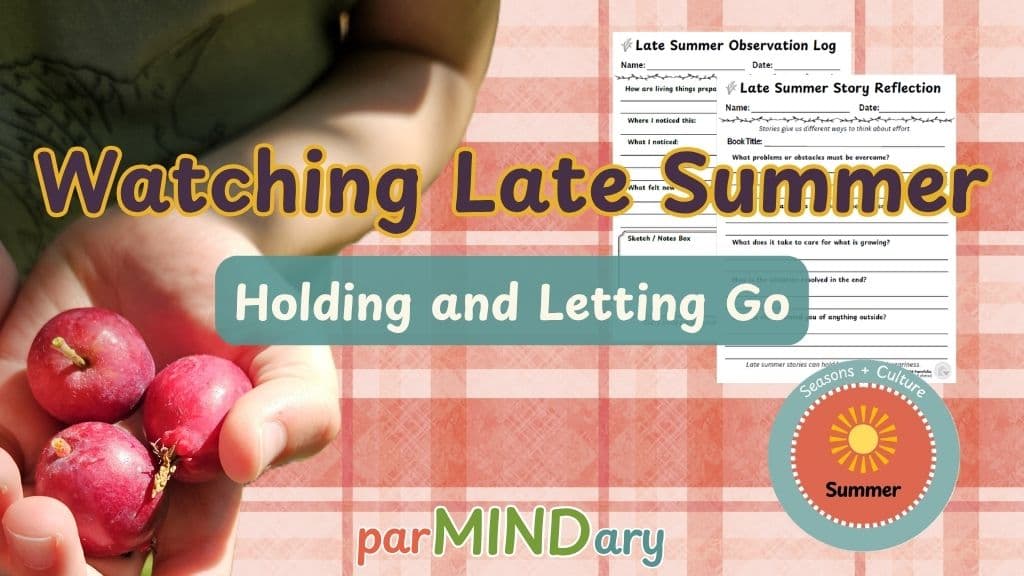
Late summer is a season of fullness beginning to shift. Gardens are producing, berries and seeds are ripening, flowers continue to bloom, and warm days carry the accumulated work of the season. This August seasonal learning post explores signs of late summer through stories, nature observation, cultural rhythms, and gentle invitations to notice effort, rest, harvest, and the first hints of change ahead.
In Simple Terms:
Late summer is a season of effort and change. Gardens and wild spaces may still look full, but growth is slowing, harvests are beginning, and small signs remind us that summer will not last forever.
At a Glance: Effort & Fatigue
- Gardens producing and beginning to slow
- Berries, fruits, seeds, and early harvests
- Flowers fading while others continue blooming
- Insects, birds, and other late-summer activity
- Hot days, dry ground, and signs of seasonal stress
- Gathering, tending, resting, and letting go
Why this matters:
Late summer lets us see what comes after abundance. Growth requires energy, harvest follows tending, and every living cycle includes periods of slowing and change. August invites us to appreciate what is still here while beginning to notice what the season is preparing to leave behind.
🌾 August in the Seasonal Cycle: Effort & Fatigue
By August, summer is still unmistakably here, but it no longer feels endless.
Gardens continue producing. Berries ripen, flowers bloom, insects remain active, and warm afternoons still stretch into pleasant evenings. Yet alongside that abundance, there are signs of strain and change. Grass dries in the heat. Earlier flowers fade. Plants put energy into fruit and seeds rather than new growth.
The work of the season becomes easier to see too. Gardens need watering and harvesting. Fruit must be gathered when it is ready. We see birds, insects, and small animals as they continue searching for food, while we tend what we have grown and make use of what summer has provided.
There is fatigue here as well as fullness. Hot days can make both people and animals seek shade. Plants wilt between waterings. Even familiar summer routines can begin to feel slower after months of long days and activity.
If high summer invited us to notice how many lives could flourish together, late summer asks us to notice what it takes to sustain that abundance—and what happens when it can no longer remain at its peak.
August holds both things at once: the satisfaction of what has grown and the first necessity of letting some of it go.
🌾 Late Summer Invitation: What We Begin to Notice in August
Late summer can feel full and tired at the same time.
Gardens are producing, berries and fruit are ripening, insects remain active, and many flowers are still blooming. Yet the season no longer carries quite the same sense of expansion. Some plants have finished flowering. Leaves may show the effects of heat and dry weather. Seed heads begin appearing where blossoms once grew.
You might notice:
- fruit and berries becoming ripe enough to gather
- flowers fading and seeds beginning to form
- plants wilting during the hottest part of the day
- dry grass, dusty soil, or other signs of prolonged summer weather
- quieter periods of activity during hot afternoons
- familiar summer routines beginning to change
August invites us to notice effort as part of the seasonal cycle. The abundance around us did not appear all at once. Plants have spent months growing. Birds and insects continually search for food and shelter. Gardens have been planted, watered, weeded, and tended.
Eventually, all that activity gives way to something else.
Late summer holds the results of the season’s work while reminding us that nothing can remain at its fullest forever. Some things are ready to gather. Some need continued care. Others are simply ready to be finished.
🌾 Stories That Capture the Feeling of Late Summer
Late summer stories can hold both activity and weariness.
Some follow gardens, food, and the work that comes before a harvest. Others linger with people caring for living things, returning home, resting, or recognizing that something is beginning to change.
A few examples you might explore:
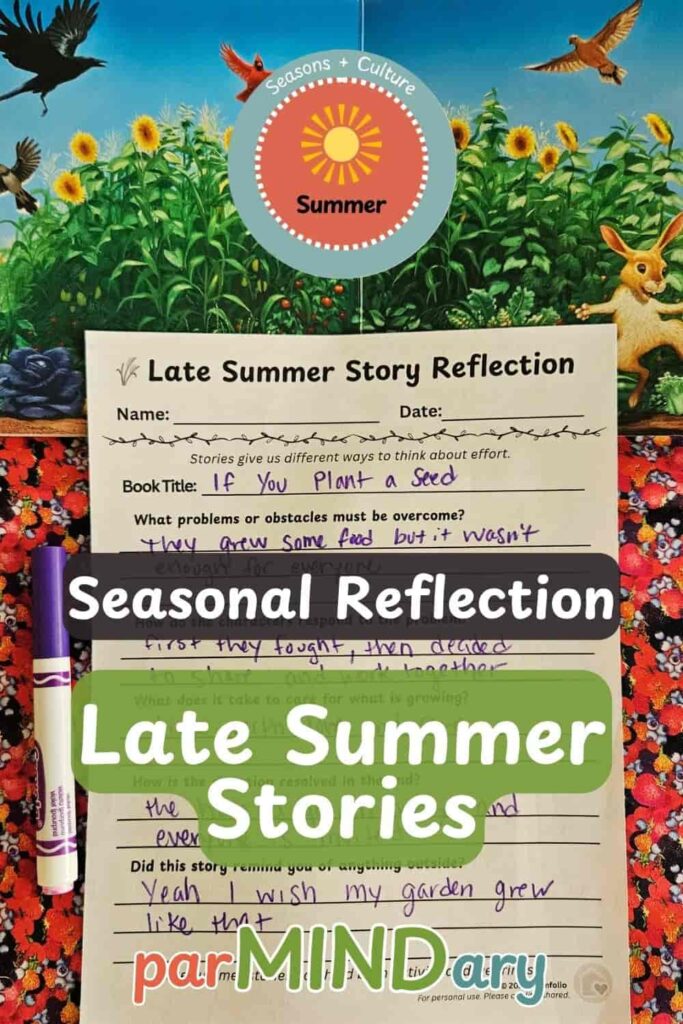
- If You Plant a Seed: A small act of planting grows into a story about patience, abundance, and what we choose to share.
- The Water Hole: Animals gather around a shrinking water source as abundance slowly gives way to scarcity and change.
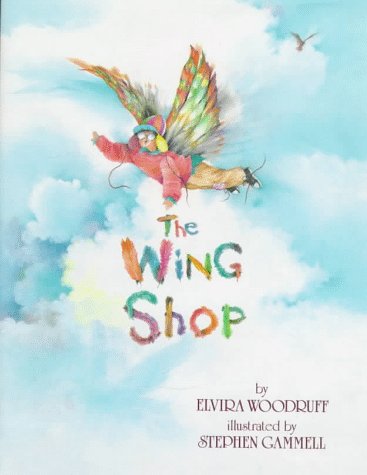
- The Wing Shop: A boy’s search for the perfect wings becomes a gentle story about longing, change, and knowing when to let go.
Disclosure: This post contains affiliate links. As an Amazon Associate, I earn from qualifying purchases at no additional cost to you.


Together, these stories give us different ways to think about effort. Sometimes effort means growing or gathering. Sometimes it means caring for something over time. And sometimes, after all that activity, it means knowing when to rest or let go.
→ If you’d like more ideas, explore our full collection of Late Summer Effort & Harvest Stories.
→ If you’d like more ideas, explore our full curated collection of Late Summer Effort & Harvest Stories.

🌾 Late Summer Nature Observations for August
By August, many things we watched grow earlier in the summer are reaching a different stage.
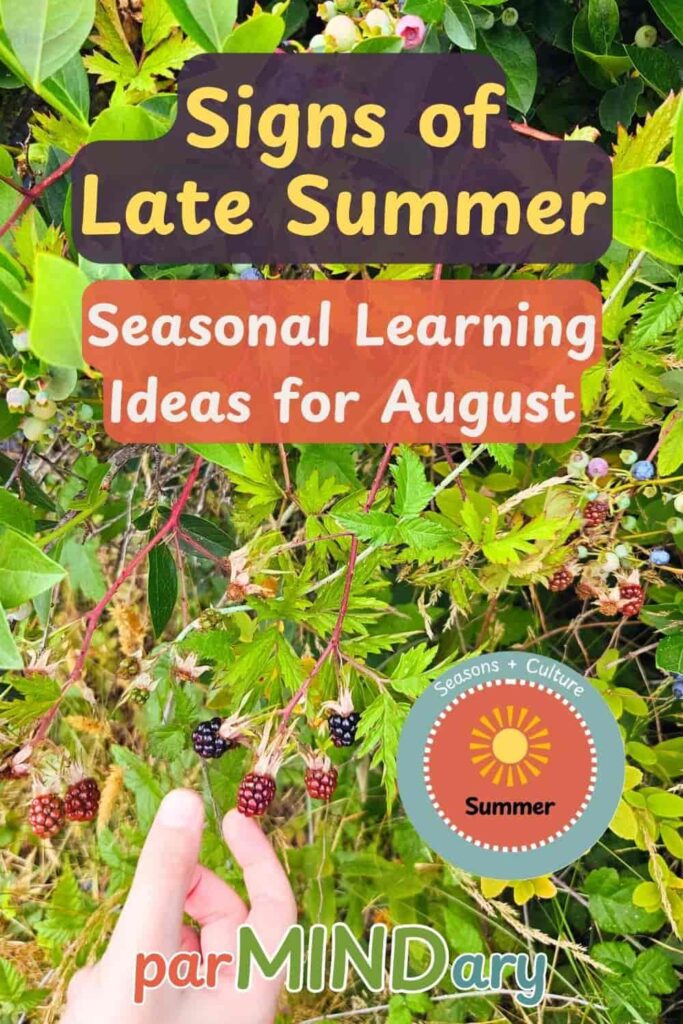
Flowers that once seemed new may be fading or forming seeds. Fruits and vegetables grow heavier on their plants. Berries ripen and disappear almost as quickly as birds, animals, and people discover them. Other plants may look dry or tired after weeks of sun and heat.
You might notice:
- ripe berries, fruit, or vegetables ready to gather
- seed pods and seed heads replacing flowers
- plants bending under the weight of fruit
- dry or browning grass
- leaves with curled, brown, or sun-worn edges
- bees, butterflies, ants, and other insects continuing their work
- birds visiting gardens, shrubs, and fruiting trees
- cooler mornings or evenings even when afternoons remain hot
- the first fallen leaves appearing beneath otherwise green trees
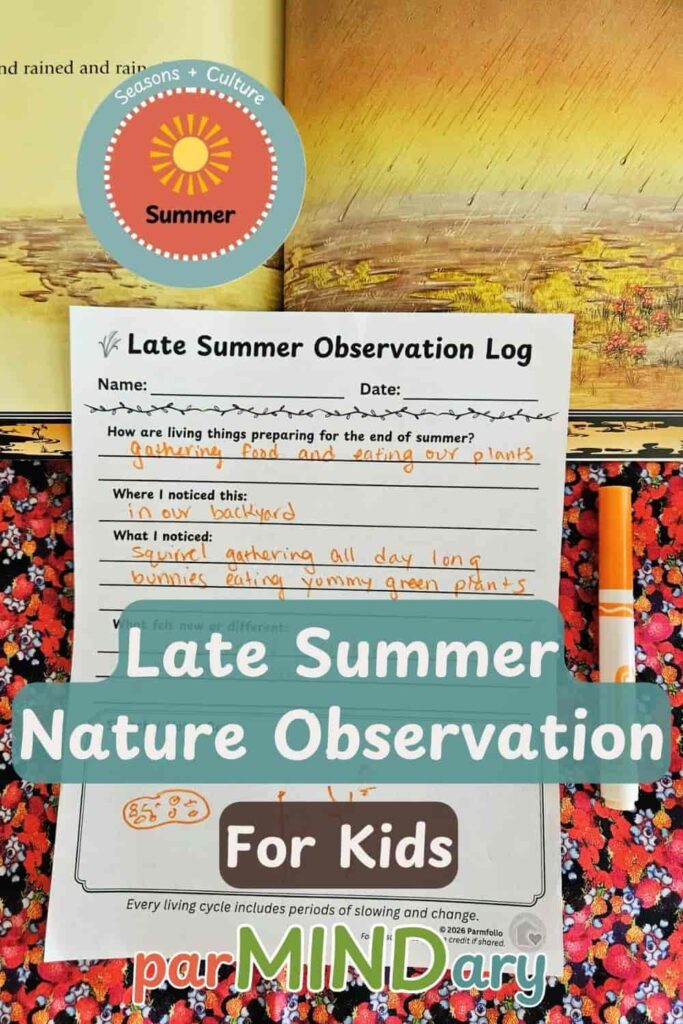
Our late summer observations often contain signs of more than one stage at once. A plant can still be flowering while another nearby has already gone to seed. A garden can be producing heavily while some of its leaves begin to fade.
August makes these overlaps especially visible. Summer is still here, but the landscape is beginning to carry a record of everything that has already happened.
→ Visit the parMINDary Free Resource Library:
To download the Late Summer Observation + Story Guide
🌾 Simple Late Summer Activities for August
Late summer offers plenty to notice without needing to search far.
This can be a good time to return to plants and places you have watched throughout the summer. Instead of looking only for something new, notice what all those weeks of growth and activity have produced.
- Gather something that is ripe and notice where it came from.
- Look closely at a flower that has gone to seed.
- Compare a fresh leaf with one showing signs of heat, dryness, or age.
- Find a plant with flowers, fruit, and seeds at different stages.
- Visit the same garden or outdoor space in the morning and during a hot afternoon. What changes?
- Look beneath a fruit tree for evidence of what has fallen or been eaten.
- Watch birds or insects around plants that are producing seeds or fruit.
- Sketch or photograph something you first noticed earlier in the season and compare how it looks now.
- Spend some time outdoors without doing anything in particular. Where do people and animals go when the day feels hot or tiring?
These moments can make the slower changes of late summer easier to see. Ripening, fading, gathering, resting, and continuing are all happening alongside one another.
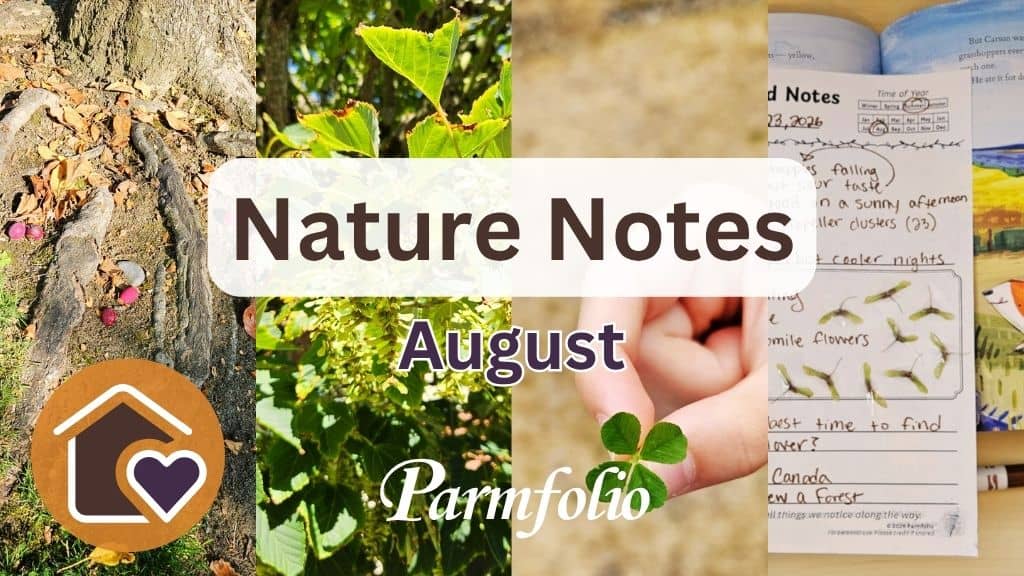
We recorded our own Late Summer observations for August in the Parmfolio Learning Lab Field Journal.
🌾 August Traditions and Seasonal Gatherings
Late summer often brings together celebration and work.
Farmers markets and roadside stands reflect what is ready to gather. County and state fairs bring communities together around food, animals, gardens, crafts, and the things people have spent months raising or making. In gardens and kitchens, late-summer abundance may be eaten immediately, shared with others, or preserved for later.
August can also carry the feeling of wanting to hold onto summer a little longer.
Everyday traditions might include:
- picking berries or visiting a farm stand
- gathering vegetables from a garden
- attending a county or state fair
- making jam, freezing fruit, or preserving garden produce
- eating outside while the evenings are still warm
- taking one more summer trip or picnic
- returning to a favorite swimming place
- sharing extra garden produce with friends or neighbors
- noticing which summer traditions are nearly finished for the year
These practices sit naturally between abundance and change. Some celebrate what the season has produced. Others preserve a small piece of it for later. And some simply give us a reason to enjoy what remains while it is still here.
🌾 How August Leads Into Autumn
As August moves toward September, the balance begins to shift.
Summer has not disappeared. Warm days may continue, gardens still produce, and flowers and insects remain part of the landscape. But small signs of the next season have become harder to miss.
We see more seeds appear, fruit ripen and fall, and leaves begin collecting beneath some trees. Mornings and evenings may feel cooler, and daylight is noticeably shorter than it was near the summer solstice.
What felt like effort in August gradually becomes preparation.
Plants disperse seeds. Animals respond to changing sources of food. People gather what is ready, finish summer projects, and begin returning to routines that belong to another part of the year.
The question changes once again.
Instead of asking,
What does it take to care for what is growing?
we begin asking,
What is getting ready for what comes next?
This is how late summer gradually becomes early autumn.
The Year Through Stories: Our Seasonal Learning Cycle
🌲 January — Looking Forward Gently
🌙 February — Noticing Before Action
🌱 March — Return & Anticipation
💧 April — Movement & Thresholds
🌼 May — Invitation & Care
🐝 June — Belonging & Welcome
☀️ July — Abundance & Coexistence
🌾 August — Effort & Fatigue
🍎 September — Preparation & Trust
🍂 October — Memory & Meaning
🕯️ November — Gratitude Without Possession
❄️ December — Rest & Dormancy
Related Seasonal Posts
→ Explore the companion curated book list for August:
Late Summer Effort & Harvest Stories
→ Visit the parMINDary Free Resource Library:
To download the Late Summer Observation + Story Guide
→ Continue reading Year 1: Watching the Year Here:
🍎 September — Preparation & Trust
Watching Early Autumn: Preparing for the First Signs of Fall
Explore more seasonal learning ideas on our Seasons & Culture pillar page.
Or follow how we learn to notice the seasonal cycle here:
Watching the Year
🌎 Watching the Year: Homeschooling Through the Seasons
🌲 Watching Midwinter: Renewal and Anticipation
🌙 Watching Late Winter: Staying Indoors and Keeping Warm
🌱 Watching Early Spring: Waiting for the First Signs of Change
💧 Watching Mid-Spring: When Motion Replaces Waiting
🌼 Watching Late Spring: Marking Time Together
🐝 Watching Early Summer: Long Days and Open Possibility
☀️ Watching High Summer: Stillness Inside Abundance
🌾 Watching Late Summer: Holding and Letting Go
🍎 Watching Early Autumn: Preparing for the First Signs of Fall
🍂 Watching Mid-Autumn: The Work of Letting Go
🕯️ Watching Late Autumn: Quiet Before Winter
❄️ Watching Early Winter: Light, Memory, and Celebration
Curated Seasonal Book Lists
🌎 Stories That Follow the Whole Year
🌲 Quiet Deep Winter Stories for Children
🌙 Late Winter & Waiting Stories
🌱 Early Spring Stories for Children
💧 Spring Migration & Movement Stories
🌼 Spring Festivals & May Tradition Stories
🐝 Early Summer Stories for Children
☀️ High Summer Nature & Pollinator Stories
🌾 Late Summer Effort & Harvest Stories
🍎 Migration & Autumn Arrival Stories
🍂 Autumn Harvest & Celebration Stories
🕯️ Gratitude & Community Stories
❄️ Winter Light & Celebration Stories

Download the Seasonal Observation + Story Guides from our Free Resource Library.