
A Curated Book List
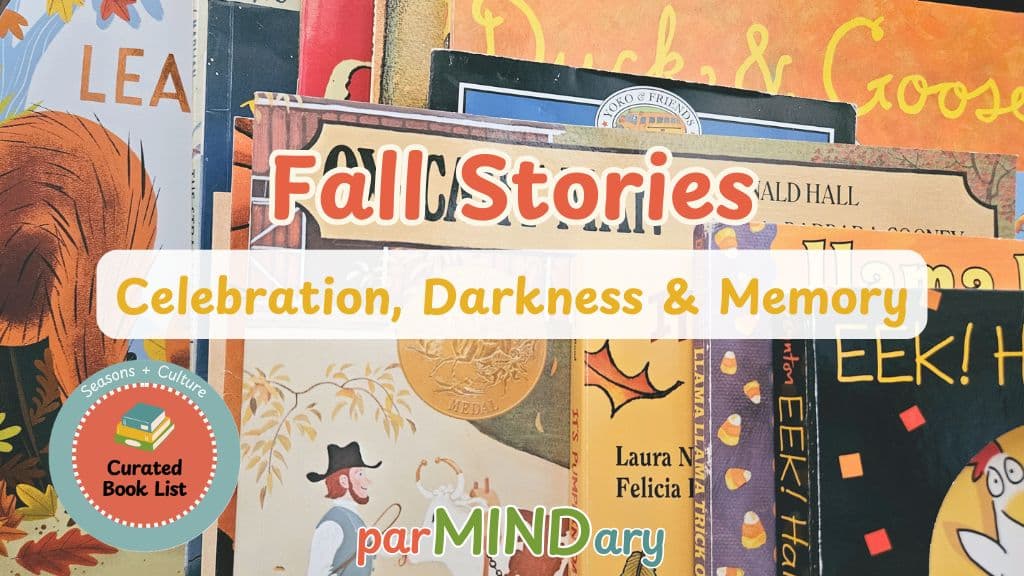
October brings autumn into full color. Leaves turn and tumble from the trees, pumpkins appear on porches and in fields, evenings arrive earlier, and familiar places begin to look different in the fading afternoon light. It is a month filled with change, but also with ways of enjoying that change—harvest traditions, costumes, glowing pumpkins, spooky stories, and reasons to gather together.
These 30 fall stories for children move through both sides of October. We begin outdoors with falling leaves, seeds, harvests, and the changing landscape. From there come pumpkins and Halloween celebrations, playful encounters with ghosts and monsters, and stories that invite us to think about memory, perspective, and the stories we carry with us.
In Simple Terms:
Mid-autumn is filled with visible change. Leaves fall, plants fade, animals prepare for colder weather, and daylight becomes shorter. At the same time, October fills those darker evenings with pumpkins, costumes, stories, traditions, and celebrations.
At a Glance: Mid-Autumn Through Stories
- Falling leaves, seeds, and changing trees
- Harvests and the seasonal work of autumn
- Pumpkins, costumes, and Halloween traditions
- Ghosts, monsters, mystery, and nighttime adventures
- Earlier darkness and the things we notice at night
- Memory, perspective, belonging, and stories from the past
Why this matters:
Reading through October gives us a way to experience both seasonal changes and celebrations. We can enjoy the bright colors, strange creatures, crisp leaves, and playful frights while also noticing how stories and traditions give meaning to a season when so much around us is changing.
Explore Seasonal Books
Looking for stories tied to a specific season?
You may also enjoy our quick visual guides:
• Spring Books for Children
• Summer Nature Stories
• Autumn & Harvest Picture Books
• Winter Read-Aloud Stories
• Books About the Seasons
🍂 Reading During Mid-Autumn
By October, autumn is no longer arriving quietly. Trees are now be filled with yellow, orange, and red. Leaves collect underfoot, gardens fade, seeds scatter, and daylight slips away a little earlier each evening.
The stories we read during mid-autumn can follow those changes into some of the most distinctive experiences of the season. Alongside all that seasonal change, October gives us opportunities to notice what remains familiar, what we remember, and how the stories we tell can shape the way we understand the world around us.
These 30 books are grouped around patterns we can explore throughout mid-autumn, and invite us into an October filled with things to see, hear, feel, celebrate, and remember. As the evenings grow longer, we can keep asking a simple seasonal question: What do we notice as the year grows darker?
Disclosure: This post contains affiliate links. As an Amazon Associate, I earn from qualifying purchases at no additional cost to you.
🍂 The Changing World of Fall
October can transform a familiar landscape surprisingly quickly. Green leaves turn yellow, orange, red, and brown before drifting to the ground. Seeds scatter in the wind. Fields and gardens empty after harvest, and bare branches begin to appear where there was once a thick canopy of leaves.
These stories let us experience that changing world up close. We can travel with a tiny seed, investigate the colors inside a leaf, and wonder about where all those leaves have gone. Other stories follow the work of the harvest or simply slow us down long enough to notice an autumn leaf or an owl moving through the night.
There is plenty to notice as October rearranges the world around us.
Themes in this Section:
falling leaves · seeds · harvest · changing colors · seasonal cycles
✦
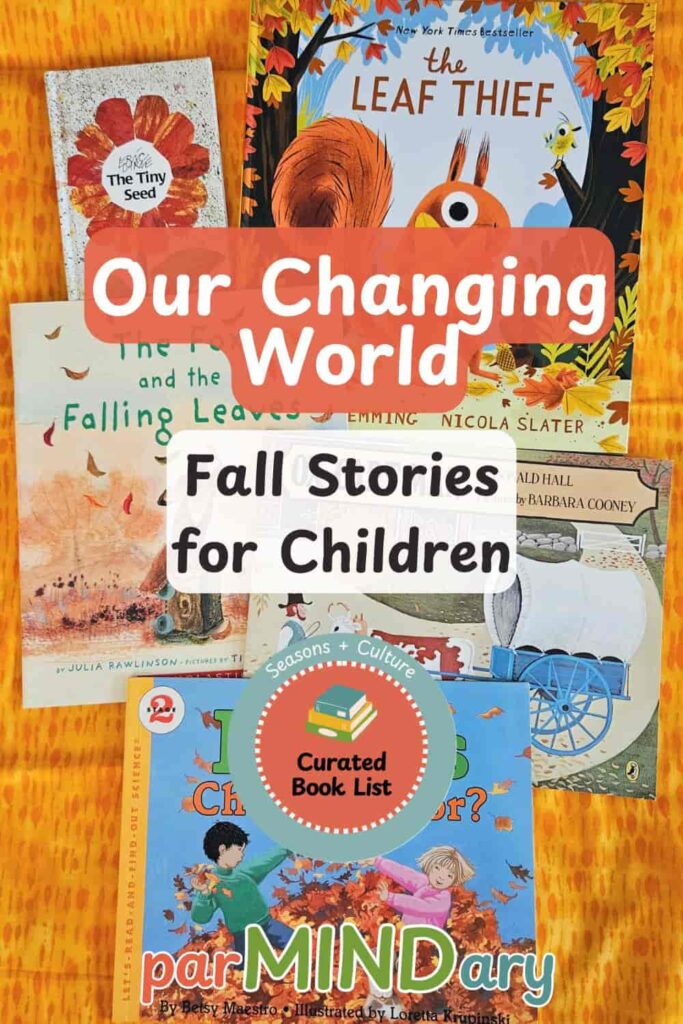
The Tiny Seed – Eric Carle
A tiny seed journeys through the seasons to grow into a huge flower.
Why this book matters: We travel right alongside the seed as wind carries it over mountains and oceans, into the ground, and eventually toward spring growth. By the time autumn returns and new seeds scatter from the flower, we’ve watched the whole cycle come around again.
Themes / patterns: plant life cycle, seasons, growth, seeds, wind, repetition
Age range: 2–6
Find The Tiny Seed on Amazon
Why Do Leaves Change Color? – Besty Maestro
Discover why an autumn leaf changes colors as the days grow shorter.
Why this book matters: Brilliant fall leaves become even more interesting when we look closely at what is happening inside them. The science gives us something new to watch for outdoors: different colors, different trees, changing daylight, and leaves at every stage from green to fallen.
Themes / patterns: leaves, autumn colors, trees, seasonal change, science, observation
Age range: 3–6
Find Why Do Leaves Change Color? on Amazon
Fletcher and the Falling Leaves – Julia Rawlinson
Fletcher watches the leaves fall from his favorite tree and tries everything he can think of to keep them safely attached.
Why this book matters: Fletcher makes it easy to linger over all the little details of leaves changing and falling. We feel the wind tugging at them, watch them flutter away one by one, and understand why a suddenly bare tree might look alarming—until Fletcher discovers one more beautiful change waiting for him.
Themes / patterns: falling leaves, foxes, trees, autumn, change, observation
Age range: 2–6
Find Fletcher and the Falling Leaves on Amazon
The Leaf Thief – Alice Hemming
Squirrel is certain someone is stealing the leaves from his tree, while Bird patiently tries to explain what autumn is doing.
Why this book matters: Squirrel’s outrage turns one of autumn’s most ordinary changes into a mystery. Leaves vanish, wind blows, and the tree keeps changing no matter how carefully Squirrel watches it. The repeated surprise makes falling leaves especially fun to notice outside afterward.
Themes / patterns: leaves, squirrels, wind, autumn, seasonal change, humor
Age range: 2–5
Find The Leaf Thief on Amazon
Ox-Cart Man – Donald Hall
A New England farmer’s year of work, harvest, and return.
Why this book matters: This classic story follows a New England farmer and his family through a full year of work, harvest, and preparation, showing how daily life once revolved around seasonal rhythms.
Themes / patterns: farm life cycles, seasonal work, sustainability, family cooperation, historical rhythms of life
Age range: 3–9
Find Ox-Cart Man on Amazon
For more books that follow our nature world through the seasons, explore our post:
👉 Children’s Books That Follow the Whole Year: Stories of the Seasons
The Wishing Leaf – Kallie George
As autumn leaves begin to fall, a little bear searches for the perfect leaf to make a special wish.
Why this book matters: Bear waits patiently for the very last leaf to fall, even as his friends leave one by one for their warm homes. When his long-awaited wishing leaf finally arrives, the wish he makes isn’t only for himself—he shares it with everyone he cares about.
Themes / patterns: autumn leaves, waiting, persistence, wishes, friendship, generosity
Age range: 4–8
Find The Wishing Leaf on Amazon
Owl Sees Owl – Laura Godwin
Through a reverso poem, a young owl leaves the nest, flies through the nighttime world, and returns home again.
Why this book matters: Sparse words and dark, luminous illustrations make this feel almost like joining the owl on a quiet nighttime flight. We move from nest to moonlit landscape to still water, noticing how different the familiar world can look after dark.
Themes / patterns: owls, nighttime, reflections, flight, observation, home
Age range: 3–7
Find Owl Sees Owl on Amazon
Leaves may be falling and gardens may be fading, but October is far from quiet. Pumpkins arrive, costumes come out, and porches and neighborhoods begin to change too. Next, we turn from the patterns of the natural world to the playful traditions people have built around the season.
🍂 Pumpkins, Harvest & Halloween Stories
October changes our neighborhoods as much as it changes the trees. Pumpkins appear on porches, costumes come out of closets, houses gain playful decorations, and familiar places begin to look a little more mysterious after dark.
These stories celebrate the lively side of mid-autumn. We can pick pumpkins, join a Halloween parade, go trick-or-treating, admire a prize pumpkin, and laugh at characters who aren’t quite sure what to make of all the strange things happening around them. Harvest and Halloween traditions give us ways to play with the season—and plenty of reasons to gather together while the evenings grow cooler.
Themes in this Section:
pumpkins · Halloween · harvest · costumes · traditions
✦
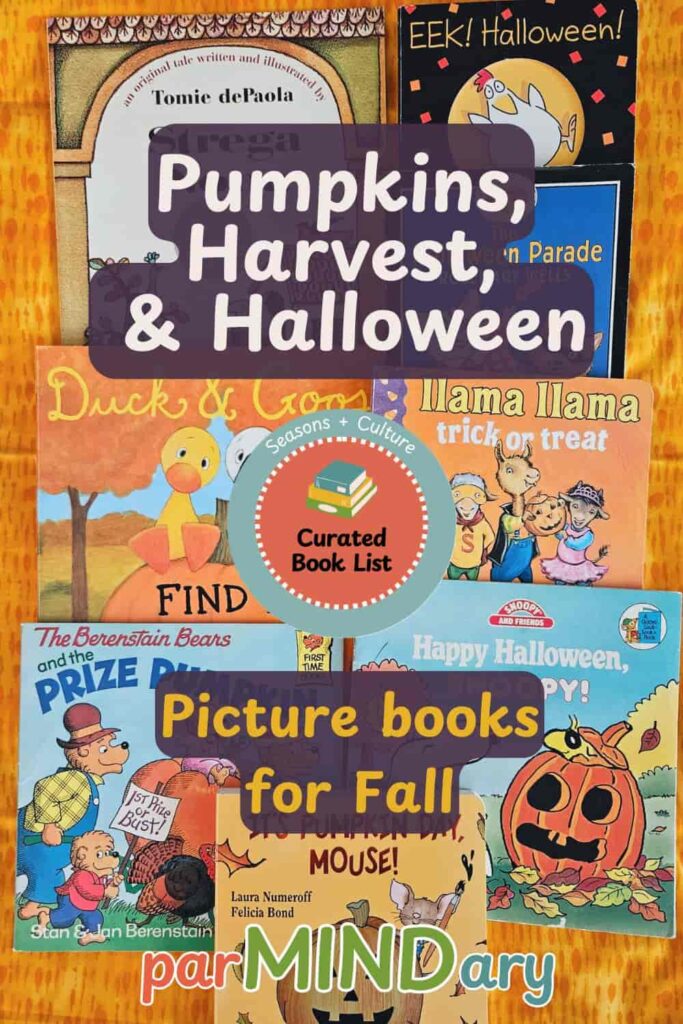
Llama Llama Trick or Treat – Anna Dewdney
Llama Llama chooses a costume, carves a pumpkin, and heads out for a first taste of Halloween trick-or-treating.
Why this book matters: Costumes, pumpkins, decorations, and treats make this a simple introduction to what Halloween can look like. We get to share the anticipation of getting ready before stepping outside to join the celebration.
Themes / patterns: Halloween, costumes, trick-or-treating, pumpkins, traditions
Age range: 1–3
Find Llama Llama Trick or Treat on Amazon
Eek! Halloween! – Sandra Boynton
The chickens are alarmed by strange sights and sounds around the farm until they discover that Halloween is behind all the commotion.
Why this book matters: Strange noises, oddly dressed animals, and the chickens’ increasingly dramatic reactions make Halloween more silly than scary. The rhyming language and repeated surprises are especially fun to read aloud.
Themes / patterns: Halloween, chickens, costumes, surprises, rhyme, humor
Age range: 1–3
Find Eek! Halloween! on Amazon
It’s Pumpkin Day, Mouse! – Laura Numeroff
Mouse decorates a collection of pumpkins with happy, sad, silly, and surprising faces.
Why this book matters: A few pumpkins and some painted faces become an easy way to play with expression. We can look at each new pumpkin, name what we see, and enjoy how much personality Mouse can create from one familiar autumn fruit.
Themes / patterns: pumpkins, faces, emotions, painting, creativity, autumn
Age range: 1–3
Find It’s Pumpkin Day, Mouse! on Amazon
The Halloween Parade – Rosemary Wells
Getting ready for a Halloween parade brings costumes and excitement, but also worries, hurt feelings, and a few tricks of its own.
Why this book matters: Dressing up isn’t automatically fun for everyone. The story makes room for some of the nervousness and social tension that can come with costumes and Halloween events, while letting the characters work through those feelings with plenty of mischief along the way.
Themes / patterns: Halloween, costumes, worry, tricks, friendship, celebration
Age range: 5–7
Find The Halloween Parade on Amazon
Happy Halloween, Snoopy! – Jack C. Harris
Snoopy and the Peanuts gang celebrate Halloween with costumes, pumpkins, treats, and familiar holiday fun.
Why this book matters: The pleasure here is simply joining familiar characters for Halloween. Costumes, decorations, and seasonal silliness capture the cheerful side of the holiday and make this an easy story to pull out as October celebrations get closer.
Themes / patterns: Halloween, costumes, pumpkins, friends, celebration, traditions
Age range: 5–7
Find Happy Halloween, Snoopy! on Amazon
The Berenstain Bears and the Prize Pumpkin – Stan & Jan Berenstain
Papa Bear becomes determined to win the prize-pumpkin contest at the Bear Country Festival, but his enormous pumpkin has some serious competition.
Why this book matters: Watching a pumpkin grow into something enormous is already satisfying, and Papa’s determination to make it the biggest adds plenty of family humor. The fair brings together harvest displays, competition, food, and the excitement of seeing what everyone has grown.
Themes / patterns: pumpkins, harvest, competition, family, fairs, gratitude
Age range: 3–6
Find The Berenstain Bears and the Prize Pumpkin on Amazon
Duck & Goose Find a Pumpkin – Tad Hills
Duck and Goose want a pumpkin of their own and search in all sorts of unlikely places before discovering where pumpkins actually grow.
Why this book matters: Their search turns pumpkin picking into a simple guessing game. We follow along as they look up, under, and around before finally reaching the pumpkin patch—a playful story to pair with seeing, touching, or choosing a real pumpkin.
Themes / patterns: pumpkins, searching, autumn, friendship, pumpkin patches, humor
Age range: 1–3
Find Duck & Goose Find a Pumpkin on Amazon
Strega Nona – Tomie dePaolo
Big Anthony ignores Strega Nona’s warning about her magical pasta pot and soon has pasta spilling through the village streets.
Why this book matters: This isn’t an autumn story in the usual pumpkins-and-leaves sense, but its magic, village setting, and enormous communal meal fit comfortably among seasonal folktales. Watching the pasta escape the pot and overwhelm the town gives us a wonderfully ridiculous sense of witches and magic.
Themes / patterns: magic, folktales, pasta, consequences, community, humor
Age range: 2–7
Find Strega Nona on Amazon
October celebrations often make room for a little strangeness too. Witches, ghosts, mysterious noises, imaginary creatures, and things that look different after dark become part of the fun. Our next stories step into that playful uncertainty, where something spooky might be waiting—but it might also turn out to be funny, friendly, or entirely unexpected.
🍂 Monsters, Mystery & Meeting the Dark
As October evenings grow longer, the world starts to look different. A shadow can become a creature, a strange sound can start a story, and an ordinary path through the woods feels a little more mysterious when the light begins to fade.
October stories have plenty of fun with that uncertainty. Ghosts can be soft and lonely, monsters can be outsmarted, witches can gather unlikely friends, and nighttime can become a place for adventure rather than something we need to hurry through.
These stories give us just enough mystery to wonder what might happen next. Some are spooky, some are silly, and some simply invite us to look more closely at what appears when the lights go down.
Themes in this Section:
monsters · nighttime · mystery · imagination · surprises
✦
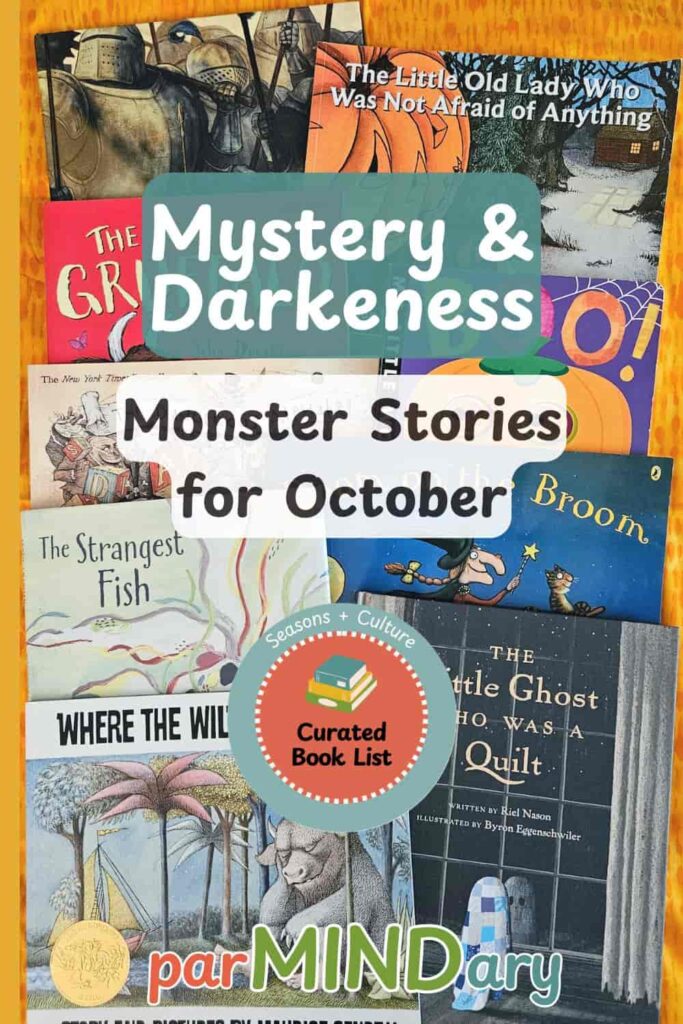
Boo! A Book of Spooky Surprises – Jonathan Litton
Discover ghosts, monsters, witches, and other Halloween surprises hiding throughout this playful spooky book.
Why this book matters: Much of the fun comes from knowing that something is hiding just out of sight. Each page gives a tiny moment of suspense followed by a colorful surprise, making “spooky” feel more like a game than a genuine scare.
Themes / patterns: Halloween, surprises, monsters, ghosts, peek-through, playful fright
Age range: 1–3
Find Boo! A Book of Spooky Surprises on Amazon
The Little Old Lady Who Was Not Afraid of Anything – Linda Williams
A little old lady walking home through the woods is followed by clomping shoes, wiggling pants, a shaking shirt, and an increasingly noisy collection of clothing.
Why this book matters: The sounds build as the walk gets darker and the strange procession grows behind her. Clomp, wiggle, shake, clap—we get to make the noises along with the story until all those mysterious pieces finally come together in a wonderfully autumnal way.
Themes / patterns: autumn, nighttime, sounds, repetition, scarecrows, courage
Age range: 3–7
Find The Little Old Lady Who Was Not Afraid of Anything on Amazon
The Little Ghost Who Was a Quilt – Riel Nason
Unlike the other ghosts who float lightly through the air, one little ghost is made from a heavy patchwork quilt and wonders what it would be like to fit in.
Why this book matters: Being a quilt makes ghostly life awkward, but it also makes this little ghost wonderfully distinctive. Halloween night gives him a chance to experience the human world up close, and the warm patchwork illustrations make the whole story feel more cozy than spooky.
Themes / patterns: ghosts, quilts, Halloween, differences, belonging, nighttime
Age range: 3–7
Find The Little Ghost Who Was a Quilt on Amazon
Room on the Broom – Julia Donaldson
A friendly witch keeps making room on her broom for animals she meets along the way, until a dragon brings their increasingly crowded flight to an abrupt stop.
Why this book matters: Wind blows away the witch’s belongings, animals scramble aboard, and the broom becomes more ridiculous with every new passenger. The bouncing rhyme keeps everything moving, while the dragon encounter adds just enough danger before the friends devise a delightfully muddy surprise.
Themes / patterns: witches, friendship, rhyme, wind, dragons, teamwork
Age range: 2–5
Find Room on the Broom on Amazon
The Gruffalo – Julia Donaldson
A clever mouse invents a terrifying creature called the Gruffalo to discourage predators—only to discover that the creature he imagined is real.
Why this book matters: The deep dark wood is full of animals who would like to eat Mouse, but he keeps talking his way out of trouble. The repeated descriptions let us build the Gruffalo in our imaginations before he finally appears, making the reveal both monstrous and funny.
Themes / patterns: monsters, forests, imagination, cleverness, repetition, humor
Age range: 2–5
Find The Gruffalo on Amazon
Knight Owl – Christopher Denise
A small owl finally becomes a knight and finds himself responsible for guarding the castle during the quiet, dark hours of the night.
Why this book matters: Night watch suits Owl perfectly: he can see in the dark, stay awake while everyone sleeps, and listen carefully for unusual sounds. The glowing castle illustrations make nighttime feel warm and atmospheric, even when a very large dragon suddenly appears.
Themes / patterns: owls, knights, nighttime, dragons, listening, courage
Age range: 2–6
Find Knight Owl on Amazon
The Dangerous Alphabet – Neil Gaiman
Two children venture beneath the city on an alphabet journey filled with odd creatures, hidden dangers, and increasingly strange discoveries.
Why this book matters: Each letter carries us farther into a shadowy underground world. The alphabet provides a familiar path through an adventure that is anything but predictable, making this one especially fun to examine slowly.
Themes / patterns: alphabet, underground worlds, strange creatures, adventure, imagination
Age range: 4–8
Find The Dangerous Alphabet on Amazon
Where the Wild Things Are – Maurice Sendak
After being sent to his room, Max sails into an imagined world of Wild Things, becomes their king, and eventually chooses to return home.
Why this book matters: Max’s bedroom transforms into a forest and then an entire wild world, giving us the wonderful sensation of watching imagination take over the page. We roar and dance through the wild rumpus with him before the adventure grows quiet and leads us back to a warm supper waiting at home.
Themes / patterns: imagination, monsters, home, adventure, return
Age range: 3–6
Find Where the Wild Things Are on Amazon
This book is featured in our A to Z picture book list for letter W. For more reading inspiration check out our post:
👉 A to Z Reading Challenge: 26 Picture Books for 26 Letters
The Strangest Fish – Katherine Arden
A girl wins a goldfish at an autumn festival, but her new pet keeps growing bigger and bigger until she must finally set it free.
Why this book matters: What begins with the familiar excitement of winning a festival prize becomes stranger with every page as the little fish outgrows one home after another. When she finally releases it, the surprise is even bigger: her enormous fish becomes a friendly dragon.
Themes / patterns: fish, unusual creatures, mystery, curiosity, nature, observation
Age range: 4–8
Find The Strangest Fish on Amazon
The Dark Is For – Jane Kohuth
Darkness becomes a backdrop for sleeping, dreaming, glowing lights, nighttime animals, and all the things that happen after the sun goes down.
Why this book matters: Instead of treating darkness as empty or frightening, the story fills it with things to notice. Stars appear, animals become active, lights glow more brightly, and familiar places take on a different look. It feels like a natural invitation to step outside in the evening and see what we can find.
Themes / patterns: darkness, nighttime, nocturnal animals, stars, light, observation
Age range: 4–8
Find The Dark is For on Amazon
The dark can change what we see, but so can the place from which we are looking. As October turns toward memory and remembrance, our final stories ask us to look again—at familiar relationships, at the past, and at the different perspectives a story can hold.
🍂 Remembering, Belonging & Seeing Differently
October is filled with stories. Some are personal—the people and places that make us feel at home. Others are stories communities tell about the past, shaped by who remembers an event and whose perspective is included.
The books in this final section invite a little more looking back. We wait with three young owls for someone familiar to return, find light during an uncertain moment, and then turn toward history through two very different tellings of Columbus’s arrival in the Americas. Finally, Remember widens our attention again, connecting people, ancestors, animals, plants, sky, and earth.
Together, these stories give us a chance to notice that memory is not only about recalling what happened. We can also ask who is remembering, what they noticed, and what stories we choose to carry forward.
Themes in this Section:
memory · perspective · history · ancestors · connection
✦
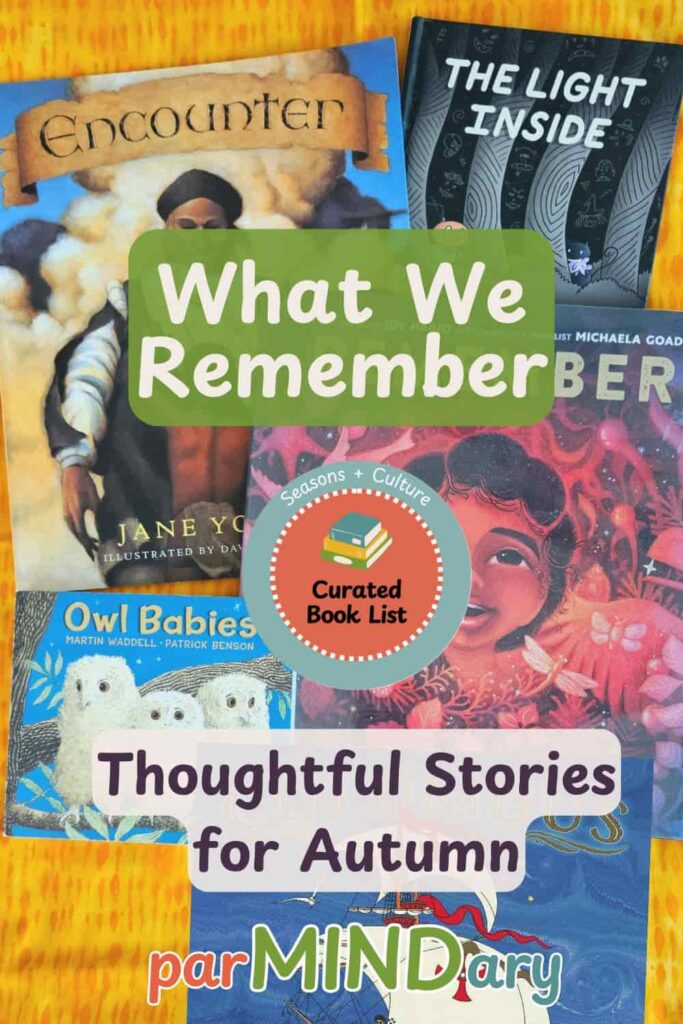
Owl Babies – Martin Waddell
Three baby owls wake in the dark woods to discover their mother is gone and wait together for her return.
Why this book matters: The nighttime forest feels very large when Mother Owl isn’t there. The owl babies each respond a little differently as they wait, huddle together, and listen. Then wings sweep through the trees and their familiar owl returns—a wonderfully reassuring ending after all that waiting.
Themes / patterns: owls, nighttime, separation, family, waiting, reassurance
Age range: 1–4
Find Owl Babies on Amazon
The Light Inside – Dan Misdea
Moving through a dark night, a small light helps reveal that things aren’t always what they seem.
Why this book matters: With very few words, the pictures let us share that moment when a shape in the dark looks scary—and then changes once we get closer. Again and again, something that first seems threatening turns out to need help. As the character finds his own light inside, he is able to move through the night, look more closely, and offer that help along the way.
Themes / patterns: nighttime, light, shadows, first impressions, helping, courage
Age range: 3–7
Find The Light Inside on Amazon
Columbus – Demi
Illustrated maps, voyages, historical details, and period imagery follow Christopher Columbus from his early life through his Atlantic expeditions.
Why this book matters: This account of history, following Columbus, his ambitions, his voyages, and the European world surrounding them. Placed beside an Indigenous perspective, the differences become worth noticing: where does each story begin, whose experiences fill the pages, and what does each book ask us to pay attention to?
Themes / patterns: Columbus, exploration, voyages, maps, history, perspective
Age range: 6–9
Find Columbus on Amazon
Encounter – Jane Yolen
Columbus’s arrival is seen through the eyes of a young Taíno boy who is uneasy about the strangers coming ashore and tries to warn his people.
Why this book matters: Instead of watching the ships arrive from aboard them, we stand on the shore with a child whose home is being entered by unfamiliar people. That change in viewpoint alters the entire story. Read alongside another account of Columbus, Encounter gives us a concrete opportunity to notice how differently the same historical event can be told depending on whose eyes we look through.
Themes / patterns: Indigenous perspective, Columbus, encounters, history
Age range: 7–10
Find Encounter on Amazon
Remember – Joy Harjo
Remember the sun, moon, stars, earth, plants, animals, family, and all the relationships that place us within a larger living world.
Why this book matters: The repeated invitation to “remember” moves outward from our own lives to everything surrounding them. We notice family and ancestors, but also sky, plants, animals, wind, and earth.
Themes / patterns: memory, family, ancestors, nature, belonging, connection
Age range: 4–8
Find Remember on Amazon
Our October stories have taken us through falling leaves and pumpkin patches, into nighttime forests and imaginary worlds, and finally back toward memory and perspective. Now we can step outside the stories and see what mid-autumn looks, sounds, and feels like where we live.
🍂 Seasonal Observation Ideas for Mid-Autumn
By October, autumn is easier to see, hear, and feel. Leaves collect underfoot, familiar trees change color, daylight fades earlier, and the world can look surprisingly different after dark.
After a month of watching leaves fall, daylight shorten, and familiar landscapes change—we turn our attention to all the things we remain connected to. Seasonal celebrations or stepping outside in the darkness, are how we make more memories to share with the people and creatures around us.
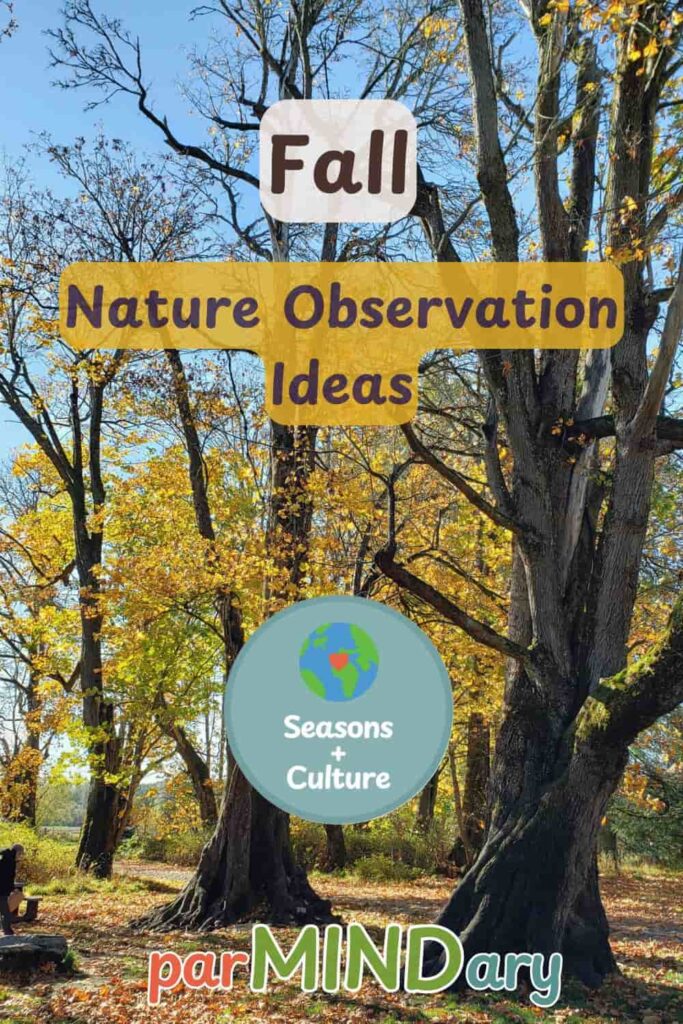
Choose a story from the list above, then step outside and see what fall looks like where you live. A nature journal or seasonal calendar can help you record what changes from week to week.
You might try:
• Collect a palette of autumn leaves.
Look for as many colors as you can. Are leaves on the same tree changing at the same time?
• Listen to the leaves.
Walk through fallen leaves or listen as wind moves through the trees. How many different autumn sounds can you hear?
• Look for what has disappeared.
Compare a familiar garden, tree, or outdoor space with summer. Which flowers, fruits, insects, or green leaves are harder to find now?
• Notice what autumn leaves behind.
Look beneath fallen leaves or fading plants for seeds, mushrooms, bare stems, acorns, or other small things that are easier to see now.
• Take an evening observation walk.
Notice the temperature, sounds, shadows, lights, moon, and animals you encounter. What looks different after dark?
• Record one October change.
Draw, photograph, or write about something familiar that looks different now than it did a month ago.
Mid-autumn gives us plenty to notice without going far: color overhead, leaves under our feet, cooler air, earlier darkness, and familiar places changing almost day by day.
You can continue the season with our companion reflection post:
🍂 October — Memory & Meaning
Watching Mid-Autumn: The Work of Letting Go
Related Seasonal Posts
Explore more seasonal learning ideas on our Seasons & Culture pillar page.
Or follow how we learn to notice the seasonal cycle here:
Watching the Year
🌎 Watching the Year: Homeschooling Through the Seasons
🌲 Watching Midwinter: Renewal and Anticipation
🌙 Watching Late Winter: Staying Indoors and Keeping Warm
🌱 Watching Early Spring: Waiting for the First Signs of Change
💧 Watching Mid-Spring: When Motion Replaces Waiting
🌼 Watching Late Spring: Marking Time Together
🐝 Watching Early Summer: Long Days and Open Possibility
☀️ Watching High Summer: Stillness Inside Abundance
🌾 Watching Late Summer: Holding and Letting Go
🍎 Watching Early Autumn: Preparing for the First Signs of Fall
🍂 Watching Mid-Autumn: The Work of Letting Go
🕯️ Watching Late Autumn: Quiet Before Winter
❄️ Watching Early Winter: Light, Memory, and Celebration
Curated Seasonal Book Lists
🌎 Stories That Follow the Whole Year
🌲 Quiet Deep Winter Stories for Children
🌙 Late Winter & Waiting Stories
🌱 Early Spring Stories for Children
💧 Spring Migration & Movement Stories
🌼 Spring Festivals & May Tradition Stories
🐝 Early Summer Stories for Children
☀️ High Summer Nature & Pollinator Stories
🌾 Late Summer Effort & Harvest Stories
🍎 Autumn Arrival & Harvest Stories
🍂 Fall Stories for Children
🕯️ Gratitude & Community Stories
❄️ Winter Light & Celebration Stories
Mid-autumn reminds us that as the year grows darker, there is still so much to notice, celebrate, remember, and carry with us.
Note: Whether you borrow books from the library, purchase them, or share them with friends, the goal is the same: finding stories worth returning to. We visit our local library every week and add a few favorites to our home library throughout the year.
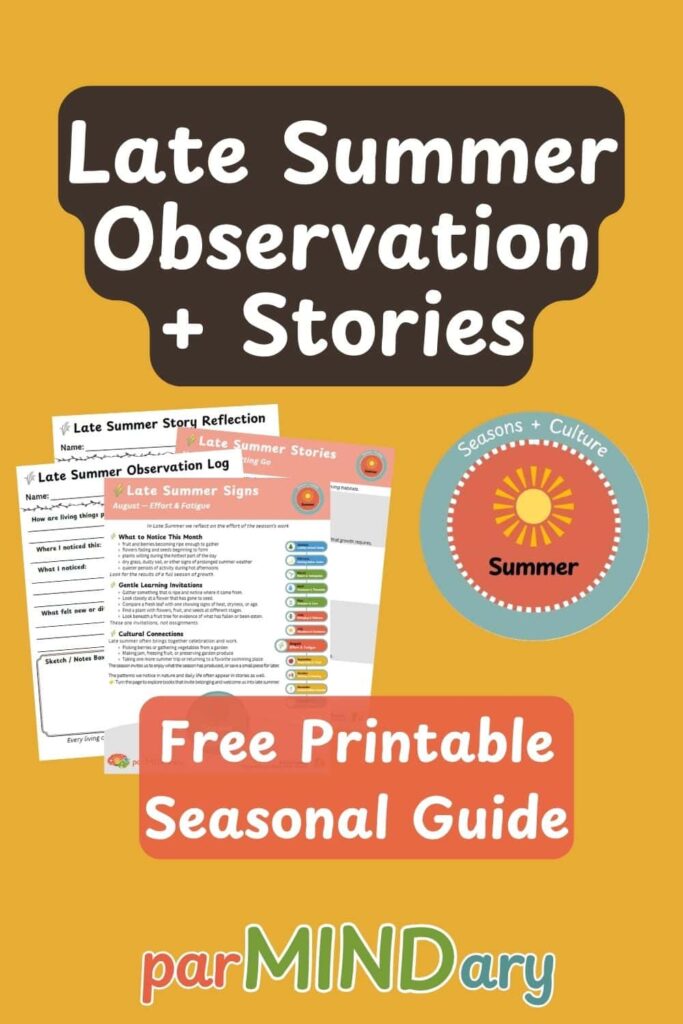
Download the Seasonal Observation + Story Guides from our Free Resource Library.