
July — Abundance & Coexistence
High summer is a season of abundance. Gardens are thriving, pollinators move steadily between flowers, and familiar outdoor spaces become busy with many forms of life. This July seasonal learning post explores signs of high summer through stories, nature observation, cultural rhythms, and gentle invitations to notice the relationships that shape the season.
In Simple Terms:
High summer is a season of abundance, shared spaces, and living relationships. Gardens, wildlife, and people are all active together, revealing patterns that become easier to notice with time.
At a Glance: Abundance & Coexistence
- Gardens in full growth
- Pollinators and active wildlife
- Shared habitats and ecosystems
- Midsummer gatherings and outdoor traditions
- Looking closely at the relationships around us
Why this matters:
By high summer, many seasonal changes are no longer happening one at a time. Plants, insects, birds, weather, and people are all interacting at once. Returning to familiar places helps us notice how these living relationships create the feeling of the season.
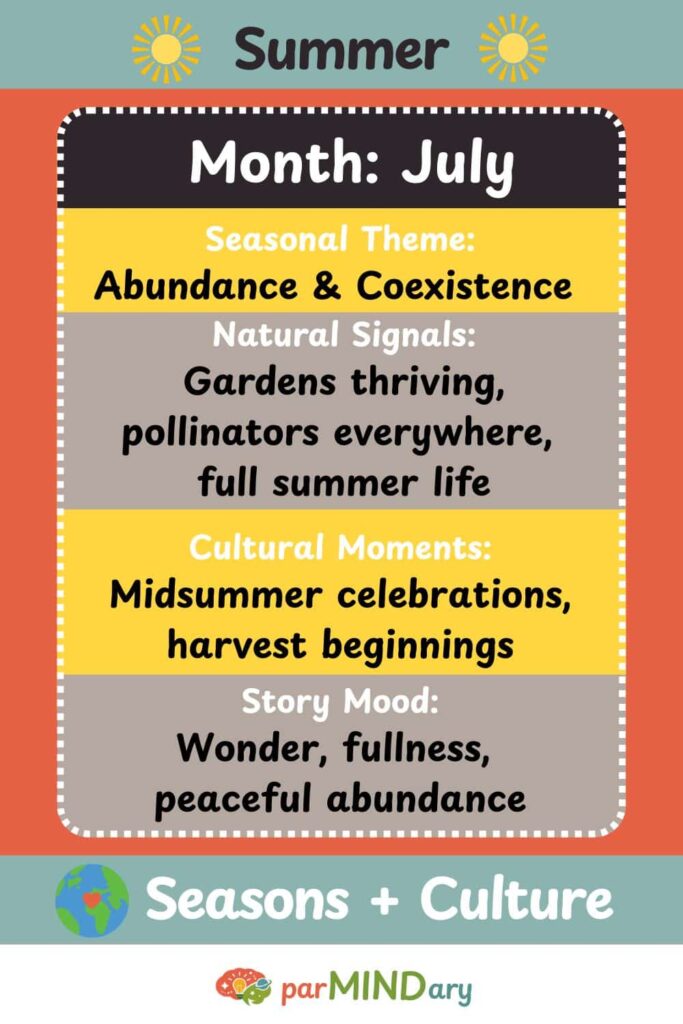
☀️ July in the Seasonal Cycle: Abundance & Coexistence
By July, the season has settled in.
Gardens are full, with new flowers blooming each week. Pollinators move constantly between flowers, and birds, insects, and neighborhood wildlife become familiar companions during time spent outdoors. Instead of watching the season arrive, we begin living within it.
Many different forms of life are active at the same time. Bees visit blossoms while butterflies drift through the garden. Birds search for food, spiders build webs, and small animals scurry around. Even small outdoor spaces reveal a surprising number of lives sharing the same habitat.
People become part of these seasonal rhythms as well. Parks, trails, gardens, and neighborhood walks grow busier during the long evenings, while midsummer cultural celebrations bring families and communities together outdoors.
If early summer invited us to belong, high summer invites us to pay closer attention. The season feels full—not because of any single moment, but because so many relationships are unfolding at once.
☀️ High Summer Invitation: What We Begin to Notice in July
High summer often feels busy at first.
Gardens are thriving, insects are active, birds call throughout the day, and long evenings invite us to spend more time outside. But as we return to the same places, something quieter begins to emerge. We start noticing not just individual plants or animals, but the ways they interact with one another.
You might notice:
- flowering plants changing from week to week
- gardens supporting insects, birds, and people at the same time
- warm evenings that encourage longer walks outdoors
Rather than looking for something new each day, high summer invites us to look more closely at what is already there. Familiar places become richer as patterns begin to repeat.
Abundance is not simply having more to see. It is beginning to understand how many living things share the same season together.
☀️ Stories That Capture the Feeling of High Summer
High summer stories often unfold in places that are already full of life.
Gardens buzz with activity, animals follow familiar routines, and communities gather to celebrate the season. Rather than focusing on a single sign of summer, these stories reveal how many different lives, traditions, and habitats overlap during the busiest weeks of the year.
A few examples you might explore:
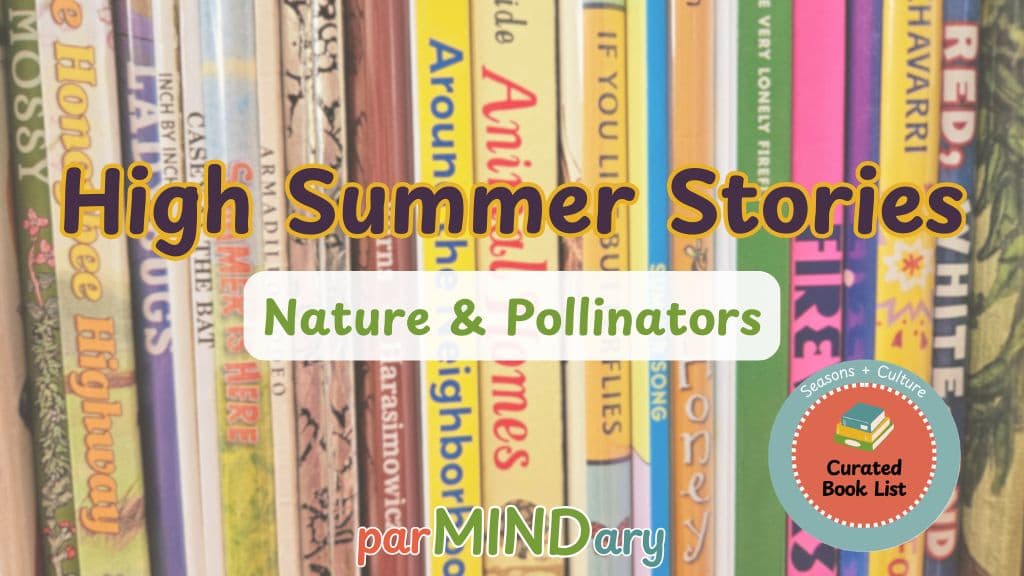
- Inch by Inch – A change in perspective turns a journey through the garden into a closer look at the living world.
- Summer Song – A gentle celebration of the sounds, sights, and rhythms that make a summer day feel complete.
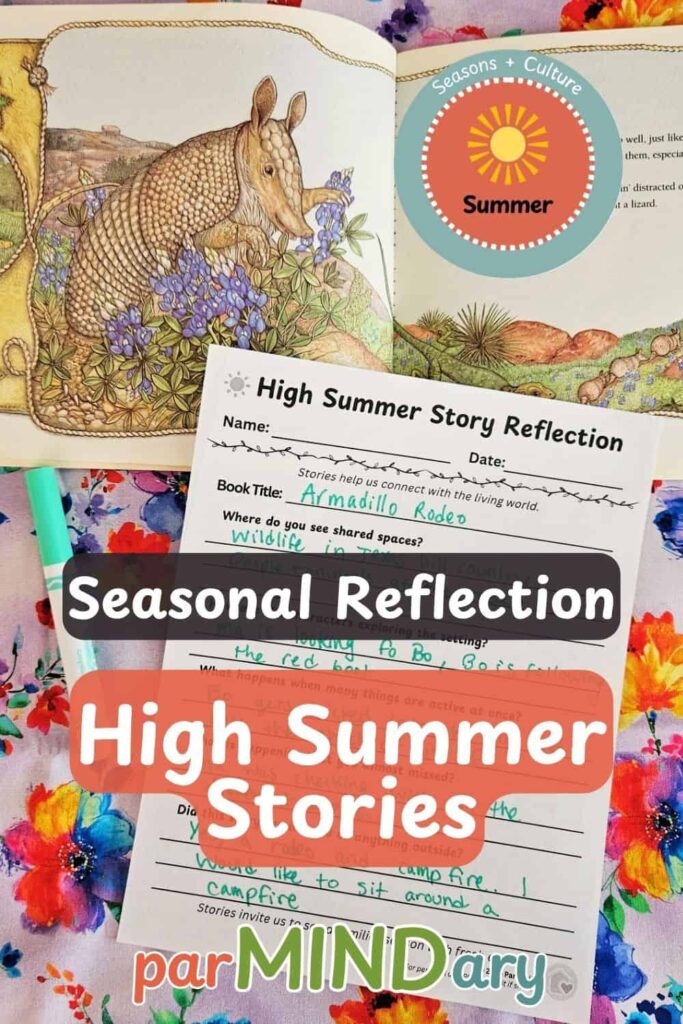
- Armadillo Rodeo – Humor and determination meet the wildlife and traditions of the American Southwest in a lively summer adventure.
Disclosure: This post contains affiliate links. As an Amazon Associate, I earn from qualifying purchases at no additional cost to you.

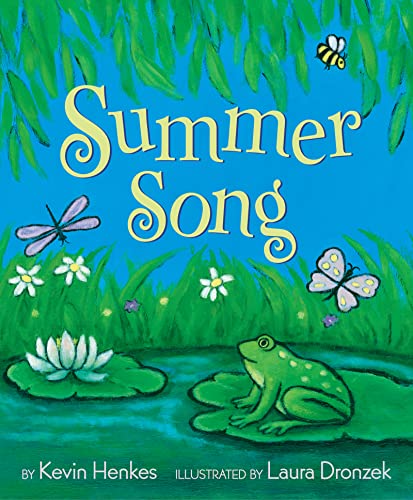

Together, these stories remind us that abundance is made of relationships. Plants, animals, people, and places all become part of the same seasonal story when we take time to notice how they fit together.
→ If you’d like more ideas, explore our full curated collection of High Summer Nature & Pollinator Stories.
☀️ High Summer Nature Observations for July
By July, many of the season’s changes have become familiar.
Instead of searching for the first flowers or the first insects, we begin noticing how different parts of the landscape interact. A flowering plant attracts pollinators. Birds return to the same trees. Spiders build webs where insects are plentiful. Even a small garden becomes a community of living things.
You might notice:
- flowers opening while others begin to fade and produce seeds
- many pollinators visiting flowers throughout the day
- birds carrying food or returning to familiar perches
- spiders, ants, beetles, and other small creatures sharing the same spaces
- hot days and warm evenings that invite more time outdoors
- neighborhood parks and gardens becoming places shared by people and wildlife alike
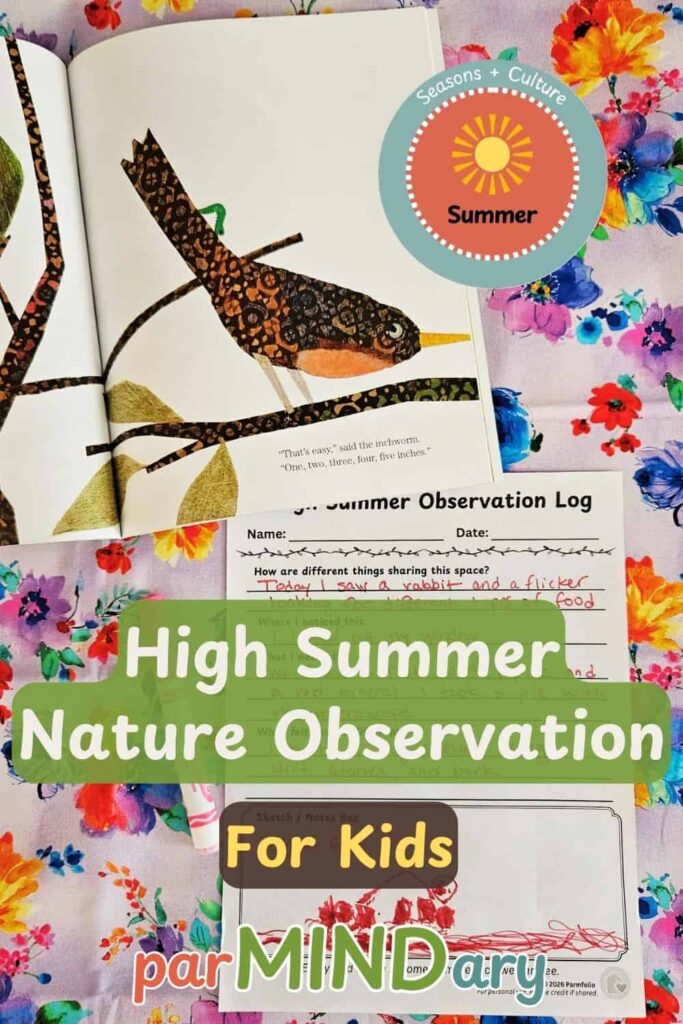
High summer observations often begin with one small detail, but they rarely end there. The longer we watch, the more connections we discover between the living things around us. What first seemed like a collection of separate observations begins to look more like a living community.
→ Visit the parMINDary Free Resource Library:
To download the High Summer Observation + Story Guide
☀️ Simple High Summer Activities for July
These invitations are meant to help us linger a little longer in places we already enjoy.
High summer rewards repeated visits. The more often we return to the same garden, trail, park, or backyard, the easier it becomes to notice how plants, animals, weather, and people share the season together.
- Visit the same flowering plant several times during the week and notice which pollinators stop by.
- Sit quietly for a few minutes outdoors and count how many different living things you can see or hear.
- Follow one bee, butterfly, bird, or ant for a short time and observe where it goes.
- Compare two nearby habitats, such as a sunny garden and a shady tree, and notice what is different in each.
- Watch how the evening light changes as the sun moves lower in the sky
- Sketch or photograph one outdoor space, then return a week later to compare what has changed.
- Look for places where people and wildlife are sharing the same space, such as parks, gardens, or neighborhood trees.
- Visit a local farmers market or pick a small harvest from a garden, noticing what is now ready in the middle of summer.
- Spend a few quiet minutes simply watching before trying to identify or name anything.
These moments do not need to become lessons or projects. They simply create opportunities to return, observe, and gradually discover the relationships that make high summer feel so full.
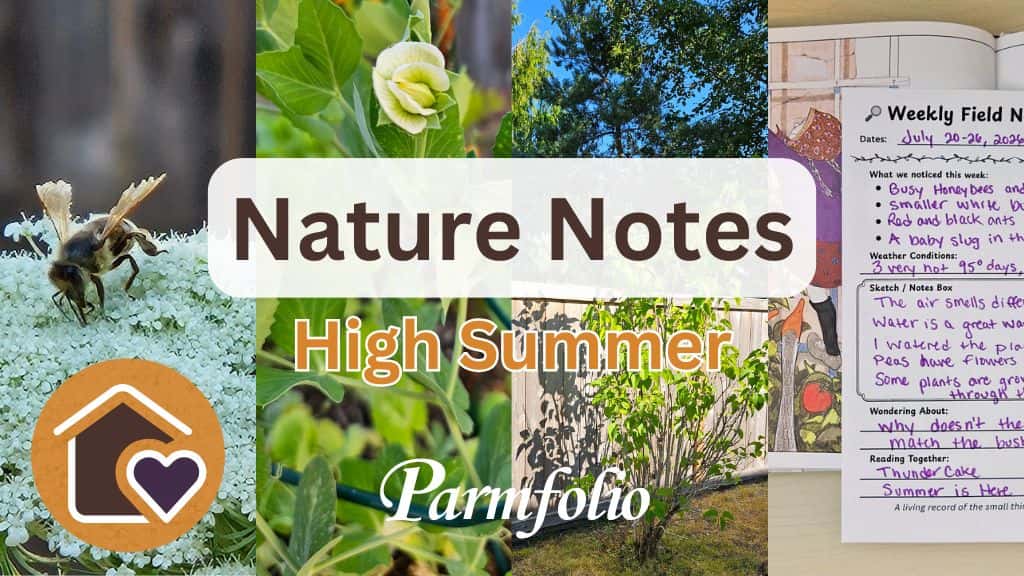
We recorded our own High Summer observations for July in the Parmfolio Learning Lab Field Journal.
☀️ July Traditions and Seasonal Gatherings
By high summer, many communities have settled into the rhythm of the season.
Community celebrations, outdoor concerts, neighborhood gatherings, farmers markets, county fairs, and local festivals often bring people together during the warmest weeks of the year. Just as gardens become places shared by many forms of life, parks, trails, and public spaces become places where communities gather.
In many places, July also brings celebrations with parades, picnics, fireworks, and time spent outdoors with family and friends. While traditions vary from place to place, they often reflect the same seasonal patterns we can observe in nature: gathering together, enjoying long daylight hours, and making the most of the season’s abundance.
High summer is also a season of everyday traditions.
- visiting a favorite park each week
- picking flowers from the garden
- watching butterflies and bees
- eating meals outdoors
- walking in the cooler evening hours
- stopping at a roadside farm stand
- sharing time with neighbors, friends, and family
Whether large or small, these traditions become part of how we remember the season. Like returning birds or blooming flowers, they remind us that many rhythms repeat year after year.
☀️ How July Leads Into Late Summer
As July gradually gives way to August, the season begins to change again.
Some flowers fade while others come into bloom. Gardens continue producing, wildlife adjusts its routines, and the first hints of late summer begin to appear. The abundance of high summer remains, but it starts to ask something different of us.
Instead of simply noticing how many living things share the season together, we begin to notice the quiet work that keeps it going. Gardens need tending. Harvests begin. Warm days can feel tiring. Even nature seems to shift toward preparing for what comes next.
The question changes once again.
Instead of asking,
How are all these living things sharing this season?
we begin asking,
How do we continue caring for what is growing?
This is how high summer gradually becomes late summer.
The Year Through Stories: Our Seasonal Learning Cycle
🌲 January — Looking Forward Gently
🌙 February — Noticing Before Action
🌱 March — Return & Anticipation
💧 April — Movement & Thresholds
🌼 May — Invitation & Care
🐝 June — Belonging & Welcome
☀️ July — Abundance & Coexistence
🌾 August — Effort & Fatigue
🍎 September — Preparation & Trust
🍂 October — Memory & Meaning
🕯️ November — Gratitude Without Possession
❄️ December — Rest & Dormancy
Related Seasonal Posts
→ Explore the companion curated book list for July:
High Summer Nature & Pollinator Stories
→ Visit the parMINDary Free Resource Library:
To download the High Summer Observation + Story Guide
→ Continue reading Year 1: Watching the Year Here:
🌾 August — Effort & Fatigue
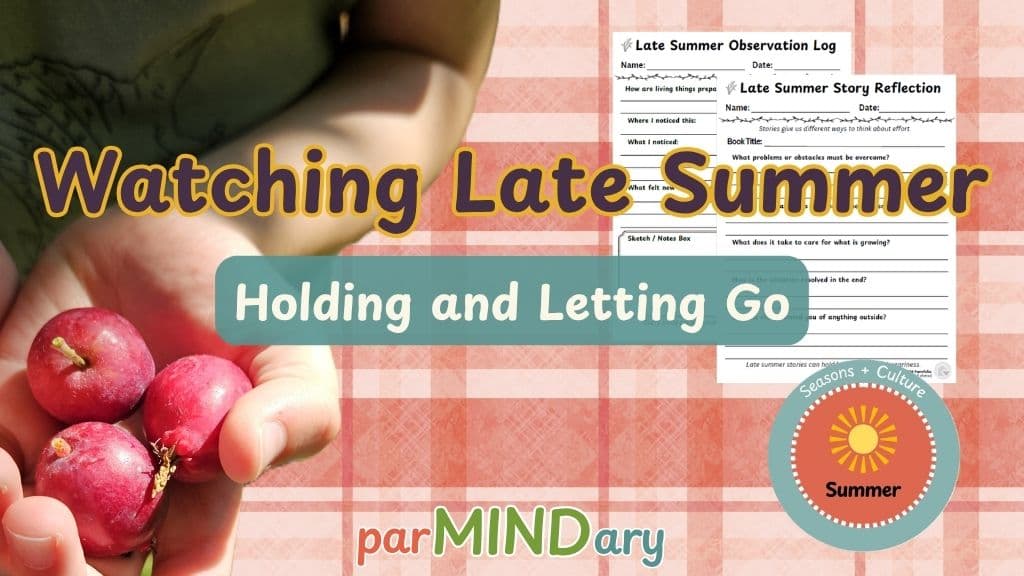
Watching Late Summer: Holding and Letting Go
Explore more seasonal learning ideas on our Seasons & Culture pillar page.
Or follow how we learn to notice the seasonal cycle here:
Watching the Year
🌎 Watching the Year: Homeschooling Through the Seasons
🌲 Watching Midwinter: Renewal and Anticipation
🌙 Watching Late Winter: Staying Indoors and Keeping Warm
🌱 Watching Early Spring: Waiting for the First Signs of Change
💧 Watching Mid-Spring: When Motion Replaces Waiting
🌼 Watching Late Spring: Marking Time Together
🐝 Watching Early Summer: Long Days and Open Possibility
☀️ Watching High Summer: Stillness Inside Abundance
🌾 Watching Late Summer: Holding and Letting Go
🍎 Watching Early Autumn: Preparing for the First Signs of Fall
🍂 Watching Mid-Autumn: The Work of Letting Go
🕯️ Watching Late Autumn: Quiet Before Winter
❄️ Watching Early Winter: Light, Memory, and Celebration
Curated Seasonal Book Lists
🌎 Stories That Follow the Whole Year
🌲 Quiet Deep Winter Stories for Children
🌙 Late Winter & Waiting Stories
🌱 Early Spring Stories for Children
💧 Spring Migration & Movement Stories
🌼 Spring Festivals & May Tradition Stories
🐝 Early Summer Stories for Children
☀️ High Summer Nature & Pollinator Stories
🌾 Late Summer Effort & Harvest Stories
🍎 Migration & Autumn Arrival Stories
🍂 Autumn Harvest & Celebration Stories
🕯️ Gratitude & Community Stories
❄️ Winter Light & Celebration Stories
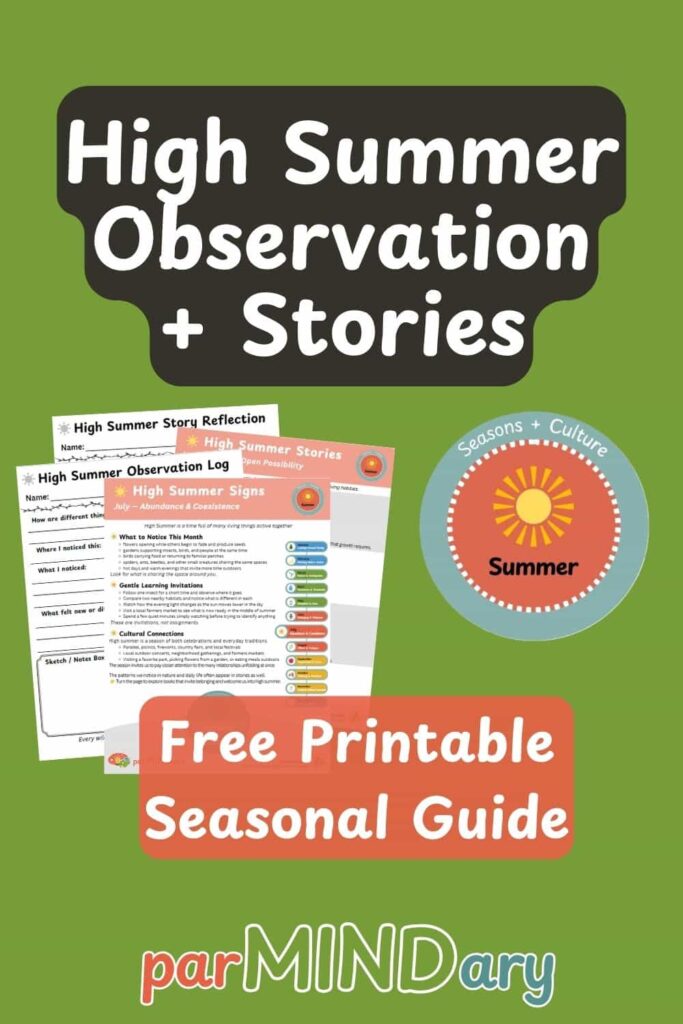
Download the Seasonal Observation + Story Guides from our Free Resource Library.