
A Curated Book List
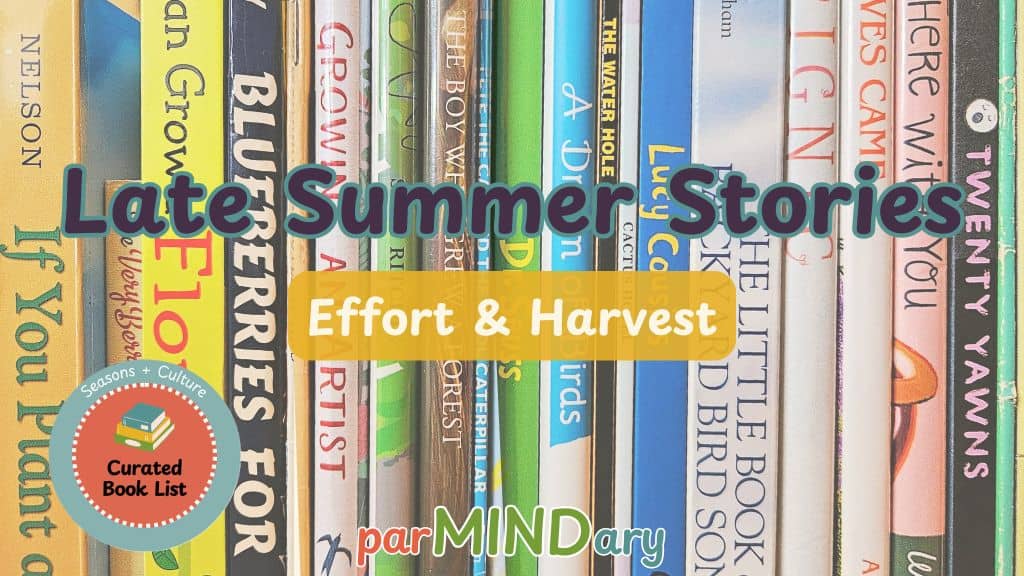
Late summer is still full of life, but the season begins to feel different. Gardens need tending, fruits and berries are ready to gather, and the work behind summer’s abundance becomes easier to see. These summer harvest stories explore growing and gathering, caring for living things, finding rest, and recognizing when it is time to hold on—or let go.
In Simple Terms:
Late summer stories often hold fullness and fatigue side by side. These books follow gardens, harvests, living things, tired days, familiar comforts, and the small changes that begin to appear as summer moves toward autumn.
At a Glance: Late Summer Through Stories
- Growing, tending, and gathering
- Berries, gardens, and late-summer food
- Caring for plants, animals, and habitats
- Effort, responsibility, and perseverance
- Rest, comfort, and returning home
- Change, transition, and letting go
Why this matters:
By late summer, we can see the results of what has been growing all season. Fruit ripens, gardens produce, and familiar outdoor spaces carry signs of months of activity. Stories can bring us into that same pattern of effort and change—what we tend, what we gather, when we need to rest, and what we eventually have to release.
Explore Seasonal Books
Looking for stories tied to a specific season?
You may also enjoy our quick visual guides:
• Spring Books for Children
• Summer Nature Stories
• Autumn & Harvest Picture Books
• Winter Read-Aloud Stories
• Books About the Seasons
🌾 Reading During Late Summer
Late summer sits in an interesting place in the seasonal cycle. There is still plenty of warmth, growth, and activity, but the feeling of endless summer has begun to fade.
Some of the work of the season is finally producing visible results. Gardens offer vegetables and fruit. Berries are gathered. Flowers that once needed time to grow may now be heavy with blooms or beginning to form seeds. Other living things continue their own work of finding food, shelter, and places to rest.
The stories in this collection follow that movement from effort toward change.
We begin with growing and gathering, where patience and work lead toward abundance. From there, we look at the care living things require and the responsibility that comes with sharing a world with them. As the season grows tired, some stories turn toward rest, comfort, home, and quieter ways of spending time. Finally, we reach stories about change—holding onto what matters while recognizing that not everything is meant to stay the same.
Late summer is not autumn yet. But if we pay attention, we can feel the season beginning to loosen its hold.
Disclosure: This post contains affiliate links. As an Amazon Associate, I earn from qualifying purchases at no additional cost to you.
🌾 Growing and Gathering
By late summer, much of the season’s earlier work has become visible. Seeds have grown into plants, berries and fruit are ready to gather, and gardens offer something back for the time and care given to them. These stories move between planting and harvest, work and reward, while celebrating the abundance that arrives along the way.
Themes in this Section:
growing · gathering · harvest · patience · abundance
✦
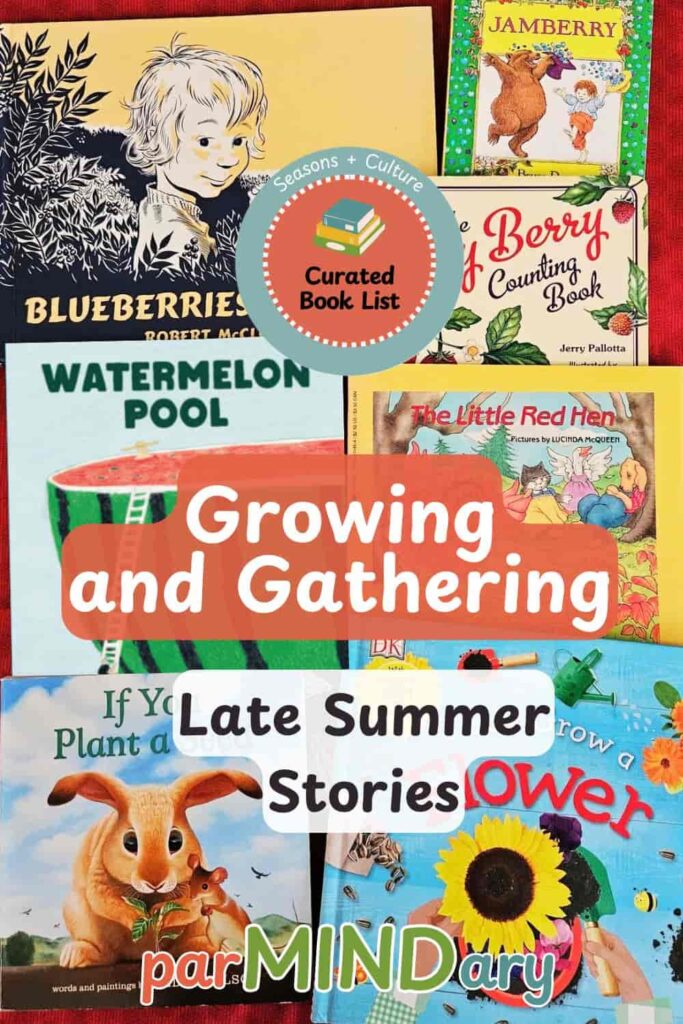
The Little Red Hen – Linda McQueen
Follow the work from planting grain to sharing what it becomes.
Why this book matters: The Little Red Hen keeps working through planting, tending, harvesting, and baking even when no one else wants to help. Her persistence makes the effort behind a finished loaf impossible to miss, while the ending raises its own questions about work, cooperation, and who shares in the reward.
Themes / patterns: effort, harvest, persistence, cooperation, consequences
Age range: 2–6
Find The Little Red Hen on Amazon
If You Plant a Seed – Kadir Nelson
Plant something small and watch what grows from the choices that follow.
Why this book matters: A rabbit and mouse patiently tend their vegetables before a struggle over the harvest threatens what they have grown. What begins with seeds and waiting becomes a larger story of abundance, conflict, generosity, and the surprising ways one choice can multiply.
Themes / patterns: planting, patience, conflict, generosity, abundance
Age range: 2–5
Find If You Plant a Seed on Amazon
I Can Grow a Flower – Dawn Sirett
Follow a seed from the first planting to a flower in bloom.
Why this book matters: Each stage of growing becomes something to watch: planting, watering, sprouting, and waiting for the flower to appear. The simple sequence slows down a process that can otherwise seem almost magical, giving even the smallest garden project a beginning, middle, and reward.
Themes / patterns: seeds, growth, tending, sequence, flowers
Age range: 1–5
Find I Can Grow a Flower on Amazon
Blueberries for Sal – Robert McCloskey
Gather berries on a hillside where two families have the same idea.
Why this book matters: Sal and her mother pick blueberries for winter while a mother bear and cub forage nearby, until each youngster accidentally follows the wrong mother. Their parallel journeys make berry gathering part of a larger late-summer rhythm shared by people and wildlife alike.
Themes / patterns: berries, gathering, family, wildlife, preparation
Age range: 2–5
Find Blueberries for Sal on Amazon
Jamberry – Bruce Degen
Tumble into a berry-filled world where the harvest becomes pure play.
Why this book matters: A boy and a bear move through an exuberant landscape overflowing with berries, rhyme, music, and impossible abundance. After stories about the work of growing and gathering, this playful celebration captures the delight of having more summer fruit than imagination can contain.
Themes / patterns: berries, abundance, wordplay, imagination, celebration
Age range: 1–4
Find Jamberry on Amazon
The Very Berry Counting Book – Jerry Pallotta
Count your way through berries in all their shapes and varieties.
Why this book matters: Familiar and less familiar berries become part of a simple counting journey, bringing attention to how much variety can hide inside one category of summer food. The progression from one to ten gives the gathering theme a gentle mathematical pattern.
Themes / patterns: berries, counting, variety, patterns, nature
Age range: 0–2
Find The Very Berry Counting Book on Amazon
Watermelon Pool – Lucy Ruth Cummins
Turn one enormous watermelon into a place everyone can enjoy.
Why this book matters: A giant watermelon becomes the center of an imaginative summer gathering as children transform it into their own juicy swimming pool. The absurd idea captures the sensory pleasure of late-summer food while turning abundance into something communal, playful, and meant to be shared.
Themes / patterns: watermelon, imagination, sharing, community, summer play
Age range: 4–8
Find Watermelon Pool on Amazon
But abundance does not appear on its own. Behind what grows and ripens is the ongoing work of caring for living things.
🌾Caring for Living Things
Care takes many forms. It can mean tending a plant, protecting a habitat, paying attention to the needs of an animal, or recognizing how our choices affect the living world around us. These stories widen the idea of effort beyond growing food, following the responsibility and attention that allow other lives and places to flourish.
Themes in this Section:
care · stewardship · habitats · responsibility · interdependence
✦
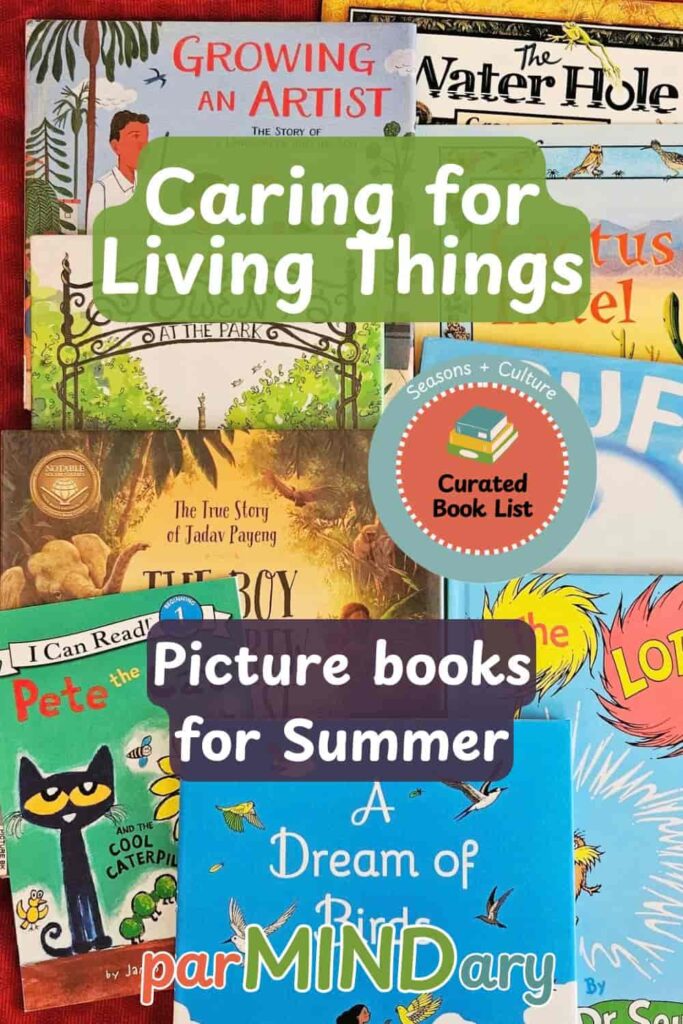
Growing an Artist – John Parra
Spend a workday noticing the people, places, and details worth remembering.
Why this book matters: A boy joins his father on his landscaping route, watching him work while sketching what he sees along the way. Gardening, physical labor, family, and art overlap as ordinary places become worthy of attention—and the work that keeps them growing becomes part of the picture too.
Themes / patterns: gardening, work, family, observation, creativity
Age range: 4–8
Find Growing an Artist on Amazon
Owen at the Park – Scot Ritchie
Tag along for a workday at the park and discover what it takes to care for a shared outdoor space.
Why this book matters: Owen accompanies his father to work at the park and gets an important job of his own: warning everyone to get off the lawn before the sprinklers turn on. Following the work happening behind an ordinary day at the park brings attention to the people who tend the places where others come to play, gather, and relax.
Themes / patterns: parks, work, responsibility, community, caring for shared spaces
Age range: 4–7
Find Owen at the Park on Amazon
The Boy Who Grew a Forest – Sophia Gholz
Watch one person’s steady work transform an empty landscape.
Why this book matters: Jadav Payeng begins by planting trees on a barren river island and continues caring for them year after year. As the forest grows, animals return and an entire habitat takes shape around his persistence, showing how repeated acts of care can accumulate into something far larger than their beginning.
Themes / patterns: trees, restoration, persistence, habitats, change over time
Age range: 5–8
Find The Boy Who Grew a Forest on Amazon
Cactus Hotel – Brenda Z Guiberson
Follow one cactus through a lifetime of growth, shelter, and change.
Why this book matters: A saguaro grows slowly from a tiny seed while birds, insects, and other desert animals make use of it throughout its long life. Even after the cactus dies, it remains part of the habitat around it—a reminder that care and dependence in nature extend across generations and life cycles.
Themes / patterns: desert, habitats, life cycles, interdependence, change
Age range: 3–7
Find Cactus Hotel on Amazon
The Water Hole – Graeme Base
Gather at a shrinking water hole as the world waits for rain.
Why this book matters: Animals arrive from different parts of the world to drink while the water gradually disappears. The growing crowd and shrinking resource create a visible pattern of dependence, scarcity, and change before rain finally returns and the cycle begins again.
Themes / patterns: water, wildlife, scarcity, interdependence, cycles
Age range: 2–6
Find The Water Hole on Amazon
For more books that follow water through the natural world, explore our post:
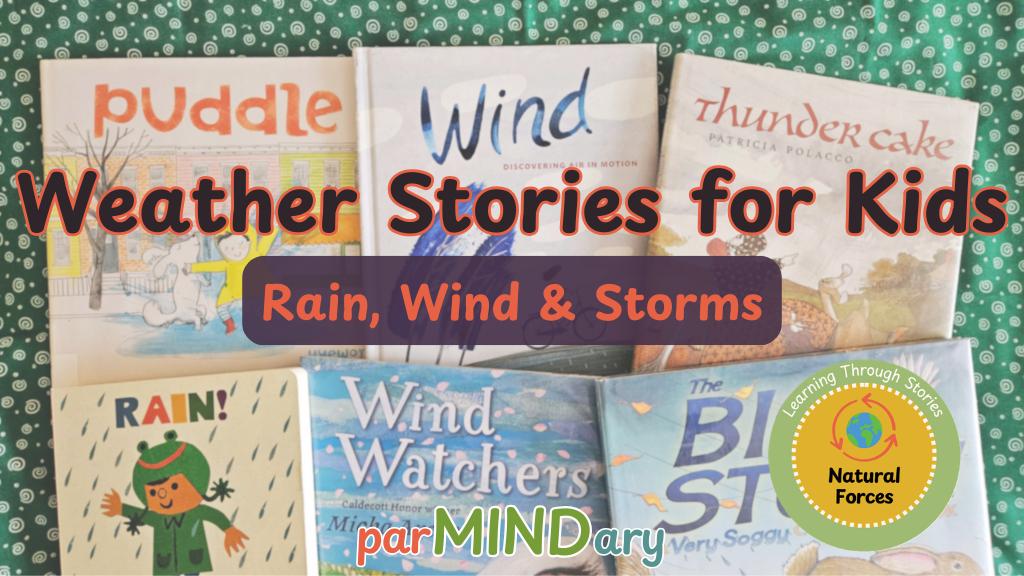
👉 Weather Stories for Kids
The Lorax – Dr Seuss
Watch what happens when taking from a place becomes more important than caring for it.
Why this book matters: A growing business transforms a thriving landscape until the Truffula Trees and the creatures that depend on them can no longer remain. Its exaggerated world makes the consequences of unchecked use visible, while the final seed leaves the future dependent on what someone chooses to do next.
Themes / patterns: resources, consequences, habitats, responsibility, restoration
Age range: 3–7
Find The Lorax on Amazon
A Dream of Birds – Shenaz Patel
Carry a love of birds into a story about freedom, wonder, and belonging.
Why this book matters: Sara’s fascination with birds shapes the way she looks at the world around her, drawing her attention toward lives that cannot simply be possessed or contained. Her experience turns observation into a question of care: sometimes loving another living thing means allowing it the freedom to remain itself.
Themes / patterns: birds, freedom, observation, empathy, belonging
Age range: 5–8
Find A Dream of Birds on Amazon
Pete the Cat and the Cool Caterpillar – James Dean
Care for a tiny visitor and discover how quickly it can change.
Why this book matters: Pete is delighted by the caterpillar he finds and makes a home where he can watch it closely. When the caterpillar seems to disappear, his concern gives way to the surprise of transformation, turning a small act of care into an encounter with one of nature’s most dramatic life cycles.
Themes / patterns: caterpillars, care, metamorphosis, observation, change
Age range: 2–6
Find Pete the Cat and the Cool Caterpillar on Amazon
Constant tending takes energy. As late summer stretches on, there is also value in slowing down, returning to familiar places, and making room for rest.
🌾 Rest, Comfort, and Returning Home
Not every summer day needs to be productive. Some are spent resting after a long day, visiting family, watching backyard birds, finding a way home, or simply wondering what to do with an empty afternoon. These stories make room for comfort, companionship, quiet observation, and the creativity that can emerge when activity slows.
Themes in this Section:
rest · home · companionship · observation · unstructured time
✦
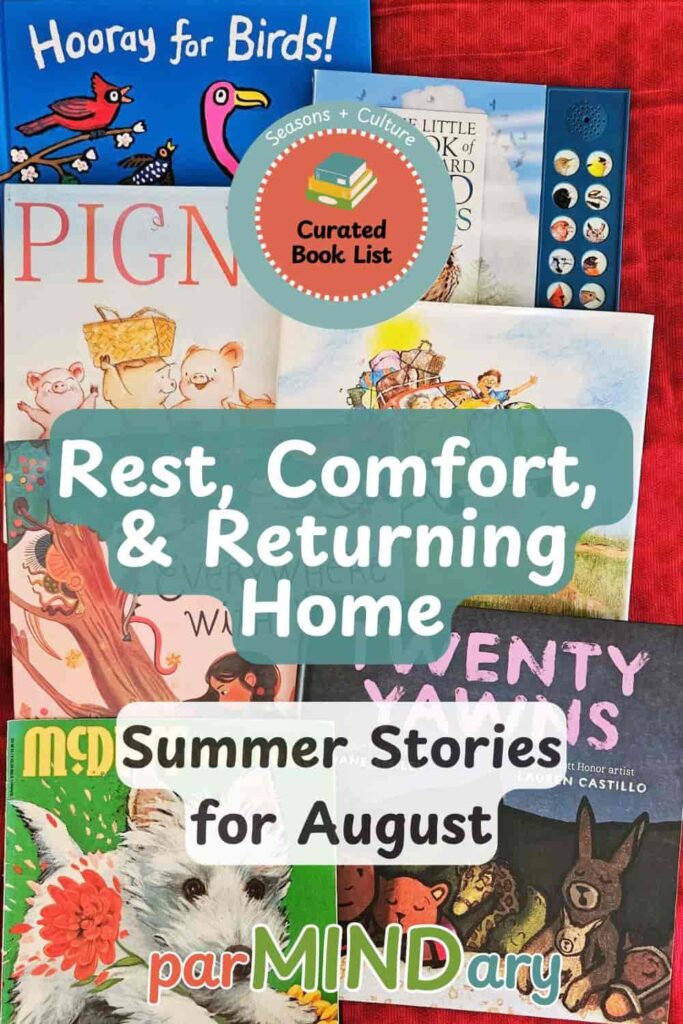
Twenty Yawns – Jane Smiley
One long summer day ends with a very contagious case of the yawns.
Why this book matters: After a full day at the beach, Lucy is ready for bed—but falling asleep is another matter. A nighttime wander through the house brings stuffed animals, familiar comforts, and yawn after yawn into a cozy ending that captures the delicious tiredness of a day well spent.
Themes / patterns: bedtime, tiredness, comfort, imagination, summer days
Age range: 2–5
Find Twenty Yawns on Amazon
McDuff Comes Home – Rosemary Wells
Getting lost is scary, but finding the way home is wonderfully sweet.
Why this book matters: McDuff slips away and soon finds himself separated from the people and home he knows. His adventure carries just enough worry to make the return especially satisfying, with home becoming less a place on a map than the familiar people waiting there.
Themes / patterns: home, belonging, getting lost, reunion, comfort
Age range: 2–4
Find McDuff Comes Home on Amazon
Everywhere With You – Carlie Sorosiak
Friendship grows across a fence between a girl and a lonely dog who needs someone to notice him.
Why this book matters: A girl begins spending time with the neglected dog who lives next door, offering him the attention and companionship missing from his own yard. Their connection grows through small moments across the fence, turning an ordinary boundary between two homes into a place of comfort, trust, and friendship.
Themes / patterns: dogs, friendship, loneliness, compassion, connection
Age range: 4–8
Find Everywhere With You on Amazon
The Relatives Came – Cynthia Rylant
Pile everyone into the house and make room for one more hug.
Why this book matters: When the relatives arrive from Virginia, the house fills with people, food, talking, sleeping bodies, and affectionate chaos. Their long summer visit feels crowded in the best possible way—and when everyone finally heads home, the anticipation of seeing one another again is already beginning.
Themes / patterns: family, summer visits, home, togetherness, returning
Age range: 2–6
Find The Relatives Came on Amazon
Pignic – Matt Phelan
Pack a picnic, head outside, and hope the weather cooperates.
Why this book matters: A family of pigs sets out for a cheerful picnic only to have their plans interrupted by rain. Rather than ruining the outing, the unexpected weather becomes part of the fun, giving an ordinary summer tradition a playful little twist.
Themes / patterns: picnics, family, weather, play, changing plans
Age range: 2–6
Find Pignic on Amazon
The Little Book of Backyard Bird Songs – Andrea Pinnington
Press, listen, and find out who might be singing outside your window.
Why this book matters: Real bird calls turn familiar backyard visitors into voices worth recognizing. Listening for each song can make the birds beyond the page suddenly feel closer, especially during the slower moments when there is time to sit outside and hear who is nearby.
Themes / patterns: birds, bird songs, listening, backyards, observation
Age range: 2–6
Find The Little Book of Backyard Bird Songs on Amazon
Hooray for Birds – Lucy Cousins
Flap, waddle, swoop, and strut your way through a day of being a bird.
Why this book matters: Bright birds fill the pages with movement, noise, and personality as they peck, paddle, stretch, and fly. Rather than simply watching birds, the invitation is to join them—making backyard observation suddenly much more energetic.
Themes / patterns: birds, movement, sound, imitation, play
Age range: 1–3
Find Hooray for Birds on Amazon
Bored, Nothing to Do! – Peter Spier
Two bored brothers discover that “nothing to do” leaves room for a very big idea.
Why this book matters: Sent outside to entertain themselves, the brothers decide to build an airplane—and take the project considerably farther than anyone might expect. Their elaborate solution to boredom celebrates the wonderfully unreasonable things that can happen when an empty afternoon is left open to imagination.
Themes / patterns: boredom, invention, siblings, creativity, unstructured time
Age range: 6–8
Find Bored, Nothing to Do! on Amazon
Hum and Swish – Matt Myers
A quiet day at the beach becomes a place to make something of your own.
Why this book matters: Jamie wants to work on her sand creation while the beach hums and swishes around her, even as curious people keep stopping to ask what she is making. Her absorbed concentration captures a different kind of summer rest: having enough time and space to follow an idea without needing to explain where it is going.
Themes / patterns: beach, creativity, solitude, concentration, imagination
Age range: 4–8
Find Hum and Swish on Amazon
Rest gives us time to notice what has changed. As summer begins to wind down, familiar places and experiences can take on new meaning when we realize they will not remain exactly as they are.
🌾 Change on the Horizon
Late summer carries the awareness that something is beginning to change. These stories explore longing, confidence, beauty, memory, and the experience of seeing familiar things differently. Some characters search for what they think they need; others discover new ways to move forward. Together, they make space for the complicated work of holding onto what matters while allowing change to happen.
Themes in this Section:
change · memory · longing · confidence · letting go
✦
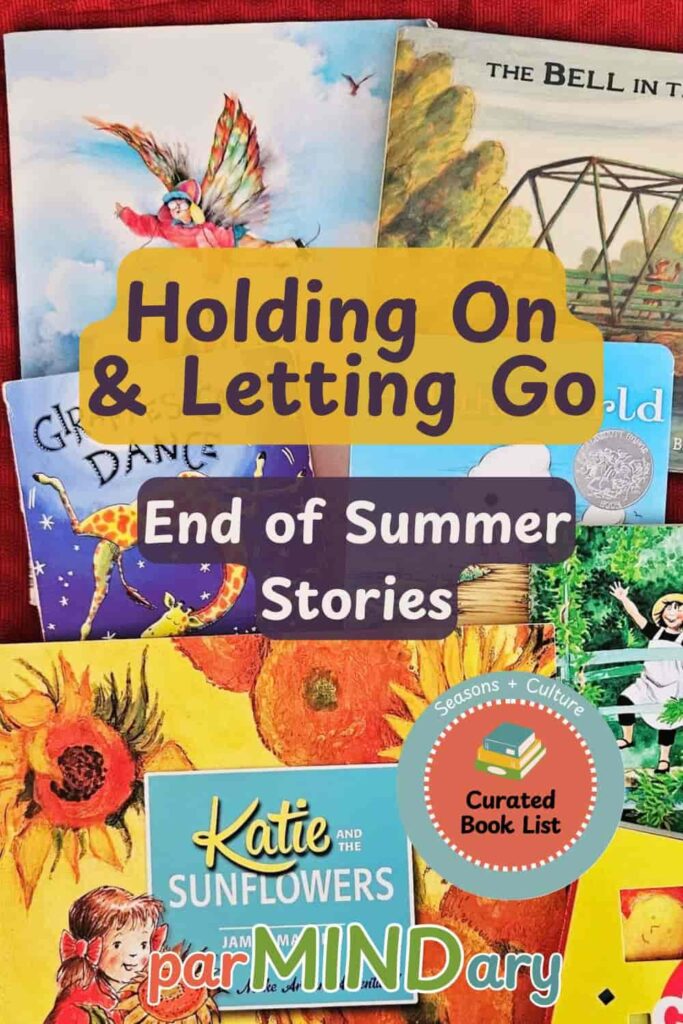
The Bell in the Bridge – Ted Kooser
Send a sound down the river and wonder who might be answering.
Why this book matters: A boy strikes a rock against a metal bridge and listens as the sound travels down the river. When another sound sometimes answers, he wonders about it for days—until he discovers a second bridge farther downstream, with its own rock waiting nearby. He never sees the other boy wondering about the very same sounds, leaving their unseen connection for us to discover.
Themes / patterns: sound, curiosity, echoes, connection, perspective
Age range: 6–9
Find The Bell in the Bridge on Amazon
All the World – Liz Garton Scanlon
Small moments gather into a much bigger picture of the world around us.
Why this book matters: A family moves through a day filled with beaches, gardens, weather, food, music, and people coming together. The rhythmic language shifts between tiny details and wide views, finding beauty in both the individual moment and the larger world it belongs to.
Themes / patterns: beauty, connection, everyday moments, perspective, belonging
Age range: 1–4
Find All the World on Amazon
Giraffes Can’t Dance – Giles Andreae
Sometimes moving forward begins with finding a rhythm that feels like your own.
Why this book matters: Gerald wants to dance, but the other animals laugh at the way he moves. A quiet encounter beneath the moon gives him another way to hear the music, and what once felt impossible changes when he stops trying to move like everyone else.
Themes / patterns: confidence, movement, perspective, individuality, encouragement
Age range: 1–4
Find Giraffes Can’t Dance on Amazon
Katie and the Sunflowers – James Mayhew
Step inside a painting and see familiar colors, flowers, and landscapes come alive.
Why this book matters: Katie’s visit to an art gallery becomes an adventure when she enters the paintings themselves. Moving among sunflowers and other painted worlds turns looking at art into something playful and immersive, inviting a second look at details that might otherwise stay quietly inside the frame.
Themes / patterns: art, sunflowers, imagination, observation, perspective
Age range: 3–8
Find Katie and the Sunflowers on Amazon
Linnea in Monet’s Garden – Christina Bjork
Follow a love of paintings all the way to the garden that inspired them.
Why this book matters: Linnea travels to Monet’s home and garden at Giverny after becoming fascinated by his paintings. Seeing the flowers, water, bridges, and light behind the artwork brings the real garden and the painted one together, showing how close observation can transform an ordinary view into something worth remembering.
Themes / patterns: gardens, art, beauty, observation, inspiration
Age range: 6–12
Find Linnea in Monet’s Garden on Amazon
The Wing Shop – Elvira Woodruff
Search for the perfect pair of wings and discover another way to fly.
Why this book matters: Matthew longs to fly and visits a mysterious shop filled with wings, trying to find the pair that belongs to him. His search opens into imagination and possibility, where moving forward does not necessarily mean getting exactly what we first thought we needed.
Themes / patterns: imagination, longing, possibility, change, moving forward
Age range: 4–8
Find The Wing Shop on Amazon
Like the stories we carry with us, the landscape holds traces of what has already happened. Stepping outside in late summer gives us a chance to notice what is still growing, what is ready to gather, and what is beginning to change.
🌾 Seasonal Observation Ideas for Late Summer
Late summer can look full and tired at the same time. Gardens are still producing, flowers are still blooming, and insects and birds remain active, but signs of strain and change begin to appear alongside that abundance. Grass may be dry, leaves worn or curled, flowers fading into seed heads, and fruits growing heavy on their stems.
This is a good time to look for evidence of everything that has happened during the season. A tiny flower may now be a tomato or berry. A plant that once seemed small may spill over the edge of a garden bed. Seeds are forming where blossoms used to be. Some things are still growing quickly, while others seem ready to stop.
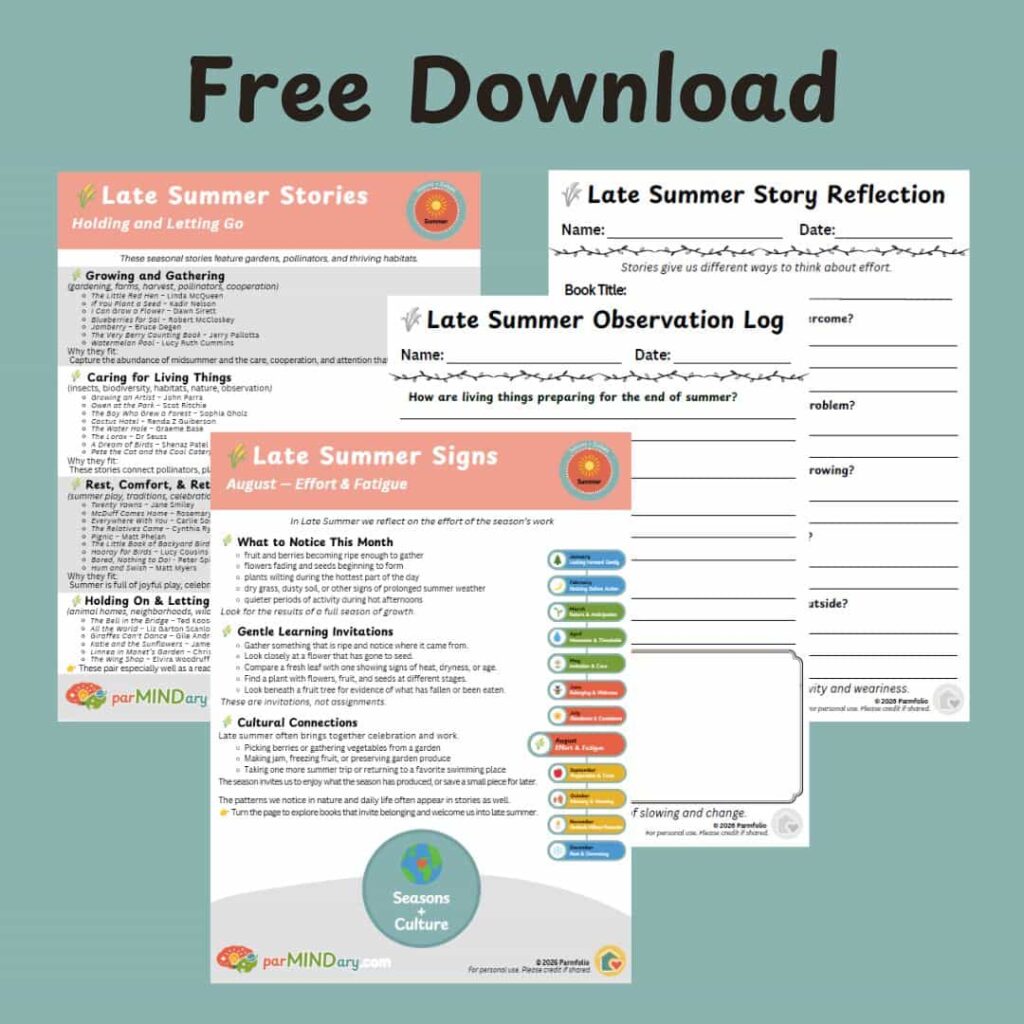
Visit the parMINDary Free Resource Library:
To download the Late Summer Observation + Story Guide
A story paired with a simple observation can bring these patterns into focus. Choose a book from the list above, then step outside together and look for what late summer is still holding—and what it may already be beginning to let go.
A nature journal or seasonal calendar are two of our favorite ways to record our observations over time.
• Look for something ready to gather.
Find berries, vegetables, fruit, herbs, flowers, or seeds that have reached a new stage. What has changed since earlier in the summer?
• Find evidence of effort.
Look for a heavily laden branch, a spiderweb, a bird carrying food, an insect visiting flowers, or a garden that has been watered and tended. What work can you see happening around you?
• Notice what looks tired.
Look for dry grass, curled leaves, faded flowers, brittle stems, or plants drooping in the heat. What is still thriving, and what seems to be slowing down?
• Look closely at seeds.
Find a flower or plant that has begun making seeds. How are the seeds held? Do they look ready to travel yet?
• Compare growing and fading.
Can you find a fresh flower and an older one on the same plant? A green fruit beside a ripe one? Look for different stages happening side by side.
• Watch who is still active.
Notice birds, bees, butterflies, squirrels, spiders, or other animals nearby. What are they doing during these later summer days?
• Find a place to rest.
Look for shade beneath a tree, an animal tucked somewhere cool, a bird sitting quietly, or another sheltered place. Where do living things go when the day is hot or energy runs low?
• Record one sign of change.
Draw, photograph, or write about something that tells you summer is beginning to shift.
We recorded our own August observations in the Parmfolio Learning Lab Field Journal.
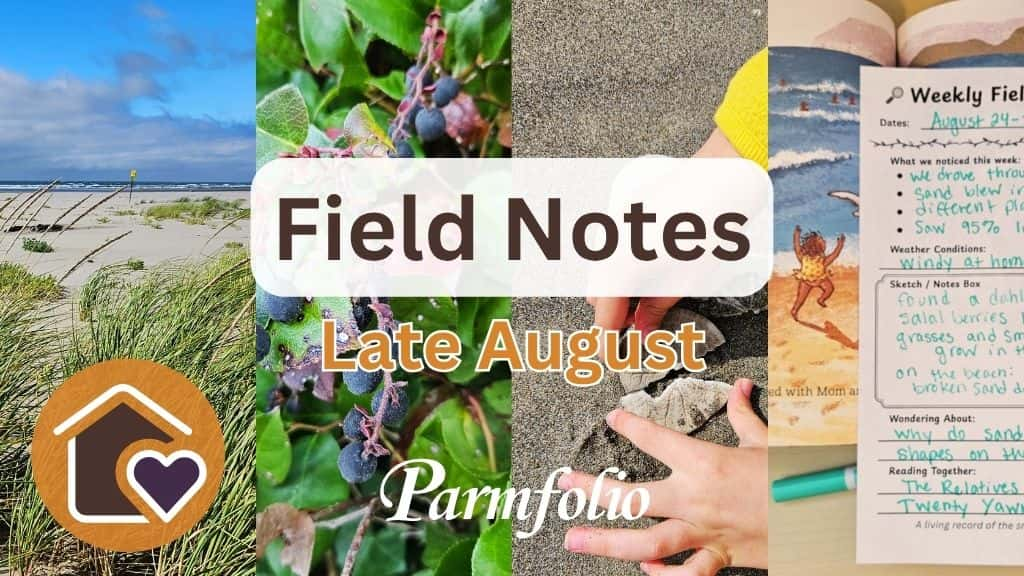
Late summer does not change all at once. Ripening fruit, tired leaves, busy animals, fading flowers, and forming seeds can all exist together. Looking closely lets us notice a season that is still very much alive while beginning to prepare for what comes next.
You can continue the season with our companion reflection post:
🌾 August — Effort & Fatigue
Watching Late Summer: Holding and Letting Go
Related Seasonal Posts
Explore more seasonal learning ideas on our Seasons & Culture pillar page.
Or follow how we learn to notice the seasonal cycle here:
Watching the Year
🌎 Watching the Year: Homeschooling Through the Seasons
🌲 Watching Midwinter: Renewal and Anticipation
🌙 Watching Late Winter: Staying Indoors and Keeping Warm
🌱 Watching Early Spring: Waiting for the First Signs of Change
💧 Watching Mid-Spring: When Motion Replaces Waiting
🌼 Watching Late Spring: Marking Time Together
🐝 Watching Early Summer: Long Days and Open Possibility
☀️ Watching High Summer: Stillness Inside Abundance
🌾 Watching Late Summer: Holding and Letting Go
🍎 Watching Early Autumn: Preparing for the First Signs of Fall
🍂 Watching Mid-Autumn: The Work of Letting Go
🕯️ Watching Late Autumn: Quiet Before Winter
❄️ Watching Early Winter: Light, Memory, and Celebration
Curated Seasonal Book Lists
🌎 Stories That Follow the Whole Year
🌲 Quiet Deep Winter Stories for Children
🌙 Late Winter & Waiting Stories
🌱 Early Spring Stories for Children
💧 Spring Migration & Movement Stories
🌼 Spring Festivals & May Tradition Stories
🐝 Early Summer Stories for Children
☀️ High Summer Nature & Pollinator Stories
🌾 Late Summer Effort & Harvest Stories
🍎 Migration & Autumn Arrival Stories
🍂 Autumn Harvest & Celebration Stories
🕯️ Gratitude & Community Stories
❄️ Winter Light & Celebration Stories
Late summer reminds us to enjoy what is still here, notice what has changed, and make room for whatever comes next.
Note: Whether you borrow books from the library, purchase them, or share them with friends, the goal is the same: finding stories worth returning to. We visit our local library every week and add a few favorites to our home library throughout the year.
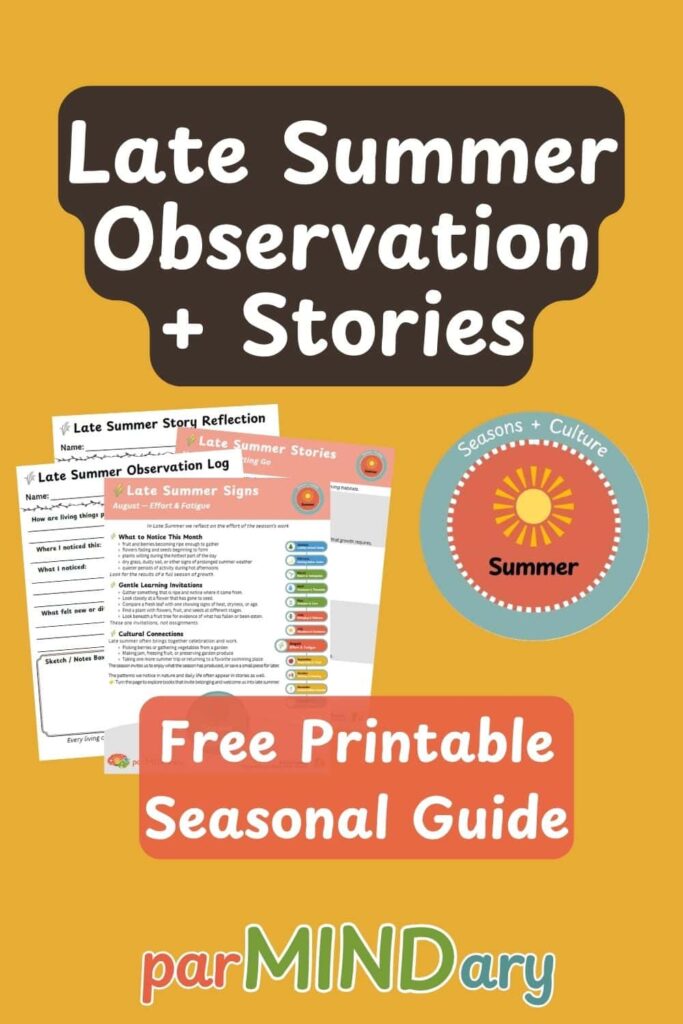
Download the Seasonal Observation + Story Guides from our Free Resource Library.